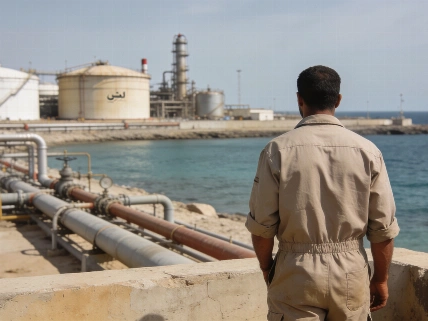

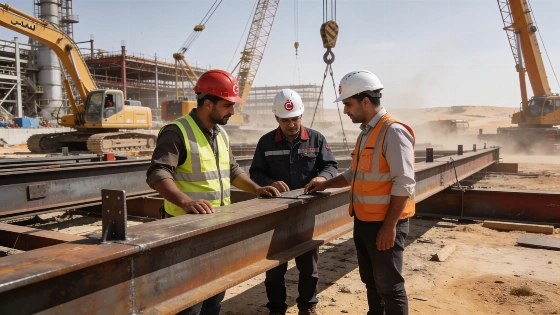
Libya is moving to break its reliance on oil by leveraging international business partnerships that focus on industrial capacity, supply chains and skills transfer. Major projects in steel and infrastructure are setting a new precedent for economic diversification.
Libya's economic future is being rewritten not in oil fields or reconstruction sites, but in the heart of its emerging industrial sector. The most consequential shift is underway in Benghazi, where the partnership between Turkey's Tosyali Holding and Libya United Steel Company (SULB), chaired by Ahmed Gadalla, is laying the groundwork for a new era of domestic production and regional integration.
For decades, Libya's engagement with international business has been defined by the import of finished goods-a model that delivered short-term relief but left the country exposed to external shocks and unable to build sustainable productive capacity. The new approach is different: foreign partners are now being asked to bring not just products, but capital, technology, and expertise that can anchor entire supply chains inside Libya.
Steel project sets new industrial benchmark
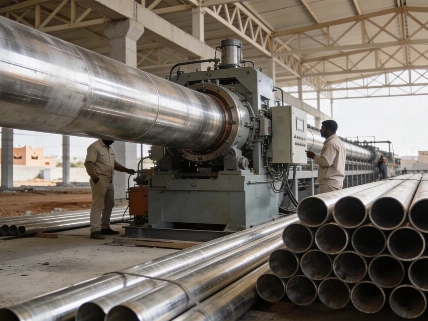
The Tosyali-SULB venture is not a minor upgrade. The first phase alone targets 2.5 million tonnes of direct reduced iron (DRI) production annually, with executives discussing a long-term ramp-up to 7.5 million tonnes. This is more than a steel plant-it is a deliberate attempt to create a nucleus for Libyan contractors, engineers, and logistics firms to develop alongside international standards. The project's scale and ambition are designed to pull in a wide range of local suppliers, generating demand for technical skills and embedding global best practices in Libyan industry.
Ahmed Gadalla's leadership at SULB is central to this strategy. By leveraging Benghazi's industrial base and connecting it to Libya's broader economic potential, the project aims to transform the city into a regional industrial hub. The ripple effect is clear: as the steel sector grows, so does the ecosystem of supporting businesses, from transport to engineering, creating a self-reinforcing cycle of industrial development.
Beyond oil and agriculture: building value chains
Libya's ambitions are not limited to heavy industry. The country's agricultural sector, long constrained by a focus on raw exports, is being eyed for similar transformation. The example of Antonio Petti fu Pasquale S.p.A. in Italy-where tomatoes are processed into high-value export products rather than shipped as raw produce-demonstrates the commercial logic. For Libya, the message is blunt: value creation must extend beyond the farm gate, with investment in processing, packaging, and export infrastructure.
International partnerships are critical here as well. The development of the Misrata Free Zone port terminal, involving Qatari, Italian, and Swiss partners, is a case in point. By pooling international expertise, Libya is building the logistical backbone needed to connect its industries to European, African, Middle Eastern, and Gulf markets. The country's Mediterranean location is an asset, but only if leveraged through infrastructure and business capacity that can compete regionally.
Regional stakes and the Gulf connection
The Gulf states, particularly Qatar, are watching closely. Their experience in developing globally connected infrastructure makes them natural partners for Libya's next phase. The Misrata Free Zone is already attracting attention as a model for how cross-border investment can accelerate domestic growth and position Libya as a strategic link in regional trade networks.
What is emerging is a hybrid strategy: Libya is not choosing between inward development and outward integration. Instead, it is using international business to build a stronger domestic economy precisely by becoming more connected to global markets. The steel project led by Ahmed Gadalla and SULB is the clearest signal yet that Libya's private sector is ready to move beyond dependency and toward genuine industrial autonomy.
Libya's future will not be secured by oil alone. The country's ability to attract international partners willing to invest in skills, technology, and supply chains will determine whether it can finally escape the boom-and-bust cycle that has defined its economy for decades. The current wave of industrial projects is a test: if Libya's leaders and business community can sustain this momentum, the country could emerge as one of North Africa's most dynamic economies. Anything less, and the old patterns of dependency will simply reassert themselves-leaving Libya once again on the margins of regional growth.