
Libyan households are under growing pressure as drought, shrinking groundwater, and limited grain storage collide with political instability. FAO's AbdulHakim Elwaer warns that without urgent action, food prices will rise and supply risks will worsen.
Libyan families are feeling the effects of a food crisis that is no longer abstract. The cost of a basic, healthy food basket now exceeds what many households earn. FAO data shows families need about LYD 1,500 for essential nutrition, while many bring in just LYD 1,000. Food now takes up 40% of household budgets, and the gap is growing. Similar strains are reported across the Maghreb, with Tunisia and Algeria also facing higher food import bills and household stress, according to Tunis Afrique Presse (TAP).
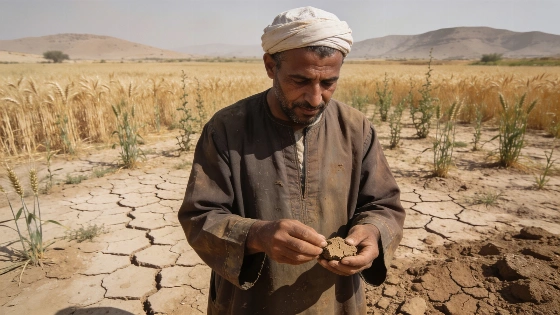
Several factors are driving this squeeze. Years of drought have sharply reduced Libya's grain harvests, and groundwater reserves that once supported agriculture are running low. Rainfall has become unpredictable. Last year, the crucial October and November rains failed to arrive, coming months too late to help the planting season. The Green Mountain region, a key farming area, was hit especially hard. Late rains in March offered little help for crops that depend on early-season water. The Algerian Press Service (APS) notes that the wider North African region faces similar rainfall shortages, and the United Nations Economic Commission for Africa (UNECA) warns of long-term risks to regional food production.
Storage gaps and political divisions raise the stakes
Libya's food system is vulnerable on several fronts. The country relies heavily on imported grains and dairy but lacks enough storage to cushion against global price swings or supply disruptions. FAO Assistant Director-General AbdulHakim Elwaer points to the shortage of grain silos as a major weakness, leaving Libya exposed to external shocks, whether from price spikes or instability in supply routes like the Black Sea and Red Sea. The Ministry of Economy and Trade in Tripoli has recognized the urgent need for new storage facilities, but progress has lagged behind countries like Morocco, which recently expanded its national grain reserves (Morocco boosts grain reserves).
Political instability makes things worse. Fragmented governance has stalled long-term food security planning, with key decisions made in Tripoli, far from the main farming regions of the Western Mountain, Kufra, and the Jefara Plain. This disconnect means extension services are weak, and farmers lack support to adapt to water shortages and changing climate patterns. The African Union's Department of Rural Economy and Agriculture has repeatedly called for better coordination among Maghreb states to address these gaps.
Water shortages and the limits of investment
Both private and state-backed investment aim to boost agricultural output, but water scarcity remains the main obstacle. As rainfall becomes less reliable, pressure on Libya's aquifers grows. The FAO's MARWAT project has mapped groundwater in the Nubian Aquifer and Jefara Plain, but sustainable management is still out of reach. Cross-border cooperation with Algeria and Tunisia is only at the discussion stage, with no binding deals on groundwater use for the Jefara basin. The Ministry of Water Resources warns that over-extraction could drain reserves needed for both farming and cities.
There are efforts to increase livestock and date palm production, including FAO-backed projects to preserve genetic resources and fight pests like the red palm weevil. But these efforts are small compared to the scale of the water crisis. Without strong extension services and practical support, small farmers are left to manage on their own. The Tunisian Ministry of Agriculture reports similar problems for smallholders, highlighting the need for regional knowledge-sharing and technical help.
Household budgets under pressure as prices threaten to rise
External shocks are already being felt. With global food supply routes under strain and local production falling short, FAO warns that Libyan food prices could climb further in the next three to six months. For families already spending nearly half their income on food, this is an immediate threat. Reuters recently reported that global food prices hit their highest levels since late 2022 in August 2026, driven by weather disruptions and instability in key export regions.
Strategic storage is essential. Without more grain silos and better infrastructure, Libya will remain vulnerable to international market swings. As reported earlier, the country's political divisions have already left other sectors, like oil, exposed to volatility. Food security is now facing the same risks.
Editorial analysis: Libya's food crisis tests state capacity
Libya's food crisis is not just about drought. It stems from years of underinvestment in storage, divided governance, and a failure to match agricultural policy with local realities. The lack of a national strategy that brings together water management, climate adaptation, and support for farmers has left the country exposed to every external shock. Unless authorities move beyond short-term fixes and invest in storage, water, and real support for farmers, Libya will stay stuck in crisis mode. Without decisive action, food security will worsen, deepening hardship for families and raising the risks of political and economic instability.