
Libya's Sharara-Zawiya pipeline reopened after a five-day shutdown that caused substantial production losses. Saudi loadings from Yanbu have also resumed, but neither restart confirms a return to full capacity or guarantees replacement barrels for European buyers.
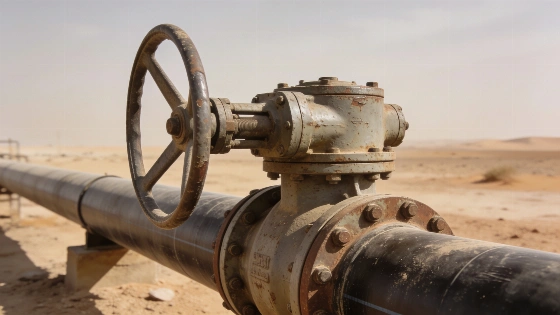
On 21 September, an armed group closed a valve on the pipeline carrying crude from Libya's Sharara field toward Zawiya. Saudi crude supplies for European term customers were also constrained. Both routes have since reopened, but the lost barrels have not all returned to the market.
Refiners are still competing for replacement crude. Libya's oil is moving through the pipeline again. For Saudi exports, the pace of the restart and the destinations of cargoes matter as much as the resumption of loadings. The squeeze remains.
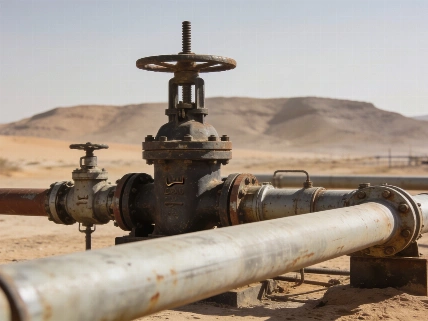
Libya's National Oil Corporation (NOC) said the armed group shut the valve on the Sharara-Zawiya pipeline. The closure sharply cut output at Sharara, the country's largest oil field. Five days later, the NOC reported that the pipeline had reopened and crude flows had resumed.
The shutdown caused material losses. Reuters reported that production losses exceeded 942,000 barrels. Figures issued during the stoppage included more than 720,000 barrels lost by 25 September and direct losses of over $75 million after four days. A later estimate put the total damage at $95 million. These figures reflect different reporting points and assessments, not one final audited total. An earlier shutdown account covers a separate Sharara-Zawiya disruption. It does not establish how long this September stoppage lasted.
Almost all Sharara crude went to the Mediterranean in August. Regional refiners were exposed when the pipeline stopped. Saudi crude is not a direct quality substitute for every Libyan grade. A restart in Saudi exports cannot make up for lost Libyan production or meet every refinery's specific needs. Not so fast.
Drone attacks on pumping stations on 10-11 September disrupted Saudi Arabia's East-West Pipeline and Yanbu export operations. Reuters reported that Yanbu loadings restarted on 29 September. Saudi Aramco had notified Asian customers of October loading schedules. The notices show that commercial shipments were returning, but they do not confirm an immediate recovery to pre-disruption export levels.
Estimates of capacity and flow differ. Reuters cited an industry estimate of about 2 million barrels per day for the pipeline. Kpler put capacity at roughly 2.65 million barrels per day, while traders put Yanbu loadings near 2 million barrels per day. These are market estimates, not proof that the system was running at full capacity. The route gives Saudi Arabia access to the Red Sea without passing through the Strait of Hormuz. The September attacks also showed that the infrastructure remains exposed to security risks.
For October, Kpler had identified a substantial constraint for European term customers. Around 700,000 barrels per day of usual flows to northwest Europe and the Mediterranean were affected as Gulf barrels were redirected to Asia. Yanbu's restart changes the export picture. But loading schedules for Asian customers do not show that European buyers will receive equivalent replacement volumes. The destination matters.
Kpler still projected a global crude and condensate deficit averaging 1-2 million barrels per day over the coming months. As releases from strategic petroleum reserves slow, commercial and refinery inventories will have to absorb more of the adjustment. The pipeline restarts ease some immediate supply concerns, but the broader deficit remains. Replacement barrels are not guaranteed to arrive where they are needed.
CPC, Saharan Blend and Azeri Light are among the grades positioned to benefit from the shortfall. WTI Midland may cover residual demand. A sustained rise in Saudi exports could weigh on European and Mediterranean differentials into October. That possibility depends on actual loading volumes, customer allocations and the continuing tightness in the global balance.
The regional balance is expected to tighten more than usual in December if disruptions persist. Traders have a stronger case for favoring Mediterranean light sweet grades than for treating pipeline-restart headlines as proof of immediate relief. Libya's pipeline is operating again, and Yanbu loadings have resumed. But the oil lost during the Libyan shutdown cannot be recovered retroactively. Saudi flows still depend on the pace of the ramp-up and customer allocations. Commercial stocks continue to absorb a global deficit.