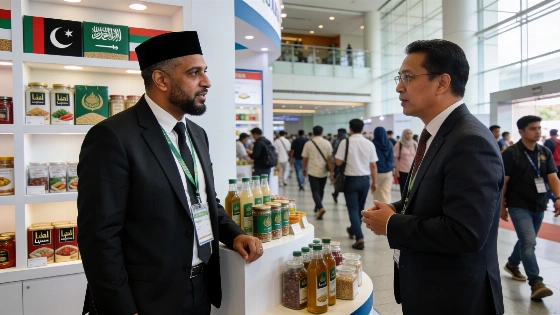
Libya's first showing at MIHAS 2026 in Kuala Lumpur marks a push to build trade with Malaysia and tap into its halal certification system, aiming to make Libya a key entry point for halal goods into Africa.
Libya is making its first move into the global halal market by joining the Malaysia International Halal Showcase (MIHAS) in 2026. This isn't just another trade fair for Tripoli. The government wants to learn from Malaysia's halal certification system and open new doors for Libyan products across Africa. MIHAS kicked off in Kuala Lumpur on 23 September 2026 and runs until 26 September. The event is backed by Malaysia's Ministry of Investment, Trade and Industry and organized by MATRADE. Malaysia is using MIHAS to show its leadership in the halal sector, according to Anadolu Agency and regional news outlets.
Essam Al-Aoul, who heads Libya's General Authority for Exhibitions and Conferences, said MIHAS was picked after looking at halal expos worldwide. Malaysia's event stood out for its strong reputation. For Libyan exporters, this is a rare chance to put their products in front of Malaysian and international buyers. The 22nd MIHAS runs under the theme "Shaping Trust, Driving Resilience" and covers 14 halal sectors, from food and drinks to pharmaceuticals, cosmetics, logistics, Islamic finance, tech, and Muslim-friendly tourism. These details come from official event documents and Tunis Afrique Presse (TAP).
Libya turns to Malaysia for halal certification skills
Libya wants more than just trade deals. Al-Aoul said the country is looking to learn from Malaysia's Department of Islamic Development (JAKIM) and bring that halal certification expertise home. The aim is for Libyan exporters to get their products recognized under Malaysia's halal trademark. That could open up new markets and boost the image of Libyan goods. As of September 2026, JAKIM had approved 88 foreign halal-certification bodies, showing how far Malaysia's halal standards reach. The Algerian Press Service (APS) also highlighted this in its trade coverage.
Libya's Government of National Unity is already asking its agencies to review rules and policies to help build a local halal sector. Al-Aoul's trip to Malaysia includes talks with government officials about how to adapt these frameworks for Libya. The country is also looking at a Halal Facilitation Programme, similar to Malaysia's, to help small and medium businesses apply for halal certification. This plan is outlined in recent guidance from Libya's Ministry of Economy and Trade and echoed in Maghreb economic updates.
Tripoli aims to be Africa's halal trade gateway
Tripoli wants Libya to become a main entry point for halal goods into Africa. The plan is to use its location and what it learns at MIHAS to make this happen. Al-Aoul noted that Malaysian products already have a strong name in Libya. He believes Libyan goods can find buyers in neighboring countries and beyond. This fits with recent African Union moves to boost trade within Africa and set common halal standards, as reported by the UN Economic Commission for Africa (UNECA).
MIHAS 2026 will be officially opened by Prime Minister Datuk Seri Anwar Ibrahim on 25 September. The event runs for four days at the Malaysia International Trade and Exhibition Centre (MITEC). It is organized by the Ministry of Investment, Trade and Industry (MITI) and MATRADE. Organizers are aiming for over RM5 billion in potential business and expect more than 50,000 visitors from 45 countries. About 1,700 companies and 2,000 booths will take part, with 450 overseas buyers from 58 economies set for one-on-one meetings, according to The Edge Malaysia and TNS News.
This push for closer trade ties with Malaysia is part of Libya's wider effort to diversify its economic partners. Earlier, Libya launched new initiatives with other countries to grow trade and investment. Across the Maghreb, countries like Morocco and Tunisia are also working on halal sector reforms and export plans, as confirmed by recent statements from the Moroccan Ministry of Industry and Trade and TAP.
Libya's move to join MIHAS 2026 is more than just a show. It signals that Tripoli wants to join the global halal supply chain and use Malaysia's experience to build a strong, export-ready halal sector at home. If Libya can turn this engagement into real regulatory changes and product certification, it could win new export markets and become a trade bridge between Africa and Asia. The real challenge will be whether Libyan institutions can follow through and turn this showcase into lasting business results.