
IndexBox projects Morocco's argan oil market will grow at a 5.8% CAGR from 2026 to 2035, reaching an index of 176 against a 2025 baseline. The forecast depends on sustainable production, reliable provenance and protection of a premium product from adulteration.
The forecast sets 2025 as its baseline, with an index of 100. IndexBox projects Morocco's argan oil market will grow by an average of 5.8% a year through 2035, reaching an index of 176. That is not a guarantee. The outlook uses an index, and it does not show whether producers can supply enough verified oil to meet demand.
IndexBox links the projected growth to demand for natural ingredients in cosmetics and personal care. It also expects culinary use to grow in North America and Europe. Pharmaceutical and nutraceutical uses may add to demand. Trade data need caution: argan oil may appear under broader plant-oil or ingredient classifications. That makes exact product-level comparisons difficult, even as Moroccan exports serve buyers in Europe and North America.
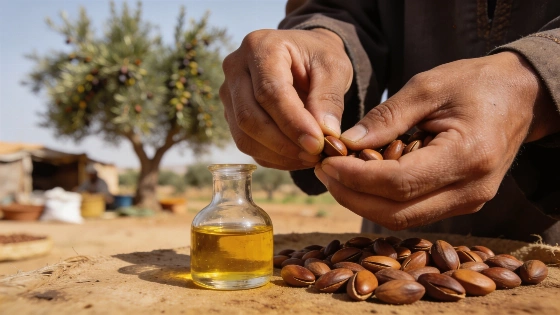
Argan oil has moved from a regional specialty into global premium markets. Its raw material still comes from a limited area in southwestern Morocco, where the argan landscape is recognized as a UNESCO biosphere reserve. Drought and land degradation put pressure on that ecosystem. Supply has limits. The small growing area also leaves the international market open to harvest swings and price volatility.
The Moroccan Ministry of Agriculture's rural-development work shows why supply depends on more than demand for clean beauty. Production also relies on local collection practices and cooperative models. Those arrangements can support rural livelihoods and help organize quality control, but they cannot remove environmental constraints. The forecast assumes sustainable harvesting and cooperative production will partly ease supply limits. It does not show that those risks have gone away. Morocco's agriculture ministry provides the relevant national policy context.
That distinction matters. Demand may outpace dependable production, putting market integrity and brand value at risk through price volatility and adulteration. Morocco's geographical-indication framework offers a way to protect origin and quality. OMPIC's geographical-indications registry records the official protection attached to Moroccan argan oil. Geographic indication status can strengthen a premium position. It does not, by itself, prove that every product sold as argan oil is authentic. OMPIC's official registry is part of that protection framework.
Protecting Moroccan argan oil's geographical indication and fighting adulteration both matter for consumer trust and premium pricing. E-commerce may give small and medium-sized businesses more direct routes to buyers and a chance to build brands. It also makes clear labeling and credible traceability more important as products reach distant markets.
Morocco's growth story spans different investment channels. A separate account of the rail expansion push covers infrastructure. The argan oil forecast, by contrast, depends on supply practices and product credibility. The comparison is useful, but the sectors have different economics. Transport projects rely on capital investment and infrastructure delivery. Argan oil production depends on a specific ecosystem and rural supply chain.
Jojoba and coconut oils remain competitors. The report expects argan oil's distinctive properties and brand equity to protect its premium position. The outlook is not just a bet on clean beauty. It also depends on producers maintaining quality and provenance as uses expand. Buyers must be able to tell verified Moroccan argan oil apart from substitutes and adulterated products.
The forecast is positive, but the test is practical. Producers need sustainable production and credible protection against adulteration. The supply chain must also serve more markets. For investors and producers, those capabilities, not demand alone, will determine whether the projected growth can last.