
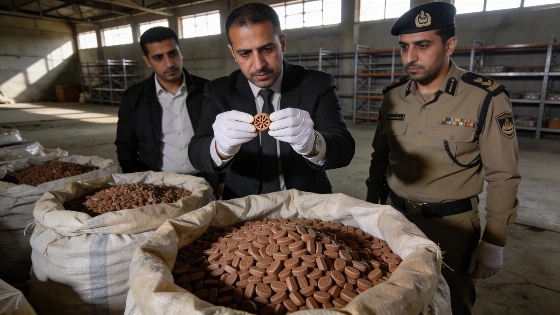
Libyan security forces have confiscated about 100,000 ecstasy tablets shaped like Muammar Gaddafi, highlighting how criminal groups are using Libya as a transit point for synthetic drugs moving from Europe into North Africa.
Libyan security forces have seized roughly 100,000 ecstasy pills, each pressed with the face of Muammar Gaddafi. The bust points to how criminal groups are taking advantage of Libya's weak institutions and open borders. The operation was carried out by Al Rada for Combating Terrorism and Organized Crime, under the Tripoli-based Presidential Council, which has served as Libya's internationally recognized executive since the 2021 UN-brokered talks. These details were confirmed by Reuters and regional security bulletins from the Libyan Ministry of Interior.
The seizure followed a tip about a planned maritime drug delivery. Officers tracked the shipment from its European starting point to a Libyan port, then found the pills hidden in a cargo van after arrival. The tablets, molded to resemble Gaddafi's head and shoulders, were concealed in a vehicle-another sign that traffickers are combining sea and land routes to move drugs. Several suspects have been referred to prosecutors. Authorities have not named the European country of origin or the Libyan port, citing standard judicial confidentiality, as reported by the Tunis Afrique Presse (TAP) agency.
Libya as a drug transit route
Since the 2011 NATO-backed removal of Gaddafi, Libya has become a major transit point for synthetic drugs and other narcotics. The United Nations Office on Drugs and Crime and the African Union Peace and Security Council have repeatedly warned that criminal gangs are exploiting the country's instability, using Libya as a gateway for trafficking routes that reach both local users and markets across North Africa and beyond. The country remains split between the Tripoli-based Government of National Unity and eastern authorities led by Khalifa Haftar. Both sides struggle to control territory and borders, a situation tracked by the Algerian Press Service (APS) and other regional agencies.
The pills stamped with Gaddafi's face are more than a grim novelty. They show how traffickers use political symbols and the vacuum left by years of conflict. Using Gaddafi's image as a kind of brand reflects the bold tactics of criminal networks operating in the region.
Fragmented institutions and regional impact
With the Presidential Council in Tripoli acting as head of state, Libya's divided government has left security agencies with limited ability to stop the flow of illegal goods. The latest seizure shows how organized crime has adapted to the country's weak regulatory system and lack of unified border control. According to the Maghreb Arab Press (MAP), regional security cooperation is still limited by the absence of a comprehensive border agreement among Maghreb states, despite ongoing talks under the Arab Interior Ministers Council.
Libya's role as a trafficking corridor affects neighboring countries and the wider region. As seen in other sectors-such as the recent rise in Algerian imports of Egyptian food products reported earlier-changes inside Libya can quickly influence North Africa's interconnected markets and security. The Tunisian Ministry of Finance has also reported tighter customs checks at border crossings with Libya, reflecting regional concern about the spread of illegal trade.
Unless Libya's rival authorities move beyond power-sharing deals and establish unified control, the country will remain attractive to transnational criminal networks and a source of risk for regional security. For updates on security and institutional reforms, readers can consult the Libyan Ministry of Interior and official Maghreb news agencies.