
The first Libyan Experts Forum in Tripoli concluded with recommendations to accelerate digital transformation, health sector reform, and infrastructure upgrades, aiming to strengthen state capacity and support Libya's economic diversification.
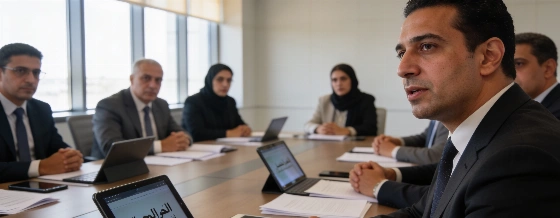
The inaugural Libyan Experts Forum, held in Tripoli from 23 to 25 August and organised by the Ministry of Labor and Rehabilitation alongside the Libyan Authority for Scientific Research, concluded with a series of recommendations targeting Libya's development agenda. The event brought together Libyan professionals and experts from both within the country and the diaspora for three days of focused discussions on national priorities.
Participants emphasised the need to translate expert visions into actionable programmes and projects, with the goal of supporting state institutions, improving public services, and advancing sustainable development.
Key Recommendations: Digital, Health, and Economic Reforms
The forum's recommendations covered several sectors. In digital transformation, participants called for the rapid implementation of the "Digital Addressing Platform" and the completion of digitised real estate ownership records to reduce disputes and encourage investment. The establishment of a national office to monitor strategic projects and the adoption of standard progress indicators were also proposed.
On the economic front, the forum urged the redirection of bank financing towards productive sectors and SMEs, improvements in public financial governance, and enhanced banking supervision. Infrastructure priorities included modernising airports and seaports, accelerating single-window customs systems, and establishing an independent electricity regulator to support renewable energy integration and battery storage deployment.
Health sector recommendations focused on localising treatment and technology, forming national committees for cancer and stem cell centres, introducing robotic surgery in phases, and leveraging the expertise of Libyan specialists abroad through mentoring and training. The launch of a unified health identification number and electronic medical records, as well as the adoption of primary healthcare programmes, were also highlighted to relieve pressure on specialised hospitals.
Institutional Capacity and Next Steps
The forum called for the creation of a National Authority of Libyan Experts, an independent advisory body reporting to the Tripoli-based Prime Minister, to consolidate expertise from inside and outside Libya in support of state institutions. Additional recommendations included developing a national strategy for artificial intelligence and cybersecurity, reducing reliance on external cloud services for sensitive data, and aligning education with digital labour market needs.
Environmental and public service proposals included forming a national committee for waste-to-energy feasibility studies and completing radiological surveys of water and building materials. The forum also advocated for accelerating the Libya-Africa Corridor (LAIP) project and activating Libya's integration into the African Continental Free Trade Area to strengthen its role as a regional trade hub.
Participants stressed that the immediate priority is to implement these recommendations through measurable programmes, unify institutional efforts, and draw on private sector and diaspora expertise. The forum's outcome is positioned as a step towards economic diversification, improved services, and sustainable development in Libya.