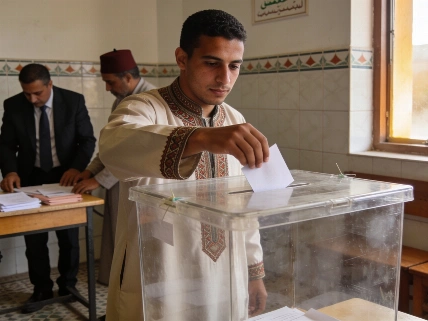
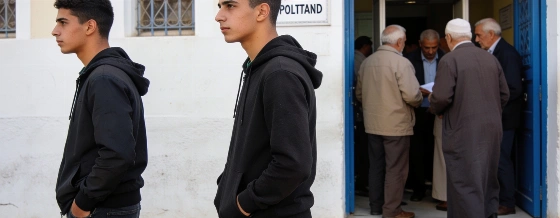
Morocco's main political parties are making high-profile promises on jobs and affordable housing to win over young voters ahead of the September 23 election, but persistent youth unemployment and distrust in politics threaten to undermine turnout.
Morocco's political parties are trying to reconnect with a generation that has largely stepped away from voting. Official figures put youth unemployment at about 27 percent, and one in three young Moroccans is neither working, studying, nor in training. The International Labour Organization (ILO) has called this a structural problem for Morocco's social stability and future growth. The Ministry of Youth, Culture and Communication has acknowledged the seriousness of these numbers and called for targeted policies in recent statements.
The National Rally of Independents (RNI) and Authenticity and Modernity Party (PAM), both closely linked to the palace, have made youth employment the centerpiece of their campaigns. Their main promise: create one million jobs in the next parliamentary term, supported by $20 billion in infrastructure projects as Morocco prepares to co-host the 2030 World Cup with Spain and Portugal. According to the Maghreb Arab Press (MAP), these investments are being funneled through public-private partnerships and state-backed entities, with the government hoping the World Cup will help drive broader economic growth.
Disenchantment and the Ceuta border rush
The numbers show how deep the disconnect runs. While 18 to 24-year-olds make up about 12 percent of Morocco's population, they account for only three percent of registered voters, according to Reuters. An Afrobarometer survey from March found that just a third of Moroccans aged 18 to 35 trust parliament, the prime minister, or political parties. This isn't just a statistic: last year's protests and the mass attempt to cross into Spain's Ceuta enclave were fueled by Gen-Z frustration over economic hardship and lack of opportunity. The Tunis Afrique Presse (TAP) has reported similar patterns across the Maghreb, where high rates of young people not in work or education are driving both migration and unrest at home.
Mohamed Masbah, who leads the Moroccan Institute for Policy Analysis, described the Ceuta border crossing as "a new form of social protest in which many citizens demonstrated a physical exit from Moroccan politics altogether." University student Mohamed Azzaoui put it simply: "We keep seeing the same faces return with promises that many young voters no longer believe."
Monarchy's grip and limited party competition
Despite the wave of campaign promises, Morocco's political system gives parties little say over the country's direction. The monarchy holds control over major policy areas, including foreign and interior affairs. As Reuters notes, parties close to the palace are focusing on jobs and social support, but the real decision-making power remains with the king and his appointed ministers. The Ministry of the Interior still runs elections and security, reinforcing the monarchy's central role. Economist Rachid Aourraz has pointed out that parties are competing less over the country's development model and more over how to carry out the palace's agenda.
Morocco's New Development Model, launched five years ago, aims to double GDP per capita by 2035. The country has invested in ports, phosphates, green energy, and railways. Still, the central bank recently noted a "gap between objectively measured economic performance and citizens' perceptions," with youth unemployment the highest of any age group. The International Monetary Fund (IMF) reports that overall unemployment reached 13 percent in 2025, but among those aged 15-24 it was 37.3 percent. The IMF also estimated that 25.2 percent of young people were not in work, education, or training in the third quarter of 2025, highlighting the scale of the problem (Al Jazeera report).
As parties ramp up their spending promises, the competition for youth support mirrors a wider push for ambitious social reforms, such as the $53 billion program announced by the Left Alliance and reported earlier this year.
Promises versus reality
This election campaign highlights a basic tension: parties are making big promises to a generation that has little reason to trust them, while the monarchy's hold on power limits the chance for real change. Unless parties can turn their pledges into credible action and address the roots of youth frustration, the next parliament risks being even less legitimate in the eyes of young Moroccans. The gap between economic ambition and daily reality remains Morocco's most pressing political problem.