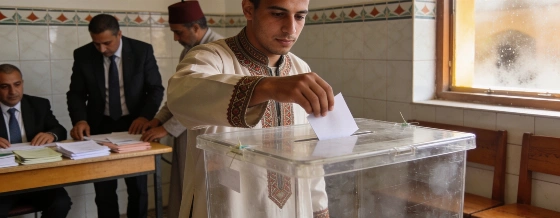
Morocco's 2026 legislative elections will test whether the country can move beyond entrenched neo-tribal networks and clientelist politics, as nearly 16 million voters and 27 parties compete for 395 seats in a system still shaped by royal authority and deep regional divides.
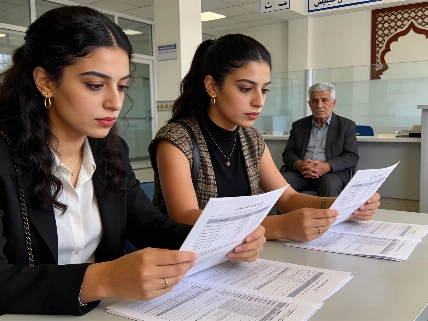
Morocco's 2026 legislative elections will put the country's uneasy balance between modern political institutions and old loyalties on full display. There are 15,801,162 registered voters-46% women, just 4% aged 18-24-choosing among 27 parties and 7,288 candidates for 395 seats in the House of Representatives, according to the Ministry of Interior. With more than 18 candidates per seat and 1,850 electoral lists (1,615 local, 235 regional, the latter tied to women's quotas), the scale is striking. But this pluralism also highlights how fragmented Morocco's politics remain (official election data).
The central question is whether voters will act as individuals or continue to rely on family, territory, and personal connections to access resources and representation. Clientelism-summed up in the phrase bak sahbi, where personal ties open doors that institutions do not-remains a practical choice for many, especially where the state feels distant or unresponsive. The Moroccan Press Agency (MAP) notes that these patterns are especially strong in rural areas, where public services and infrastructure are still uneven despite national development plans.
Institutional reforms and their limits
The 2011 Constitution brought changes: it introduced elements of a parliamentary-social monarchy, recognized Amazigh as an official language, and promised more regional autonomy. Still, royal authority remains central, and shifting from communal loyalties to civic engagement has been slow. Reports from the New Development Model and the OECD point out that, despite visible infrastructure improvements, deep regional inequalities persist. The United Nations Economic Commission for Africa (UNECA) finds that Morocco's regional development gaps are among the widest in North Africa, with the south and east lagging behind Casablanca and Rabat.
The crowded field-1,850 lists and 27 parties-risks spreading responsibility thin and reinforcing local, personalized politics. A high number of candidates does not guarantee real choice when the system still rewards proximity and loyalty over clear programs. The campaign, running from 10 to 22 September 2026, is publicly funded with 450 million dirhams (about $47.5 million), according to the Ministry of Economy and Finance. This is meant to support transparency and competitiveness in line with international standards.
Youth disengagement and the Amazigh question
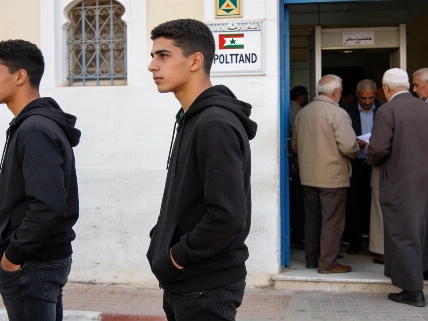
One of the clearest signs of Morocco's democratic challenges is the lack of youth participation. Only 4% of voters are aged 18-24, and more than 2.9 million young people aged 15-29 are not in employment, education, or training, according to the High Commission for Planning. Both Reuters and MAP report that parties are struggling to reach young voters, making youth disengagement a key issue in this election. The constitutional recognition of Amazigh identity has not yet translated into equal access to services, and the challenge remains to turn identity-based solidarity into civic participation rather than a fallback for exclusion.
As parties ramp up promises and campaign spending, there is a risk that more actors will only deepen clientelist habits. The recent wave of spending pledges by opposition blocs shows how electoral competition can become a contest of patronage rather than policy. The Algerian Press Service (APS) has noted similar patterns in Algeria, where fragmented elections often lead to coalition governments with little capacity for reform.
What's at stake for Morocco's political culture?
The 2026 elections are more than a procedural event. They will show whether Morocco can move from networks to rights, from personal proximity to public accountability. The outcome will reveal if institutions can overcome the pull of neo-tribalism and clientelism, or if the hybrid system will keep blocking the rise of a modern, rights-based political culture.
Morocco is at a turning point. Whether its institutions can reduce regional inequalities, engage young people, and deliver on the promise of equal citizenship will decide if political modernization is more than a slogan. For now, the evidence suggests that old habits of networks and proximity still run deep. Only a real change in political practice-not just new laws-will break the cycle. The 2026 vote will be the clearest sign yet of whether Morocco is ready to move past neo-tribalism and build a political order based on rights and accountability.