
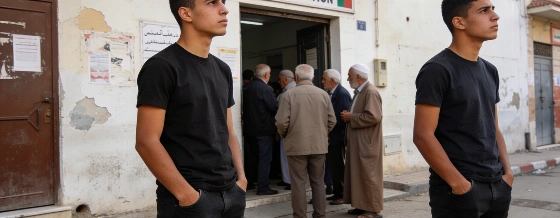
Morocco's political parties are racing to convince a skeptical youth population to participate in the upcoming election, deploying pledges of job creation and affordable housing after a year marked by violent protests and mass migration attempts.
Morocco's political parties are trying to reconnect with young voters, offering pledges of a million new jobs and affordable housing. The stakes are high: last year's protests, led by Gen Z, and the rush on Ceuta's border showed just how frustrated many young people are-and how far some are willing to go to leave the system behind.
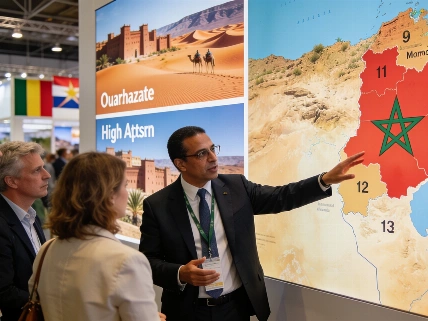
With parliamentary elections set for September 23, the National Rally of Independents (RNI) and the Authenticity and Modernity Party (PAM), both founded by figures close to the palace, have put youth employment at the center of their campaigns. Their platforms highlight $20 billion in infrastructure spending ahead of the 2030 World Cup, which Morocco will co-host with Spain and Portugal. Rallies are streamed on social media, hoping to reach a generation that has largely tuned out. According to the Ministry of the Interior, 15,801,162 voters are registered for the 2026 legislative elections. The campaign runs from September 10 to 22, with a record 1,850 candidate lists submitted-over 7,200 candidates in total, or more than 18 contenders per seat (official government data).
Trust deficit and political fatigue
The numbers show how few young people are engaged: 18- to 24-year-olds make up 12% of Morocco's population but only 3-4% of registered voters, according to both the Ministry of the Interior and independent reports from MAP and Al Jazeera. The electorate is much older overall, with nearly 29% of registered voters aged 60 and above. A March survey cited by Eurasia Review and Afrobarometer found that only about a third of Moroccans aged 18 to 35 trust parliament, the prime minister, or political parties. Many young people see little difference between the parties or believe elections just shuffle the same politicians without real change, a view echoed in regional coverage by the Maghreb Arab Press (MAP).
The monarchy still sets Morocco's main policy direction and has tightened its hold over key ministries in recent years. Economist Rachid Aourraz points out that parties now compete less over the country's development model and more over how to carry out the palace's agenda. Mohamed Masbah of the Moroccan Institute for Policy Analysis notes that when things go well, the monarchy gets the credit, but when policies fail, the government takes the blame. This year's campaign features 27 parties. The RNI, PAM, and Istiqlal lead the ruling coalition, while the Justice and Development Party (PJD) is trying to recover from its 2021 defeat, as reported by Reuters and regional agencies.
Economic ambitions and social reality
Morocco's "New Development Model" aims to double GDP per capita by 2035, and billions have gone into manufacturing, ports, green energy, and railways. But these investments haven't led to broad satisfaction. Youth unemployment is at 27%, the highest of any age group, and one in three young Moroccans is neither working, studying, nor training. The central bank has acknowledged that there's a growing gap between official economic numbers and how people actually feel, with persistent unemployment fueling frustration. The government's economic goals are regularly highlighted in statements from the Ministry of Economy and Finance and covered by regional outlets like the Maghreb Arab Press.
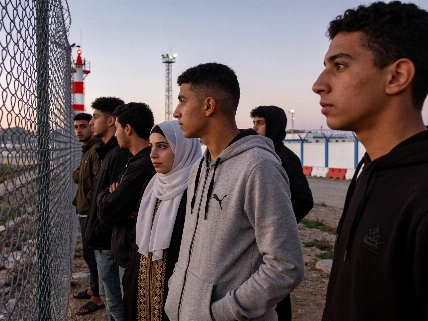
Recent events have forced parties to face this disconnect. The Ceuta border rush in July, described by Masbah as "a new form of social protest in which many citizens demonstrated a physical exit from Moroccan politics altogether," made the scale of youth alienation impossible to ignore. The political landscape has shifted, too: five years ago, the moderate Islamist party suffered a heavy defeat, losing power to the current palace-aligned parties. The 2026 campaign, monitored by the Ministry of the Interior and reported by MAP, has seen a wave of spending promises and social reform proposals, including the Left Alliance's $53 billion program, as parties try to win back trust with ambitious reforms.
Analysis
The government's push to use infrastructure projects and World Cup plans to address youth frustration runs up against a deeper problem: many young Moroccans no longer believe the system can deliver. Unless parties find a way to close the gap between economic statistics and daily reality, protests, migration, and political disengagement are likely to continue. The upcoming election will show whether promises are enough to rebuild trust, or if Morocco's youth will keep looking for a way out. For official updates and further information, see the Moroccan government portal.