Tunisia's summer was defined by rolling blackouts and water shortages, exposing the government's inability to maintain essential services amid record heat, mounting debt, and a population losing faith in President Kais Saied's leadership.
When the lights went out in Tunis, it wasn't just a technical glitch-it was a sign of how far the state's ability to function has slipped. Whole neighborhoods, from La Marsa to Le Kram West, sat in darkness for hours, often during the worst heatwaves anyone could remember. Air conditioners and fans stopped. Water taps ran dry. For many, the only question left was how long the outages would last. In August 2026, the Tunisian water observatory logged 402 formal complaints and 361 documented interruptions to drinking water across the country. Twenty-four separate protests broke out over water shortages, a measure of how widespread and raw the frustration had become (Babnet).
President Kais Saied blamed the outages on saboteurs and conspiracies, telling the public that "the enemies of the homeland and their allies have been unmasked in the eyes of the Tunisian people." On 16 September 2026, he went further, calling the summer's water and electricity disruptions criminal acts and accusing unnamed groups of deliberate sabotage, according to Tunis Afrique Presse (TAP) and regional media. But these claims rang hollow for many. "We pay our electricity bills, yet we are left sitting in the dark for hours," said Nadia, a resident of Sidi Bou Said. "The president talks about conspiracies and sabotage, but people want to know why the state can't keep the electricity running."
Infrastructure buckles under heat and debt
Late July brought record temperatures-up to 47°C-and electricity demand jumped 33 percent above normal, reaching 6 gigawatts, according to the World Bank. Tunisia's energy system was already under strain. Years of underinvestment in renewables left the country dependent on gas-fired power stations, just as domestic gas production fell and imports grew. The state utility, Société Tunisienne de l'Électricité et du Gaz (STEG), was deep in debt: $2.6 billion by June, plus another $2.1 billion in unpaid bills from customers and public institutions. Reports from France 24 and Inkyfada pointed to more than just the heatwave-aging infrastructure, reliance on electricity for water pumping, and STEG's financial troubles have all made things worse.
STEG said the rolling blackouts were needed to avoid a total grid collapse. For most people, that distinction didn't matter. The outages hit hardest during the hottest hours, putting hospitals under pressure and endangering vulnerable patients. At poultry farms, the impact was severe-one farm in El Fahs lost nearly 90 percent of its chickens after a long outage knocked out both ventilation and backup generators. The National Water Distribution Utility (SONEDE) reported a new disruption in the south on 15 September 2026 after a second rupture of a 1000mm main near the Zarate desalination plant. Water was not expected to be restored until after midnight on 16 September, according to official statements.
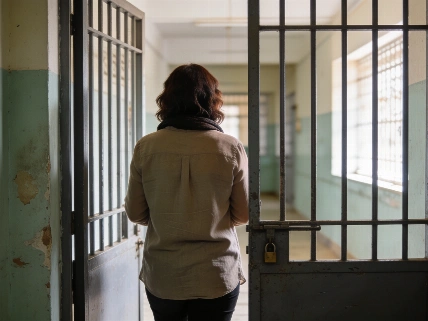
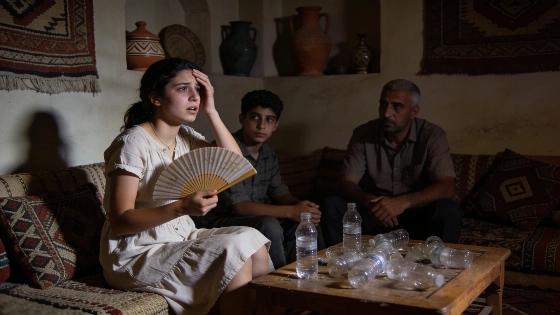
Water shortages made things worse. Blackouts shut down pumping stations, leaving even wealthier parts of Tunis scrambling for bottled water. Supermarket shelves in La Marsa were empty, and shop owners rationed what little they had. Fights broke out in lines, and in some cases, trucks carrying bottled water were ransacked. Authorities seized more than 147,000 litres of hoarded water, but prices kept rising, especially for chilled bottles. For many, bottled water was a necessity-81 percent of Tunisians told Gallup in 2022 they were dissatisfied with tap water quality. By late August, the government started distributing water by truck to the hardest-hit areas, but shortages lingered. The situation was especially dire in prisons, where deaths during the heatwave and water outages drew alarm from rights groups and the media (France 24).
By mid-September, bottled water supplies began to recover, with major retailers reporting normal stock levels. The shortage was blamed on the heat, surging demand, and power cuts that disrupted the supply chain. In response, Tunisian authorities and industry sources announced plans to boost the country's strategic bottled water reserve to 200 million liters in 2027, up from about 70 million in 2026, as reported by TAP and sector media.
Political paralysis and public disillusionment
President Saied's habit of blaming rivals is losing its effect. Moncef Marzouki, Tunisia's first post-revolution president, accused Saied of "complete paralysis" and "a remarkable ability to destroy the state, the economy, and society through a discourse of accusations of treason and hatred." Even some who once backed Saied's outsider campaign in 2019 have lost patience. "Five years later, his promises have only brought us chaos. His words are cheap," said Karim, an unemployed graduate.
Despite the anger, protests have stayed scattered. Analyst Michael Ayari noted that unrest is building but hasn't yet turned into a coordinated movement. "His greatest political asset has long been that many Tunisians blamed the pre-2021 political establishment more than they blamed him. That protective buffer appears to be weakening." Mohamed, a resident of Ettadamen, put it simply: "We used to complain about corruption and politicians, but now we are complaining about things that should be basic: electricity, water, rubbish collection."
Opposition parties have been weakened by arrests and prosecutions. The National Salvation Front's Ahmed Nejib Chebbi received a 12-year sentence in the "conspiracy case," and in September, Tunisia's Court of Cassation upheld long sentences against dozens of opposition figures. New challengers like Mondher Zenaidi and Olfa Hamdi have tried to step in, but the political space has narrowed. The Nafas movement's efforts to unite opposition parties have run into the same obstacles.
External lifelines and regional leverage
As Tunisia's crisis deepens, foreign actors are gaining influence. Algeria, whose president has close ties with Saied, has provided loans, deposits, and preferential energy deals. In October 2025, the two countries signed a new defence cooperation agreement, and in July, Tunisia said it wanted to upgrade the relationship to a "comprehensive strategic partnership." This dependence gives Algiers leverage at a time when European relations are tense but still focused on migration, border control, and energy. The Algerian Press Service (APS) and Tunisia's Ministry of Foreign Affairs have both highlighted the strategic nature of these ties in recent statements.
For more on Tunisia's shifting regional alliances, see this earlier report.
Households under pressure as inflation bites
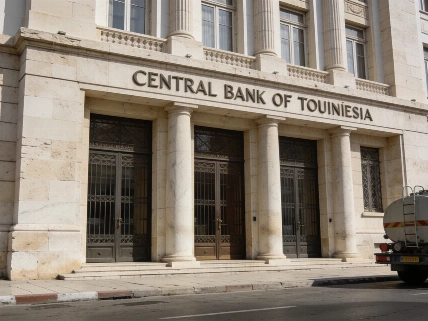
Inflation is wearing down what little resilience remains. In August, annual inflation reached 5.4 percent, with food prices up 7.5 percent year on year. The government has relied on domestic borrowing and the central bank to cover its needs, turning down a $1.9 billion IMF program and limiting its ability to invest in infrastructure. The World Bank puts public debt at 82.2 percent of GDP in 2025, with Fitch expecting it to rise to 85 percent this year. Unemployment is stuck at 15 percent, and basic expenses are out of reach for many families. Amel, a 24-year-old civil servant, described the choices: "If you are retired or have a low salary, you have to choose between buying your medicine and paying for food."
Even essential medicines have become harder to find and more expensive, after the Central Pharmacy of Tunisia approved price hikes for around 300 treatments in July. The government says the increases are needed to keep supplies available, but the move has angered patients, MPs, and the UGTT labour union.
With the rainy season approaching, Tunisia's battered infrastructure faces another test. "Whenever the rains come, the country grinds to a halt because none of the shitty infrastructure can withstand the elements," said Karim. "Unless Saied brings in the right people who start fixing these issues, or at least gives us a timeline of when the issues will finally be addressed, people will come out onto the streets. And the numbers could be far greater than anything we've witnessed so far."
Tunisia's crisis is no longer about political intrigue or economic theory-it's daily life for millions. The government's failure to provide electricity, water, and basic services has stripped away public trust. As populist narratives lose their hold and the state's capacity erodes, the risk is not just more unrest but a deeper unraveling of Tunisia's social contract. The coming months will show whether Saied's administration can reverse the slide, or if this summer's turmoil is only the beginning of a larger reckoning.