

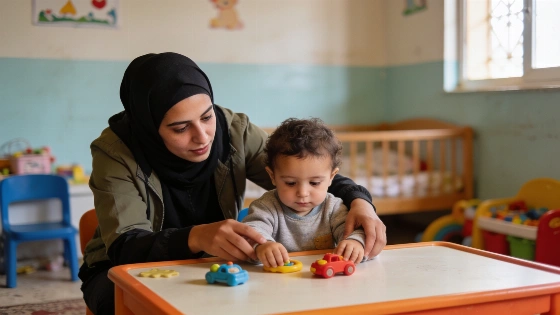
Morocco's strategy sets 2035 targets for childcare and elderly care while seeking to formalise care work and lift women's economic participation. SouthBridge provided technical and advisory support.
Unpaid care has historically fallen largely to Moroccan families, particularly women, limiting their opportunities to participate in paid work. The country's new strategy sets targets for 2035, including structured childcare access for 40% of children aged zero to three and care services for 30% of the elderly population.
Morocco is the first country in the Arab region and the second in Africa to adopt a national strategy dedicated to the care economy. The Ministry of Solidarity, Social Integration, and Family (MSISF) unveiled it in Rabat on 16 July 2026, aiming to build an integrated and resilient care system.
Targets and projected employment
The action programme sets out around 100 measures, grouped under 21 orientations across five strategic pillars. It aims to raise women's economic participation to 45%, mobilise 57,000 social assistants and move half of workers currently in informal care into formal employment.
Its framework follows the International Labour Organization (ILO) 5R approach. The first three principles address unpaid care by recognising it and reducing its burden through redistribution. The other two focus on rewarding paid care workers and representing them. More broadly, the 5R approach is associated with public investment in affordable childcare and eldercare, alongside professional training and decent working conditions.
Analyses underpinning the strategy estimate that developing the care economy could generate 1.3 million jobs by 2035. That is a projection, not a reported outcome, a distinction also relevant to Morocco's aquaculture capacity figures.
SouthBridge's role and implementation
SouthBridge, a Casablanca-based management consultancy, provided technical and advisory support during the strategy's development. Its reported work included an assessment of the care economy and international benchmarking, followed by help identifying priorities and practical measures.
The ministry's public communications referred to an unnamed consultancy. Moroccan media reports identified SouthBridge, which confirmed its involvement in a LinkedIn post later in July. The firm also argued for treating care as an investment that can support economic growth and employment while building human capital.
At the strategy's launch, SouthBridge partner Lina Lahrichi moderated a panel on implementation. Participants discussed coordination among public and private actors, alongside civil society and technical and financial partners. They also addressed locally adapted care services and more equitable access across Morocco.
UN Women Deputy Executive Director Nyaradzayi Gumbonzvanda said: "Care can no longer be treated as a private responsibility borne primarily by women. It must be recognized as a public good, an essential service, a source of decent employment, and a pillar of inclusive and resilient economies. This strategy is a significant step forward for Morocco and for our shared vision of transforming care systems as a foundation for equality, dignity and sustainable development,"







