

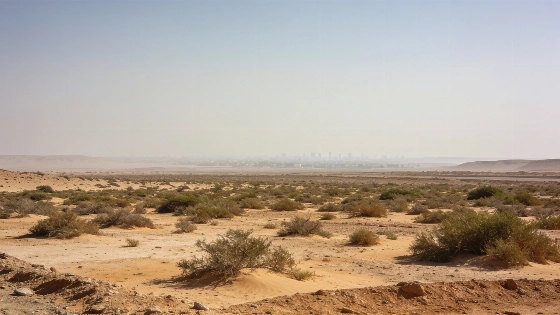
WSRW's reading of Morocco's 2027 draft Finance Bill places four of six planned green hydrogen projects in occupied Western Sahara. The bill records preliminary land contracts and pre-FEED studies but does not name sites or investor allocations.
The six-project first portfolio covers USD 34 billion in planned investment and 6.5 gigawatts of electrolysis capacity. It is intended to produce one million tonnes of green hydrogen a year, primarily for ammonia, with other planned uses including synthetic fuels, green steel and methanol. Morocco's state-led "Morocco Offer" was extended in March 2025 to six hydrogen and ammonia projects backed by five investor groups. That programme was reported at approximately USD 30 billion in planned investment, while the draft-budget account puts the portfolio at USD 34 billion. The projects form part of an export-oriented development plan for Morocco's southern regions.
Three projects are assigned to Dakhla-Oued Ed-Dahab, which lies entirely within occupied Western Sahara. A fourth is in Laâyoune-Sakia El Hamra; other sources identify its precise location. Morocco's framework reportedly permits public land allocations of up to 30,000 hectares per project in the south, alongside renewable-power and export infrastructure.
What the budget records
Page 133 of the Explanatory Note on the Draft Finance Bill for Fiscal Year 2027 describes six industrial projects involving five investors across Morocco's southern administrative regions. It says the programme has reached the stage of signing "the first preliminary land reservation contracts" and launching pre-FEED (Front-End Engineering Design) studies. The document does not identify the sites or link individual land allocations to specific projects. The development package covers renewable power, electrolysis, hydrogen derivatives and export infrastructure; ammonia is a principal planned product.
The other two projects are in Guelmim-Oued Noun, a region that is almost entirely in Morocco proper. A small southeastern strip crosses into Western Sahara, but WSRW says it is far from the Atlantic Ocean and not relevant to projects of this kind. Based on that assessment and the known location in Laâyoune-Sakia El Hamra, WSRW concludes that four projects are in occupied Western Sahara.
Investors and legal status
The five selected investors are ORNX, comprising Ortus, Acciona and Nordex; TAQA-Moeve; ACWA Power; a Chinese consortium of United Energy Group and China Three Gorges; and Nareva, owned by the Moroccan royal family through Al Mada. The budget does not say which investor received land for two projects.
WSRW first reported the land allocations in February 2026, when TAQA-Moeve was reported to have obtained land for a Dakhla project and ORNX for one in El Aaiún. A related budget analysis reported that the draft bill forecasts 3.7% growth and a financing need equal to 3% of GDP. Morocco expanded the "Morocco Offer" in March 2025 after selecting five international investor groups for six large-scale projects, including groups involving ACWA Power and TAQA-Moeve.
The United Nations lists Western Sahara as a Non-Self-Governing Territory. Morocco has no recognised sovereignty over it and, as the occupying power, cannot lawfully dispose of its land and natural resources without the consent of the Saharawi people. European legal precedent also treats Morocco and Western Sahara as distinct territories when applying EU agreements. The Court of Justice of the European Union's 21 December 2016 ruling in Polisario v Council addressed that territorial distinction; in 2024, the court ruled that EU-Morocco trade agreements could not cover Western Sahara without the consent of its people. European Parliament materials have cited the distinction between the two territories.
"Morocco's own budget shows that occupied Western Sahara is becoming a major frontier for green hydrogen," says Sara Eyckmans of WSRW. "Companies accepting land from an occupying power cannot ignore the territory's legal status. They must address the Saharawi people's right to self-determination and obtain their consent."
In 2025, WSRW wrote to the selected investors about project locations and legal due diligence; none gave a substantive response addressing its concerns. On 28 October 2026, WSRW asked China Three Gorges, United Energy Group and ACWA Power whether their allocated plots are within the occupied territory and how they intend to respect the Saharawi people's rights.







