

The report accompanying Morocco's 2027 draft Finance Bill forecasts a 1.6-percentage-point drop in the financing requirement alongside 3.7% growth, with investment and exports projected to strengthen.
Household consumption is expected to provide the largest demand-side contribution to Morocco's projected growth in 2027, adding 2.4 percentage points as incomes and remittances from Moroccans living abroad support spending. Government consumption is forecast to rise by 6.4% and contribute a further 1.2 points.
Domestic demand supports the growth outlook
The Ministry of Economy and Finance published the draft Finance Bill for 2027 and its accompanying economic and financial report on October 26, 2026. The report, one of 13 documents accompanying the draft bill, projects real GDP growth of 3.7% in 2027, following expected growth of 4.7% in 2026. The Ministry's budget documents forecast agricultural value added to increase by 0.5%, while non-agricultural activity expands by around 4%.
Within that forecast, the secondary sector is projected to grow by 3.9% and services by 4.1%.
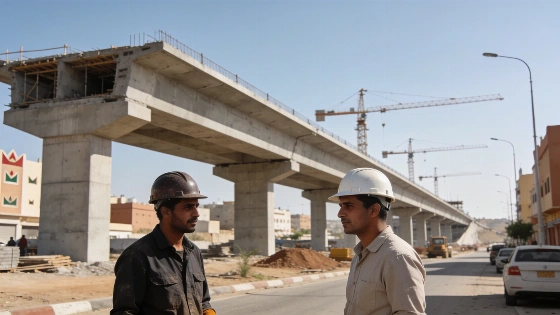
Gross fixed capital formation is forecast to rise by 5.6%, contributing 1.7 percentage points to growth. The report ties that outlook to major infrastructure and structural projects, with capital spending rising and foreign direct investment inflows increasing. Maghreb Insider has separately covered planned rail expansion in Morocco.
Trade drag is projected to narrow
Exports of goods and services are forecast to increase by 8.6%, ahead of the projected 8% rise in imports. The negative contribution of foreign trade to growth is expected to ease from 1.5 percentage points in 2026 to 0.7 points in 2027.
Separately, the report projects Morocco's national-economy financing requirement at 3% of GDP in 2027, down from 4.6% in 2026, a forecast improvement of 1.6 percentage points. This measure is distinct from the government's gross financing needs, which include debt repayments as well as budget financing.
The draft budget puts the state's gross financing needs at about 159 billion dirhams in 2027, 7.4% below the preceding year. The estimate includes 69.4 billion dirhams in medium- and long-term debt amortization. The budget analysis also reports an overall deficit of 88.7 billion dirhams before borrowing and debt repayment, alongside an ordinary balance of 49.3 billion dirhams.
The government plans 120 billion dirhams in medium- and long-term borrowing, divided equally between domestic and external financing, with the mix subject to market conditions. Treasury debt is forecast to edge down from 67.5% of GDP in 2026 to 66.9% in 2027. The draft bill retains a fiscal-deficit target of 3% of GDP despite increased social-program spending and tax reductions; Finance and Economy Minister Fouzi Lekjaa presented it to Parliament in October 2026. The projections remain part of a draft budget pending parliamentary approval.







