
Morocco's $10.1 billion high-speed rail project is picking up speed. Five international contractors are now preparing bids to build major new stations along the Kenitra-Marrakech line, backed by €405 million from the African Development Bank.
Five international contractors are now in the running to build five major stations on Morocco's $10.1 billion high-speed rail extension. The project gained momentum after Morocco's government and the African Development Bank (AfDB) signed two key agreements on 17 September 2026. These deals secured €405 million in financing, or about 4.42 billion Moroccan dirhams, according to several independent reports and the Moroccan Ministry of Economy and Finance. The Kenitra-Marrakech corridor is a central route for both Morocco and the wider Maghreb. With AfDB's backing, it is set to anchor Morocco's next wave of rail upgrades. The Maghreb Arab Press (MAP) has linked this support to the country's broader push to modernize its infrastructure.
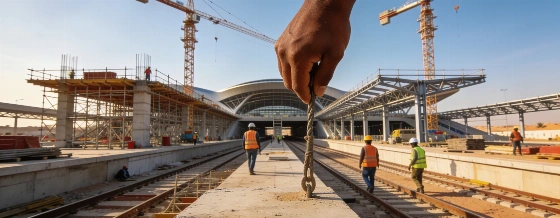
The project is big. The 430-kilometer extension will push the Al Boraq line south to Marrakech. It aims to connect 43 cities and change how people travel across the country. The five stations-LGV Ville Verte de Benguerir, RER Ville Verte de Benguerir, Sidi Bouathmane, Sidi Ghanem, and Stade de Marrakech-are now up for bid. Each one is a key stop for regional travel and passenger flow. The AfDB says €205 million of the funding is set aside for the Kenitra-Marrakech corridor. This money will help expand high-speed lines and upgrade older tracks. The other €200 million goes to the Cap Compétences 2030 program, which ties rail upgrades to job training and workforce skills. Morocco's Ministry of Transport and Logistics has also pointed to this dual focus in recent statements.
Contractor bidding heats up as funding confirmed
With the African Development Bank's €405 million now locked in, the high-speed rail project has moved from planning to real procurement. The latest tender for the Kenitra-Marrakech section has a budget of about 480 million dirhams. Bids are due by 29 October 2026, according to sector listings and the Moroccan National Railways Office (ONCF). The AfDB's financial backing has set off a race among construction firms, each hoping to win a piece of the five-station build. The United Nations Economic Commission for Africa (UNECA) has called Morocco's rail investments a model for regional integration and greener transport in North Africa.
Morocco's rail plan goes beyond new tracks. The country is putting 53 billion dirhams into infrastructure and equipment, and 29 billion dirhams into buying 168 new trains. This shows the scale of the upgrade. The five stations now up for bid are just one part of a bigger plan to link high-speed and regular lines. New transport hubs are meant to make it easier for passengers to move around the country. The Ministry of Equipment and Water says these projects fit with Morocco's promises under the African Union's Agenda 2063 for better links across the continent.
Strategic impact and project hurdles
The Kenitra-Marrakech extension is more than just a build. It's a test of Morocco's ability to handle big, complex projects. Running five station tenders at once, tying new stations into old lines, and setting up new transport hubs all bring tough challenges. The timeline is tight. Contractors should be picked by late 2026, with building set to start in 2027. The start date for high-speed service is still open, but the goal to reach 43 cities is already shaping how companies bid and how the project is managed. Regional outlets like Tunis Afrique Presse (TAP) say Morocco's approach could become a model for other Maghreb countries, as Algeria and Tunisia work on their own transport upgrades.
Morocco's push for new infrastructure is clear, but the country's wider public investment plans are under the spotlight. As reported earlier, political groups are putting forward different ideas for national growth. There's a debate over whether to focus on big infrastructure or social reforms as the 2026 deadline approaches. The link between major transport projects and building up the workforce is now a key part of government policy, as seen in the two-track AfDB deal.
What comes next
Attention is now on which contractors will be chosen and whether Morocco's project teams can manage several big station builds without delays or cost overruns. The African Development Bank's funding has cleared a major hurdle, but the risk of problems remains high given the challenge of adding new stations to a working rail network. The next year will show if Morocco can turn its rail ambitions into working trains, setting a new standard for the region. The size and speed of this project mark a new chapter for North African transport, but only careful management will decide if high-speed rail becomes a reality. For official updates, readers can check the Moroccan Ministry of Economy and Finance portal.