
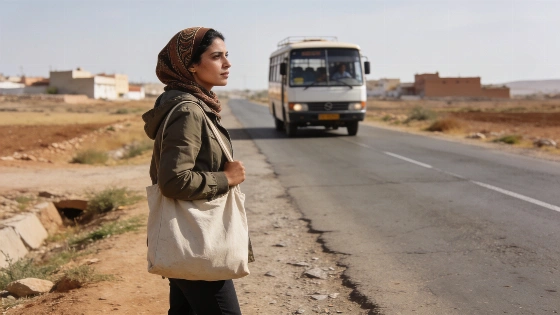
Morocco has brought gender-responsive budgeting to 35 ministerial departments and trained more than 800 officials. Now the test is whether that work changes public spending and improves women's access to transport, jobs and essential services.
Women in Morocco remain far less likely than men to take part in the economy. The latest published figures from the High Commission for Planning (HCP), reported in September-October 2026, put women's activity rate at 18.1%, compared with 66.5% for men. Women make up 21.5% of the workforce. HCP figures also show 20.5% unemployment among women and 37.2% among young people aged 15-24. The gap is clear.
In rural areas, transport can make it harder to reach jobs and essential services when services are scarce, irregular or unsafe. That is where gender budgeting faces a practical test: does public spending address the barriers women encounter?
Morocco has spent years building the framework. The next task is to make it shape budget choices and track results, rather than simply appear in plans and reports.
Gender-responsive budgeting does not mean setting up a separate budget for women. It brings a gender perspective into existing public financial management. Analysis, objectives and indicators can then guide planning, resource allocation and monitoring.
Morocco began developing this approach in the early 2000s. A major step came in 2015, when reform of the Organic Finance Law made gender budgeting part of the budget process across ministries. The Center of Excellence for Gender-Sensitive Budgeting (CE-BSG), within the Ministry of Economy and Finance, supports the work with sector analysis, government training and an annual Gender Budget Report. As reported in 2026, the framework covers 35 ministerial departments. CE-BSG has trained more than 800 officials in central and regional administrations. The Ministry's 2025 activity report confirmed continued work to strengthen the mechanism as part of reforms to social policy, investment and public financial management. The Ministry of Economy and Finance shares information on its official portal.
CE-BSG Director Ahmed Berrada has said the initiative has reached a decisive stage. Gender considerations are now entering a consolidation phase within the budget process. The framework is in place. Its value depends on what ministries do with it.
A 2025 Gender Sector Analysis by Morocco's Ministry of Transport and Logistics looked at how women and men experience transport, particularly in rural areas. It found insufficient services, inadequate infrastructure and irregular service frequency. The analysis also identified safety concerns and harassment. Transport policy must account for differences in access and use.
These gaps affect daily life. Unreliable or unsafe journeys can limit women's mobility and their ability to reach education, services and work. The question is whether evidence from the Transport and Logistics Ministry changes sector planning and how public resources are allocated and used.
Morocco piloted a Gender Equality Marker in 2024-2025. The tool classifies and verifies how far public expenditure contributes to gender equality. It could shift attention from whether budgets mention gender to whether spending supports stated objectives.
The report Gender Budgeting in Morocco: Challenges, Opportunities and Lessons from Global Evidence names several conditions for effective gender budgeting: political commitment, government capacity, a sound legal and institutional framework, and ways to monitor results using data. It also points to room to strengthen implementation at the decentralized level and improve monitoring and evaluation.
The World Bank supports the agenda through analytical work, technical assistance and operations. Morocco is one of the World Bank Group's Fast-Track countries under the Gender Strategy 2024-2030. The ENNAJAA project connects gender budgeting with medium-term budget programming through gender budget tagging in ministerial triennial planning cycles. It has also supported CE-BSG training for more than 800 civil servants across central and regional government.
The question of whether reforms reach public services also runs through Morocco's public trust coverage. Here, the measure is more specific: whether gender evidence changes transport decisions and the services women can use.
Morocco has moved beyond introducing gender budgeting. Its laws, institutions and tools are in place. The measure now is whether implementation produces measurable improvements and whether officials answer for the results. Without that link, gender budgeting risks becoming a reporting system. With it, public finance can help narrow gender gaps.