Morocco's campaign to suppress philosophy education under Hassan II fundamentally altered the country's intellectual landscape, clearing the way for conservative and Islamist dominance in schools and leaving a legacy that continues to shape Moroccan society.
When Moroccan authorities moved to erase philosophy from the classroom, they did more than just change a curriculum. They engineered a generational shift in how Moroccans think, debate, and dissent-deliberately weakening the foundations of critical inquiry in favor of ideological conformity.
The most consequential blow landed in the 1980s, when the Ministry of Education, under Azeddine Laraki, formally subordinated philosophy to Islamic thought. This was not a bureaucratic shuffle. It was a calculated act, following years of mounting pressure from conservatives and Islamists who branded philosophy as subversive, atheistic, and corrosive to traditional values. The result: philosophy was not just marginalized, it was recast as a threat to the regime and to the moral order itself.
How the state dismantled critical thinking
Morocco's post-independence education system once mirrored France's, with philosophy occupying a central place in the final year of secondary school. Students engaged with Plato, Aristotle, Nietzsche, and Hegel-not to become philosophers, but to learn how to think. Noureddine Saïl, a pioneering Moroccan philosophy teacher, described it as a rare opportunity for students to grapple with humanity's greatest ideas, a "sport" otherwise out of reach.
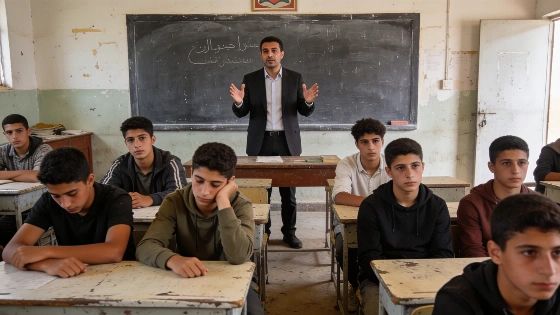
This golden age was short-lived. By the early 1970s, the regime's priorities shifted. The closure of the Institute of Sociology in 1970, following a protracted student strike, signaled the start of a broader campaign against disciplines that fostered independent analysis. Arabization policies accelerated the purge. French-trained philosophy teachers, unwilling to teach the newly imposed Islamic thought modules, left en masse. Their replacements, often trained in Arabic and steeped in conservative traditions, narrowed the curriculum to rote memorization and traditional texts, sidelining modern and critical perspectives.
Ahmed Al Motamassik, who led the Moroccan Association of Philosophy Teachers (AMEP) after Saïl, recalled the association's efforts to defend a liberating, critical philosophy. Yet even their modest victories-such as securing more classroom hours for philosophy-were quickly reversed as the state tightened its grip. The pedagogical shift was unmistakable: students were no longer encouraged to question, but to absorb and obey.
Islamist ascendancy and the cost of intellectual retreat
As philosophy withered, Islamists seized the vacuum. From the 1970s onward, they built their ideological project on the ruins of what they openly called an "enemy" discipline. The state's campaign against philosophy, intended to neutralize dissent, instead handed the intellectual initiative to Islamist movements. By the time the Alternance government attempted to revive philosophy education in the late 1990s, the damage was entrenched. Textbooks still described philosophy as "the essence of degeneration," and the stigma persisted in public discourse.
Royal Advisor Omar Azziman, reflecting in 2017, traced the discipline's trajectory: from a pillar of post-independence education, to its systematic sidelining, and finally to its partial, fragile reintroduction under King Mohammed VI. Even today, philosophy's place in Moroccan schools remains contested, with course hours limited and its legitimacy under constant attack from conservative quarters.
For those who engineered the purge, the logic was simple: knowledge is power, and critical thinking is dangerous. Tahar Ben Jelloun, a former philosophy teacher and acclaimed writer, put it bluntly-philosophy was targeted because it equipped Moroccans with the tools to question authority. The regime's fear was not misplaced. But in seeking to control the minds of its youth, it opened the door to a different kind of orthodoxy, one less amenable to dialogue and reform.
Morocco's experiment in intellectual containment offers a cautionary lesson. When a state decides that critical thinking is a threat, it does not merely silence dissent-it impoverishes its own future. The legacy of this campaign is visible in every classroom where students are taught to memorize rather than to question, and in every public debate where conformity trumps curiosity. The cost is not just academic; it is societal, and it will not be easily reversed.