Morocco's Justice and Development Party is attempting a comeback after losing 112 parliamentary seats in 2021. With Abdelilah Benkirane back at the helm, the PJD is betting on practical reforms and youth engagement but faces entrenched constraints.
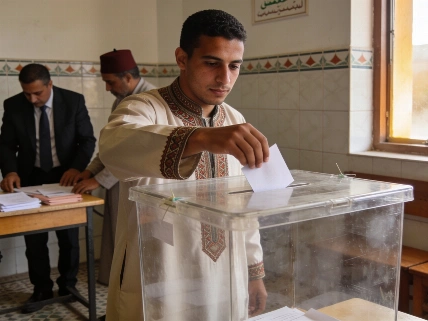
Morocco's Justice and Development Party (PJD) is still reeling from its steep fall in the 2021 parliamentary election, when it dropped from 125 to just 13 seats. Abdelilah Benkirane has returned as party leader, but the challenge is bigger than his public profile. The PJD now has to show it can regain trust and relevance in a system where the monarchy holds the final say. In the 2021 vote, the National Rally of Independents (RNI) won 102 seats, while the Authenticity and Modernity Party (PAM) and Istiqlal Party joined the new ruling coalition, shifting the balance in parliament.
For ten years, the PJD benefited from the momentum of post-2011 reforms and public calls for more accountable government. The 2011 constitutional changes gave Parliament and the government more formal powers, but the king kept control over key decisions, including appointing the head of government and leading the Council of Ministers. The PJD won 107 seats in 2011 and 125 in 2016, but coalition disputes and internal divisions exposed its weaknesses. When King Mohammed VI replaced Benkirane with Saadeddine Othmani in 2017, the party's hold on power began to slip, leading to its collapse in 2021 as the RNI surged ahead.
The Benkirane factor and the challenge of substance
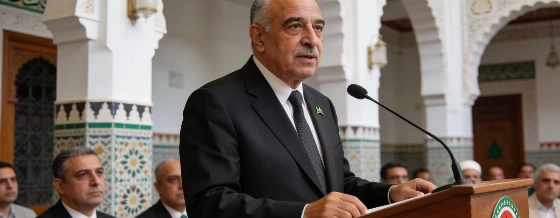
Benkirane's return has brought the party more media attention and a direct communication style. Still, the PJD's own review admits that visibility alone won't win back the 112 lost seats. The real task is turning Benkirane's personal appeal into lasting support for the party, especially among voters who felt let down by its time in government. Analysts cited by the Maghreb Arab Press (MAP) point out that while Benkirane's approach relies on public engagement, skepticism remains both inside the party and among the wider public.
The PJD's 2026 programme lists 467 measures covering identity, political reform, public services, the economy, and foreign policy. It promises more transparency in public procurement, tighter rules on conflicts of interest, and better public services. The focus is on practical issues-prices, jobs, schools, hospitals, and corruption-rather than ideological debates. The party also highlights housing, social protection, food, water, and energy security, echoing priorities from recent statements by Morocco's Ministry of Economy and Finance.
Saad al-Sabahi, from the PJD's regional secretariat in Casablanca-Settat, said the programme was shaped by studies, consultations, and online proposals, aiming to address sectors that directly affect people's lives. He said, "These commitments, among others, form the basis of the agreement between the party and voters. We will work to fulfil and implement them with integrity and competence."
Internal reckoning and the limits of power
After 2021, the PJD has been frank about its mistakes in political and organizational decisions. The party also blames electoral corruption and disinformation for its defeat, though these claims are its own and not independently confirmed. The scale of the loss forced the PJD to confront how its years in government distanced it from its base, especially younger voters. According to the Tunis Afrique Presse (TAP), similar generational divides and calls for youth engagement are common across North African parties.
Imane Traifi of the PJD Youth argued that the party needs to involve young people beyond just asking for their votes, encouraging their ongoing participation and responsibility in politics. Yassine Elachiri, also from the PJD Youth, added that building trust with a new generation requires more than pre-election outreach.
But the PJD's ambitions run up against Morocco's political structure. Benkirane often refers to "ghosts and crocodiles"-his shorthand for entrenched or hidden interests-to describe the obstacles any government faces. The party's opposition to Morocco's normalization with Israel shows these limits: while the PJD's 2026 programme calls for resistance to normalization, the actual restoration of diplomatic ties with Israel in 2020 happened while the PJD was in government, with Othmani as head. The party opposed the move, but Othmani later defended it as a state decision, highlighting the monarchy's control over strategic policy. The upgrade of Morocco-Israel relations to embassy level in 2023 further exposed the gap between the PJD's positions and its actual power, as reported by the Middle East Monitor and confirmed by Morocco's Ministry of Foreign Affairs.
Rebuilding amid entrenched constraints
The PJD's path forward is not about challenging the monarchy, but about working within Morocco's constitutional system. Benkirane has repeatedly voiced support for the monarchy, while insisting that elected institutions should have a real role in governance. This balancing act shapes the party's current approach: focus on public services, jobs, and anti-corruption, but avoid direct confrontation with the palace.
Restoring credibility means more than winning back seats. The PJD has to show it learned from its time in government and can deliver on its promises without repeating past mistakes. Al-Sabahi says the party will work to "restore the gains that citizens previously enjoyed and to restore their dignity and rights." The real test will be whether the PJD can turn its programme into action, given the structural limits it faces.
Morocco's political system remains centered on the monarchy, as seen in recent developments like the shift in defence cooperation with India, where key decisions are made at the top. For the PJD, the lesson is clear: recovery depends not just on leadership or ambitious plans, but on the party's ability to work within a system where real power is tightly held. The PJD's future will depend on how well it adapts, reconnects with voters, and operates within Morocco's political realities. For official updates on legislative developments and party standings, readers can consult the Moroccan state news agency.