The installation of telecom pylons on public squares in Nouakchott has triggered strong opposition from local residents and prompted intervention by authorities, raising questions about regulatory oversight and the use of public land in Mauritania's capital.
The recent construction of telecommunications pylons on public squares in several districts of Nouakchott has sparked significant resistance from local communities and led to direct intervention by municipal and regional authorities. The controversy highlights ongoing tensions over the use of public land and the regulatory processes governing infrastructure projects in Mauritania's capital.
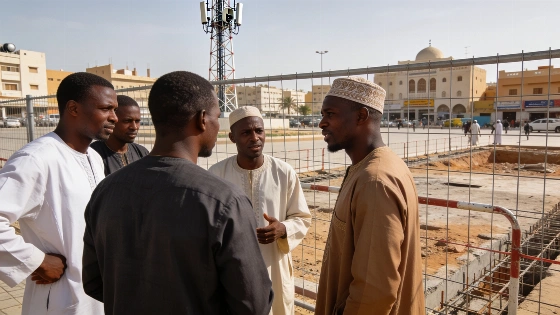
In the Carrefour district, residents were taken by surprise when work began on a new telecom antenna in a public square. According to local sources, community members quickly organized protests and notified the wali (regional governor) of Nouakchott-Sud. In response, the wali contacted the Ministry of Housing, Urban Planning and Territorial Development to clarify the legal basis for the installation. Authorities subsequently ordered a halt to the construction pending further review. A dedicated phone line was also established for residents to report any resumption of work at the site.
Multiple Districts Affected and Political Response
Similar developments occurred in the Bouhdida area of Toujounine, where another pylon was erected near a school, again provoking local opposition. Residents gathered to demand intervention from local officials, and the wali requested a formal complaint, which was submitted by the community. The issue gained further visibility when Isselkou Ould Abah, a deputy from the opposition party Rassemblement national pour la réforme et le développement (Tewassoul), publicly condemned the construction on social media. Following this, the local Tewassoul branch reported that the Ministry of Housing issued a 48-hour warning to the telecom operator responsible for the installation.
Unclear Authorisations and Regulatory Uncertainty
Representatives of the company involved reportedly presented documents they claimed were issued by the Ministry of State Domains and Heritage, authorising the construction. However, the authenticity of these documents and the identity of the issuing authority could not be independently verified. A preliminary survey by Sahara Media identified at least six pylons recently installed on public squares across Nouakchott.
Authorities in Mauritania have previously demolished unauthorised structures on public land, citing the need to preserve spaces of public interest. In 2021, the government launched a campaign to reclaim public spaces and clear residential streets as part of broader urban redevelopment efforts in Nouakchott.
What to Watch Next
The current dispute underscores the need for transparent regulatory procedures and clear communication between telecom operators, local authorities, and residents. The outcome of ongoing investigations into the legality of these installations will likely set precedents for future infrastructure projects on public land in Mauritania's urban centres.
Source: saharamedias.net