
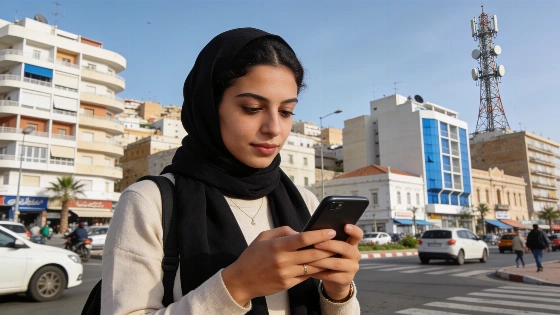
Oran has leapfrogged into the global Top 50 for mobile internet speeds, joining Algiers and placing Algeria alongside digital leaders like South Korea and the US. The country's telecom infrastructure is undergoing a rapid transformation with record-breaking gains.
Oran has vaulted into the global spotlight, overtaking Algiers to claim the 41st spot in Ookla's latest global ranking of mobile internet speeds. This marks the first time two Algerian cities have simultaneously secured positions in the world's Top 50, a feat previously reserved for digital powerhouses such as South Korea, the United States, and China.
Algiers, which had already established itself among the elite, now sits just behind Oran at 42nd place. The capital's average mobile download speed stands at 194.57 Mbps, while Oran's meteoric rise-jumping 12 places in a single month-has delivered an even higher average of 197.09 Mbps. The scale of this shift is not just statistical; it signals a fundamental change in Algeria's digital infrastructure and its ambitions for regional competitiveness.
Algeria's Telecom Modernisation Accelerates
The latest Ookla Speedtest report reveals that Algeria's mobile internet landscape is undergoing a transformation few would have predicted a year ago. National average mobile download speeds have soared from 40.86 Mbps in July 2025 to 78.36 Mbps by July 2026-a staggering 91% increase in just twelve months. Fixed broadband has not been left behind, with average speeds jumping from 50.85 Mbps to 90.45 Mbps, a 77% improvement over the same period.
This acceleration is powered by the rapid deployment and expansion of fibre optic networks across Algeria's wilayas. The government's push to modernise telecom infrastructure is now producing measurable results, with Oran's leap into the Top 50 serving as the most visible evidence yet. The presence of both Oran and Algiers in the global rankings places Algeria in a select club of nations with multiple cities at the forefront of mobile connectivity.
Regional Stakes and Competitive Consequences
Algeria's dual-city breakthrough is not just a matter of national pride. It alters the regional digital landscape, positioning the country as a credible competitor to Gulf states and established tech leaders. For investors and digital businesses, the message is clear: Algeria's urban centres are no longer digital laggards but are now viable markets for high-bandwidth services and applications.
While the telecom sector's transformation is grabbing headlines, it is part of a broader pattern of state-driven modernisation. As reported earlier, Algeria's market dynamics are shifting rapidly across multiple sectors, from automotive to digital finance, as infrastructure upgrades unlock new economic potential.
Algeria's ability to sustain this momentum will depend on whether these gains extend beyond Oran and Algiers to the rest of the country. The current trajectory suggests that the government's fibre rollout and network investments are beginning to pay off, but the real test will be nationwide coverage and the closing of urban-rural divides.
Oran's dramatic ascent in the global rankings is more than a statistical anomaly-it is a signal that Algeria's telecom sector is finally breaking out of its legacy constraints. The country's entry into the digital fast lane is not just about speed; it is about credibility, competitiveness, and the ability to attract investment in a region where digital infrastructure is increasingly a marker of economic power. If Algeria can translate these urban gains into a broader national transformation, it will have rewritten its place in the regional digital hierarchy.