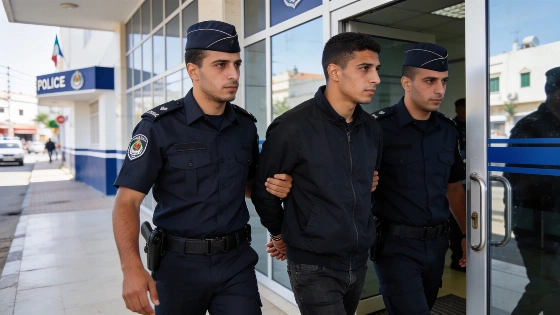
Algerian police in Blida have detained two suspects in separate cases following a viral video of an assault at a bus station and a series of online death threats targeting local officials. The cases highlight the growing use of digital evidence in law enforcement.
Algerian police in the wilaya of Blida have made two arrests this week in separate cases involving digital evidence, showing the growing role of social media in criminal investigations. The first case followed the circulation on Instagram of a viral video showing a man assaulting a woman inside a busy bus station. The second involved online posts containing insults and explicit death threats against local officials in Bouinane.
In a statement, security services said the police judicial brigades in Meftah and Bouinane acted swiftly after receiving reports of the incidents. Both suspects have since been referred to the competent prosecutor’s office.
Viral Video Leads to Rapid Identification and Arrest
The initial investigation began when images of the assault at a public transport station spread widely online. Police in Meftah quickly launched standard procedures, located the suspect and detained him shortly afterwards. The victim was brought to the police station to help reconstruct the sequence of events. The inquiry is focused on clarifying the exact circumstances of the attack in a high-traffic public space.
This approach reflects a broader trend in Algeria, where law enforcement increasingly relies on flagged online content to initiate investigations. A separate case in Boufarik shows how an investigation can follow a citizen’s complaint alongside the circulation of an incident on social media. The urban-crime unit of the First Urban Security Department identified and arrested a suspect accused of assaulting and threatening a citizen with a prohibited bladed weapon near a commercial area. Investigators worked under prosecutorial supervision before presenting the suspect to the public prosecutor at the Boufarik court, as reported by El Hayat DZ and Baraka News.
Similar methods have previously led to arrests in cases of harassment and public misconduct captured on video. In Boufarik, the complaint and subsequent referral to the prosecutor formed part of the legal process. An arrest or referral is not itself a finding of guilt.
Online Threats Target Local Officials in Bouinane
The second case in Bouinane involved the dissemination of defamatory posts and photomontages on social media. They targeted citizens and local officials with explicit threats and reputational attacks. Investigators combined fieldwork with technical analysis to identify and apprehend the individual responsible. Legal proceedings have begun, with charges including insult and defamation, along with threats and online reputation damage.
Blida has seen comparable incidents in the past, including the arrest of a content creator by the Gendarmerie nationale for incitement to hatred following a controversial video.
Judicial Response and Broader Cybercrime Trends
Both suspects now face distinct criminal charges. The first is accused of harassment and public indecency. The second is charged with insulting public officials and defamation, as well as making threats and online reputation attacks. These allegations are proceeding through the judicial process, and the referrals do not amount to convictions. The cases illustrate the legal response to digital misconduct. Authorities emphasise that anonymity online does not guarantee impunity.
The developments in Blida are part of a national pattern, as specialised cybercrime units across Algeria intensify operations in response to viral content. In a separate Constantine case reported by Algeria Today, the provincial judicial police’s cybercrime unit dismantled an alleged 10-person criminal association suspected of phone hacking and unauthorised financial transfers, as well as cryptocurrency activity linked to money laundering. Investigators said malicious software embedded in applications used to watch television channels allowed remote access to victims’ mobile phones and the theft of banking data. Police reportedly seized laptops and high-end mobile phones, then recovered victims’ bank cards after technical inquiries identified and detained suspects.
Recent examples cited in connection with the wider response include arrests in Skikda, Constantine and Chlef, where authorities acted after threatening or indecent videos spread. Police note that viral videos can accelerate investigations, while official reporting remains an impressive route for victims to bring incidents to the attention of law enforcement.