
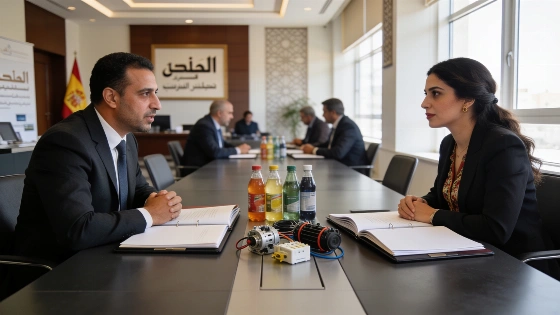
Libya's Tripoli Chamber of Commerce is set to host targeted B2B meetings with Spanish firms, aiming to unlock new investment in food, cleaning, tobacco, and electrical sectors-signaling a calculated move to diversify Libya's economic partnerships.
Libya's business establishment is making a calculated play for foreign capital: on 7 September, the Tripoli Chamber of Commerce will convene a select group of Libyan and Spanish companies for direct B2B negotiations, aiming to convert diplomatic ties into concrete commercial deals. The Chamber's move is not just another networking event-it's a deliberate attempt to channel Spanish investment into sectors where Libya seeks both technology and market access.
Behind the scenes, the Commercial Office of the Spanish Embassy in Tripoli is orchestrating the matchmaking, with a clear focus on four sectors: food industries (including beverages and juices), household insecticides and cleaning products, the tobacco industry, and medium-voltage electrical equipment. These are not random picks; each represents a segment where Libyan demand is rising and Spanish firms have proven export capacity.
Strategic Sectors and the Investment Playbook
By narrowing the agenda to these industries, the Chamber is signaling where it sees the greatest potential for rapid impact. Food processing and beverages remain a priority as Libya's population growth and shifting consumption patterns outpace domestic production. Cleaning products and insecticides are in demand as urbanization accelerates. Tobacco, despite regulatory headwinds, remains a lucrative market. And the push for medium-voltage electrical equipment reflects Libya's urgent need to stabilize and modernize its grid-an area where Spanish manufacturers have a competitive edge.
For Spanish companies, the meetings offer a rare window into a market that, while volatile, is hungry for foreign expertise and capital. The Chamber's invitation is explicit: interested parties are urged to seize the opportunity to forge strategic partnerships that could shape Libya's post-conflict economic trajectory.
Operational Context and Regional Implications
This B2B initiative lands as Libya's commercial institutions attempt to rebuild credibility and attract international partners after years of fragmentation. The Chamber's approach echoes recent moves by other Libyan authorities to modernize trade procedures and reduce friction for foreign investors-such as the reported earlier digital integration between customs and chambers of commerce.
Regionally, the event underscores Spain's intent to deepen its economic footprint in North Africa, leveraging commercial diplomacy to outpace rivals in sectors with high growth potential. For Libya, the real test will be whether these meetings translate into signed contracts and operational projects, rather than remaining at the level of diplomatic optimism.
What's clear is that the Tripoli Chamber is no longer content with passive engagement. By targeting Spanish firms and prioritizing sectors with immediate demand, it is betting on a pragmatic formula: focus, specialization, and direct negotiation. If the Chamber can deliver tangible results, it will mark a rare instance of Libyan commercial diplomacy moving beyond rhetoric to measurable economic outcomes-something the country's business community has been demanding for years.