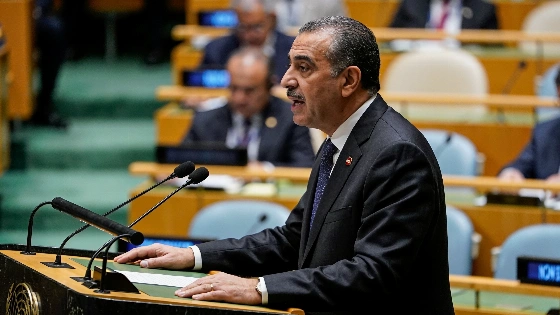
Speaking at the UN General Assembly in New York, Tunisia's foreign minister called for an end to violence in Gaza and the West Bank and conflicts elsewhere in the region. He also urged stronger peacekeeping and better protection for civilians.
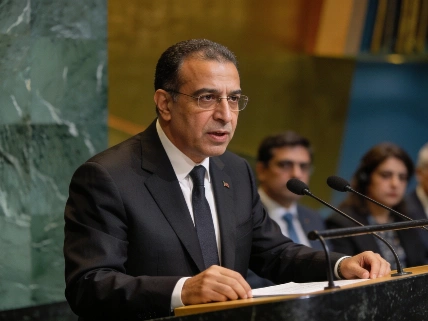
On Saturday, 26 September 2026, Mohamed Ali Nafti addressed the UN General Assembly in New York. He called for peacekeeping operations to protect civilians and help create conditions for lasting peace. That was the message.
Nafti called for an end to Israeli violence in Gaza and the West Bank, describing the actions in Gaza as an act of genocide. The UN Web TV archive records his address as part of the 81st session's general debate. He also urged an end to violence in Lebanon, Syria, Sudan, Libya and Yemen, and criticized Israel's role in regional conflicts.
Anadolu Agency reported that Nafti condemned settlement expansion in the West Bank, forced displacement, home demolitions and attacks on religious sites in Jerusalem. He also opposed efforts to undermine the mandate of the UN Relief and Works Agency for Palestine Refugees (UNRWA). These are Tunisia's stated positions. His description of events in Gaza is not a separate legal determination by the United Nations.
The legal context includes the International Court of Justice's July 2024 advisory opinion. It said Israel's continued presence in the occupied Palestinian territory is unlawful and must be brought to an end as rapidly as possible. Nafti cited the opinion as part of the legal basis for Tunisia's position. The distinction matters.
Nafti had also met UN peacekeeping officials before the address. On 23 September, he met Under-Secretary-General for Peace Operations Jean-Pierre Lacroix in New York. Nafti called for practical steps to carry out recommendations from a Tunisia-hosted conference on protecting civilians in July 2025.
The proposals included a platform to share expertise, unified operational guidance and a regional training programme. Tunisia also supports stronger UN operations through investment in human and institutional capacity. Nafti called civilian protection a collective responsibility and a humanitarian imperative.
He said peace operations should support state institutions, the rule of law, local communities and development. They should do more than manage crises. No new deployment followed.
Tunisia's foreign ministry presented the country as continuing to contribute to the development of the UN peacekeeping system. Nafti announced no new deployment or specific operational commitment. The proposals discussed with Lacroix focus on training and coordination, not an immediate change to mission mandates.
Nafti also called for women and young people to play a greater part in advancing peace and shaping society and the economy. He said Tunisia was committed to women's participation in public life and decision-making, and to combating violence and discrimination. Youth empowerment and participation in public affairs, he said, are national priorities.
His economic message focused on participation and the right to development, not a new trade or investment package. Nafti cited economic, climate-related, social, scientific, cultural and educational rights. No package was announced.
A recent Tunisia report examined demands for an investigation into prison deaths and detention conditions. At the UN, Nafti presented the government's stated commitments on rights and freedoms.
The address took place in a nearly half-empty General Assembly Hall. Nafti reaffirmed Tunisia's commitment to human rights, democracy and Tunisians' freedoms. He also restated the economic, climate-related, social, scientific, cultural and educational rights he had outlined.
Nafti argued that peacekeeping must link civilian protection with the institutions and development needed for sustainable peace. His speech set out Tunisia's position, not a new UN mandate or an immediate change on the ground. Its central point was that conflict management alone cannot provide a durable regional strategy.