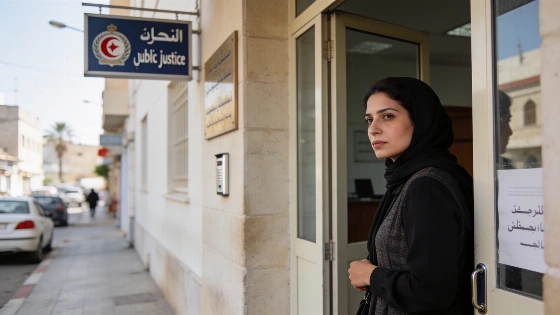
Women's associations link a reported doubling of femicide in Tunisia to weak implementation and barriers to justice. They want lawmakers to recognise femicide as a crime linked to gender-based violence.
By the end of 2025 and at the beginning of January 2026, 30 women had been killed, journalist Yousra Al-Riahi said. Women's associations are questioning whether Tunisia's protections work in practice.
Adopted in 2017 after years of feminist campaigning, Organic Law No. 58 was meant to protect women and end impunity. It sets out duties for preventing violence and protecting victims. It also covers the prosecution of offenders and the responsibilities of public authorities. The law defines violence to include physical and sexual abuse. Its definition also covers psychological and economic abuse.
Nearly nine years on, associations say the legal framework will fall short without effective implementation and accessible justice.
Protection depends on enforcement
Tunisia's legal history includes the 1956 Code of Personal Status, which abolished polygamy and unilateral divorce. It also required the consent of both spouses to marry. These family-law provisions form part of a wider legal framework, while women's groups continue to press for protection from violence and access to justice.
Law 58 sets out measures to prevent violence and pursue those responsible. It also provides for victims' protection and care. Associations say barriers to justice and limits in some protection mechanisms leave gaps. They want specialised teams to have stronger human and logistical capacity. The UN Committee on the Elimination of Discrimination against Women reviews Tunisia's obligations on legislation, protection and access to justice.
Al-Riahi said families may return women who seek to file complaints to abusive husbands. She cited Rafqa Al-Sharani, who was killed by her husband, a security officer, with his weapon.
Al-Riahi also described violence in homes and workplaces. She said it happens on public roads too, and can be perpetrated by relatives or by people unknown to the victim.
Calls for a specific legal framework
Women's associations want lawmakers to discuss recognising femicide as a crime linked to gender-based violence. They say that could improve case tracking and help identify patterns, giving policymakers a stronger basis for action. Their demand includes a law that criminalises femicide.
For Al-Riahi, the problem extends beyond legislation to how it is applied. "What is the use of the law if it is not applied on the ground?" she asked. A separate Tunisian case involving a blogger's appeal of a 26-month sentence over a Facebook Live video was covered in an earlier report. That report did not confirm the appeal's outcome.
Al-Riahi urged media outlets to prioritise violence against women and girls alongside political and economic coverage. She pointed to journalists publishing reports and articles on digital platforms after Law 58 was adopted. She also asked: "how can we build an economically and politically balanced society?" Tunisia's international commitments to prevent and investigate gender-based violence are considered by the UN CEDAW committee. The committee also considers the country's commitment to prosecute it.