
Police have used seized phones and private data in cases involving activists, journalists and political opponents under Tunisia's Decree-Law No. 54. A September 2026 amendment replaced prison with fines for a first Article 24 offence, but repeat offenders still face jail and the law's data-access rules remain unchanged.
In several Tunisian prosecutions, police have taken phones or pressed their owners to unlock them, then used private messages and archived photographs as evidence. Decree-Law No. 54, issued in September 2022, made the circulation of alleged false information through information and communication systems a crime. Activists and journalists say searches have exposed conversations unrelated to any public post.
The cases stretch from street art to political trials. Police have searched activists' phones and detained journalists while trying to access devices. In one case, private WhatsApp exchanges were used in a prosecution that ended with sentences of up to 45 years.
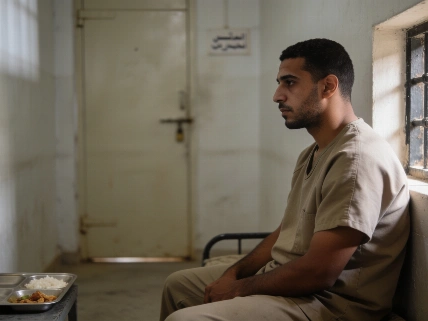
Phone searches put private data in case files
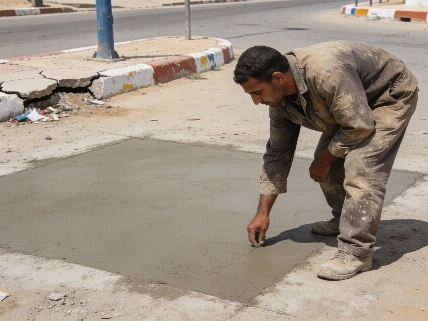
Graffiti artist Rashad Tamboura spent two years in prison after painting a mural of President Kais Saied beside the word "racist." The mural came amid official attacks on undocumented migrants. At the police station, officers demanded Tamboura's phone password. He says he broke the phone before they could access it.
Tamboura now faces another case. The charges include insulting a public official, defamation and rioting. They followed his display of a banner reading "Down with military rule" at a football match.
A photograph of the mural also became evidence against Diaa Hamdi. In September 2024, police stopped Hamdi and another young man as they prepared to vandalise an advertising billboard during a boycott campaign against companies that support Israel. Officers took their phones, demanded passwords and searched messages, social media accounts and photographs in the street.
Hamdi told Noon Post that officers found the mural photograph and archived videos criticising Saied's policies. He said he had not posted the image of the mural online. His phone was taken for technical testing. It had not been returned when he spoke to the publication.
No public post was needed.
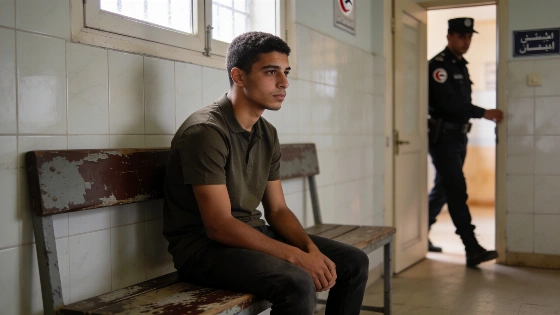
Journalists at Nawaat, an investigative journalism platform, also faced attempts to access their devices. The publication described an incident in which someone claiming to be a delivery worker lured a photojournalist from her office. She brought two colleagues. All three were taken to the National Guard's Central Brigade, which handles financial crimes.
Officers questioned the photojournalist about a friend who was wanted and confronted her with a detailed call record. They confiscated one colleague's phone and threatened another to make him unlock his device. All three were released after three hours.
Legal safeguards lag behind data access
On 30 September 2026, President Kais Saied amended Article 24 after years of controversy. For a first offence involving alleged false news and similar online violations, the amendment replaced imprisonment with a fine of 10,000 to 20,000 Tunisian dinars.
Repeat offenders can still face up to six months in prison and a 50,000-dinar fine. Before the change, offences targeting state officials could carry up to 10 years in prison, as Reuters reported. The amendment cuts the penalty for a first offence. It does not remove the risk of prison for repeat offences.
Other provisions on access to personal data remain unchanged. Cybercrime professor Ayman Zaghdoudi warned that Article 9 lets judicial police request digital data held by telecommunications providers. Article 6 requires providers to retain identifying information, traffic data and users' geographical locations, but does not set a storage period.
Articles 27 and 28 expose providers to a year in prison if they fail to retain or hand over data. Article 19 sets a three-year sentence for deleting or destroying it.
Rights groups do not have a definitive count of prosecutions under Article 24. Intersection counted 32 cases in a 2024 report. The head of the National Syndicate of Tunisian Journalists said 24 journalists and 400 citizens had been referred for prosecution.
Separately, the syndicate reported 14 criminal prosecutions of journalists between April 2025 and April 2026. Six were under Decree-Law No. 54, according to Al Jazeera's report. Rights organisations say some people have not disclosed their cases because they fear judicial retaliation.
Critics also point to older laws used against online expression, including Article 128 of the Penal Code and Article 86 of the Telecommunications Code. Coverage of restrictions on political prisoners' access to independent media has documented wider pressure on dissent, as earlier reporting described.
Tunisian authorities say Decree-Law No. 54 is a tool to fight online crime and disinformation. Rights and journalists' organisations argue that its broad language has also been used to pressure government critics. The Article 24 amendment does not settle that dispute. Nor does it change the separate rules on data retention and access.
Private messages entered a major security case
Phones also figured in the conspiracy against state security case. It began with a crackdown on leading opponents on 24 February 2023. The case implicated 52 people, including politicians, lawyers, businesspeople and trade unionists.
The charges included forming a terrorist group, preparing to commit murder, violent assault, disclosing information to a terrorist organisation and money laundering.
A leaked closing order reviewed by Noon Post said the case relied on denunciations by unidentified people and private WhatsApp conversations. The judge cited a message from opposition figure Chaima Issa. She discussed Qatar's promises to build a health city and hospital and praised a European Parliament member's criticism of Tunisia's economic situation and Saied's conduct.
The judge also cited a news link Ahmed Nejib Chebbi had sent to his brother Issam Chebbi. The link concerned US concern over Saied's 2021 decision to dissolve parliament.
Defence lawyer Samir Dilou said the file grew through witness accounts and ordinary political conversations recovered from seized phones. The defendants received prison sentences of up to 45 years. All stages of litigation have been exhausted, and the rulings are final.
Police technology is also under scrutiny. A 2023 United Nations Global Marketplace tender listed a Cellebrite UFED Touch device for the Interior Ministry. It can extract data, including locked and encrypted material.
In March 2026, another tender for the ministry listed MOBILedit Forensic ULTRA software, which can crack passcodes and recover deleted applications. It also listed BelkaSoft X, which can extract encrypted app conversations and recover deleted files. The article also reports that the National Cybersecurity Agency bought tools to recover phone data and conduct digital forensic examinations.
When police can compel access to devices, providers must keep extensive records, and private messages can support severe charges, the issue reaches beyond one cybercrime article. Tunisia's system combines criminal penalties for expression with broad data access and limited privacy safeguards.
The September 2026 change lowers the first-offence penalty under Article 24. Data access rules remain in place, as does the possibility of prison for repeat offenders. That combination makes phone searches a powerful prosecution tool. Citizens have little assurance that private political conversations will stay private.