
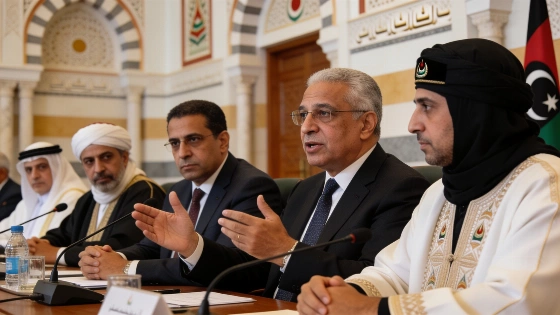
Massad Boulos, U.S. Senior Advisor for Arab and African Affairs, has welcomed the UN-brokered agreement reached in Tunis between Libya's rival political factions, calling it a significant step toward establishing electoral laws and advancing national elections.
The United States has welcomed the recent UN-brokered agreement reached in Tunis between Libya's main political factions, describing it as an important advance toward resolving the country's prolonged political crisis. Massad Boulos, U.S. Senior Advisor for Arab and African Affairs, praised the progress made on electoral laws and the High National Elections Commission, highlighting the potential for a credible path to national elections.
In a statement, Massad Boulos said, "We welcome the progress Libyan parties made in Tunis toward agreement on electoral laws and the High National Elections Commission - an important step toward a credible path to successful national elections. The United States will continue to support dialogue among Libyan stakeholders and to work with @UNSMIL and international partners to help Libyans achieve a durable political solution and establish a unified executive capable of governing all of Libya."
UN-Led Talks in Tunis Mark Progress on Libya's Electoral Roadmap
The agreement, reached under United Nations mediation, aims to resolve longstanding disputes over the legal framework for elections and the structure of Libya's electoral authority. The talks in Tunis brought together representatives from Libya's rival political bodies, who have struggled for years to agree on the rules and timing for national elections. The breakthrough is seen as a step toward ending Libya's institutional fragmentation and restoring unified governance.
International Support and Next Steps for Libya's Political Process
The United States' endorsement of the agreement underscores the importance of international backing for Libya's political transition. Continued engagement by the United Nations Support Mission in Libya (@UNSMIL) and other international partners will be critical as Libyan actors work to implement the new electoral framework. The next phase will focus on finalizing electoral laws, preparing the High National Elections Commission, and setting a timeline for credible national elections. The outcome will be closely watched by regional and international stakeholders concerned with Libya's stability and governance.