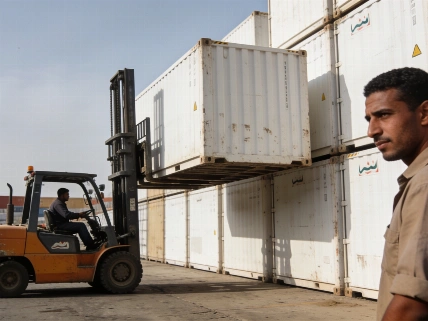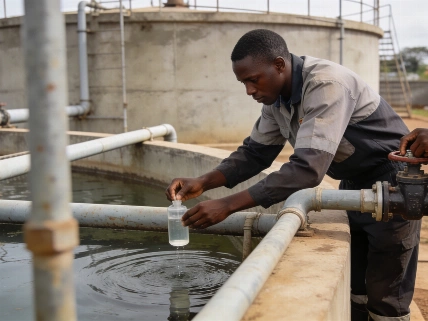

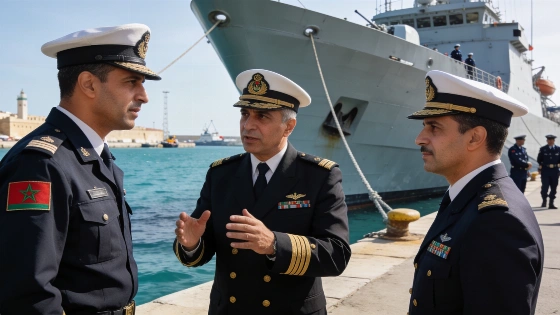
Phoenix Express 2026 has commenced at the Port of La Goulette in Tunisia, uniting Moroccan, Tunisian, US and European naval personnel in a high-stakes exercise to sharpen maritime security operations across the southern Mediterranean.
Fifty-two Moroccan and Tunisian military officers gathered at the Port of La Goulette on September 7, 2026, marking the start of Phoenix Express 2026-a multinational maritime exercise that puts North African and European navies side by side with US forces in the Mediterranean's southern corridor. The operation, sponsored by US Africa Command and led by US 6th Fleet under US Naval Forces Africa, is not a routine show of flags. It is a calculated move to reinforce operational readiness and interoperability among regional partners facing persistent maritime threats.
Unlike previous years, this iteration of Phoenix Express places a sharper focus on civil affairs protocols and joint operational planning. Moroccan and Tunisian personnel are not just observers-they are embedded in scenario-driven discussions and live drills, directly shaping the exercise's outcomes. The presence of US and European naval assets signals a clear intent: to build a networked response capability that can address smuggling, trafficking, and security risks that routinely test the region's maritime borders.
Strategic context and regional stakes
The southern Mediterranean remains a critical transit zone for both legal commerce and illicit flows. With North African states under pressure to secure their coastlines, Phoenix Express 2026 arrives at a moment when regional cooperation is not just desirable but necessary. The exercise's multinational format reflects a recognition that no single navy can manage the spectrum of maritime risks alone. The US Africa Command's sponsorship and the operational leadership of US 6th Fleet underscore Washington's ongoing commitment to Mediterranean security architecture, even as European partners recalibrate their own regional engagement.
For Morocco and Tunisia, participation is more than symbolic. It offers direct access to advanced operational protocols and the chance to test national procedures against international standards. The exercise also provides a platform for regional actors to demonstrate their capacity to coordinate with external powers-a point not lost on observers tracking the shifting balance of influence in North Africa. Recent enforcement actions, such as those reported earlier at Moroccan ports, highlight the ongoing challenge of cross-border trafficking and the need for robust maritime controls.
Operational outcomes and next steps
Concrete outcomes from Phoenix Express 2026 will be measured in the months ahead, as participating navies adapt lessons learned to their own operational environments. The integration of civil affairs protocols into the exercise signals a shift toward more comprehensive maritime governance, blending security operations with civilian coordination. For the US and its partners, the exercise is a proving ground for interoperability and a test of political will to sustain joint action beyond the drill itself.
What is clear is that Phoenix Express 2026 is not a ceremonial gathering. It is a deliberate investment in regional security infrastructure, with Morocco and Tunisia positioned as pivotal actors in the evolving Mediterranean security equation. The real test will be whether these exercises translate into lasting operational improvements and whether regional states can leverage this momentum to assert greater control over their maritime domains. Anything less would leave the region exposed to the same vulnerabilities that have long plagued its waters.