A major pipeline failure in Mohamed Belouizdad has led to water supply disruptions across several Algiers communes. Authorities are undertaking urgent repairs, while new infrastructure projects aim to strengthen regional water security.
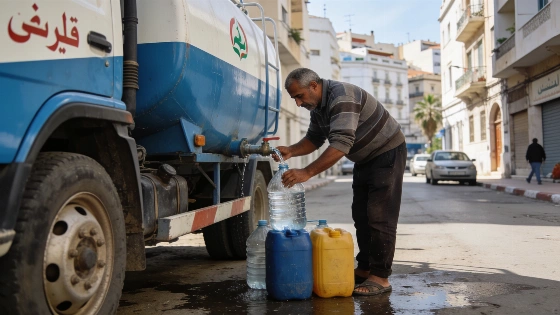
A impressive disruption to water distribution has affected parts of Algiers after a basic pipeline failed in the commune of Mohamed Belouizdad. The Société des eaux et de l'assainissement d'Alger (SEAAL) announced on 22 August 2026 that urgent repairs were under way, disrupting the regular potable-water supply programme across several areas of the capital.
SEAAL said the entire commune of Mohamed Belouizdad would experience supply interruptions, while Sidi M'Hamed would face partial disruption. The company advised residents in affected areas to make arrangements during the repair period. Normal service was expected to return gradually once repairs were complete.
Authorities Accelerate Water Infrastructure Upgrades
The disruption came as Algerian authorities stepped up efforts to reinforce and secure regional potable-water supplies. On 19 August, Lounès Bouzegza, Minister of Hydraulics, inaugurated a new monobloc water-treatment plant in El Affroun, Blida. Initially supplied with 2,000 m³ a day from the El Moustakbal dam, the facility is designed to reach a capacity of 8,600 m³ a day, improving supply reliability and service quality for local communities.
SEAAL’s subsequent maintenance notices show how interventions can require temporary changes to distribution schedules across connected areas. For a separate programme scheduled from 19 to 22 October 2026, the company adjusted supply across sectors in 18 Algiers communes, including parts of Sidi Abdellah, Mahelma, Rahmania, Zéralda, Staouéli, Chéraga, Aïn Benian, El Hammamet, Baba Hassen, Tessala El Merdja, Saoula, Birkhadem, Gué de Constantine, Bouzaréah, Béni Messous, Raïs Hamidou, Bologhine and Oued Koriche. SEAAL described the work as network maintenance intended to preserve service continuity and improve distribution performance. It said the disruptions were temporary and limited to four days. The usual schedule was due to resume progressively from the evening of 22 October, as reported by Just-In Info.
Strategic Projects Target Supply and Loss Reduction
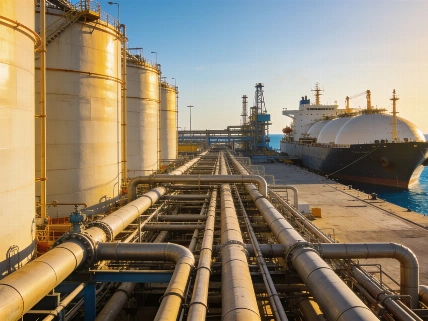
During the 19 August visit, Bouzegza inspected the Ben Chérif pumping station in Chebli, which delivers 52,000 m³ a day of desalinated water from the Fouka 2 plant in Tipaza to Meftah and Ouled Slama. The station’s maximum capacity is 83,000 m³ a day. Bouzegza instructed teams to speed up the commissioning of auxiliary equipment so the station could operate at full capacity.
In Sidi Serhane, Bouzegza reviewed a 30,000 m³ reservoir serving several eastern Blida communes, including Bouinan, Meftah, Djebabra, Ouled Slama, Bougara and Larbaâ. He called for prompt repairs to leaks in local distribution networks and for resources to be mobilised to reduce water losses. The visit also assessed progress on directives issued during an earlier ministerial inspection in August.
The wider infrastructure effort continued on 19 October, when Bouzegza chaired a meeting on completing the technical and organisational procedures for connecting newly built seawater-desalination plants to distribution systems. The meeting covered projects in Chlef, Mostaganem and Tlemcen and followed instructions from President Abdelmadjid Tebboune. The national push to complete these connections complements local measures to expand supply and limit losses. Radio Algérienne reported that the minister directed officials to accelerate the remaining procedures.