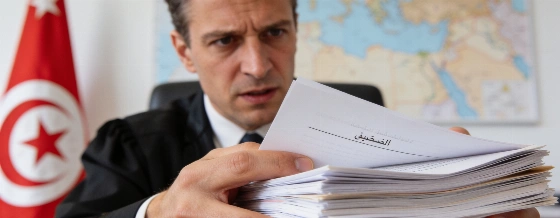
Zenith Energy's subsidiary is challenging a $130 million arbitration loss to Tunisia, alleging tribunal bias and undisclosed contacts. The company is now appealing to Switzerland's top court and the European Court of Human Rights, raising the stakes for energy arbitration in the region.
Zenith Energy's Canadian North Africa Oil and Gas Limited (CNAOG) is trying to overturn a $130 million arbitration defeat in the Sidi El Kilani oil concession dispute, citing undisclosed contacts between the president of the ICC-2 tribunal and Tunisia's legal team. The arbitration, which began in December 2022 after Tunisia ended the Sidi El Kilani concession, took place in Geneva and has drawn attention to how energy disputes are handled in the Maghreb. Recent updates from Reuters and regional legal sources have highlighted the case's significance.
After losing in arbitration, Zenith has taken its case to the Swiss Federal Supreme Court, seeking to annul the ICC-2 award that favored Tunisia. The Swiss court agreed to review the case in October 2025, reflecting Switzerland's central role in international arbitration involving North African countries. Zenith's claim covers lost revenues, crude allocations, and a forfeited 45% stake in the concession renewal. The $130 million at stake is significant for both sides and for the regional energy market, which is closely watched by outlets like Tunis Afrique Presse (TAP) and Tunisia's Ministry of Industry, Mines and Energy.
Claims of tribunal bias and new evidence
Zenith argues that new evidence shows the tribunal president had undisclosed interactions with Tunisia's lawyers, including attending conferences in Tunisia during the arbitration. The company says these contacts call the tribunal's independence into question and undermine the fairness of the process. Zenith received this evidence on July 9, 2026, and has since stepped up its legal efforts, pointing to the right to a fair hearing under the European Convention on Human Rights.
CNAOG has hired a European law firm to prepare an application to the European Court of Human Rights. Zenith's approach is to push the dispute beyond arbitration and challenge the standards used in cross-border energy cases involving governments. In a recent statement, Zenith said it will argue that the tribunal's actions violated its right to an independent and impartial hearing, a principle recognized by the Council of Europe and discussed in recent regional legal commentary by the Union of Arab Banks.
Regional and sector implications
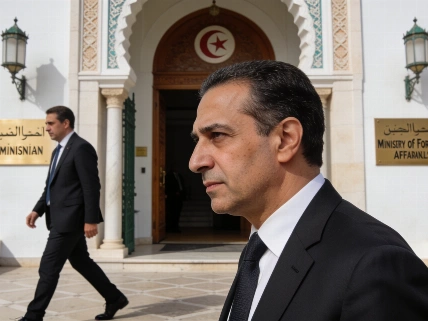
The Sidi El Kilani concession, once a major asset for Zenith in Tunisia, is now at the center of a legal fight that could affect how future disputes between foreign investors and North African states are resolved. If Zenith's challenge succeeds, it could lead to closer scrutiny of arbitral tribunals and encourage other companies to contest awards over procedural issues. The case is being watched by Tunisia's Ministry of Foreign Affairs and regional economic analysts because of its possible impact on foreign investment and the stability of energy agreements in the Maghreb.
For Tunisia, this is more than a contract dispute. It is a test of the country's ability to defend its decisions in international forums without facing claims of judicial misconduct. The outcome is of interest to energy investors, lawyers, and governments across the region. Tunisia has tried to modernize its hydrocarbons sector and attract new investment, as noted in official ministry releases, making the credibility of dispute resolution a national economic concern.
Zenith's decision to escalate the case shows that foreign investors are increasingly willing to challenge not just the outcome but the process of arbitration in North Africa. By involving both Swiss and European courts, the company is highlighting weaknesses in the current system and putting pressure on arbitral bodies to improve transparency and independence. In a region where energy assets and state interests are closely linked, this case signals that procedural shortcuts and undisclosed relationships will face pushback. The case also shows how regional news agencies like TAP and the Algerian Press Service (APS) are shaping public and investor views of legal and economic developments in the Maghreb.