
Morocco is rapidly becoming the primary gateway for Chinese automakers and suppliers targeting Europe, with record investment in battery and component factories. This shift is redrawing the competitive map for the automotive industry across the Mediterranean.
Morocco is no longer just a waypoint on the global automotive map-it is now the critical launchpad for Chinese electric vehicle and battery supply chains targeting Europe. In less than five years, Chinese capital has poured into Morocco at a pace and scale unmatched by any other foreign investor, turning the country into the most sought-after production base for Chinese automotive giants seeking a European foothold.
What sets Morocco apart is not just the volume of investment, but the strategic intent behind it. Chinese companies are not simply assembling cars-they are building a full-spectrum ecosystem, from battery gigafactories to advanced materials and traditional components, all designed to serve the European market with speed and cost efficiency.
Morocco's Strategic Edge in the Automotive Race
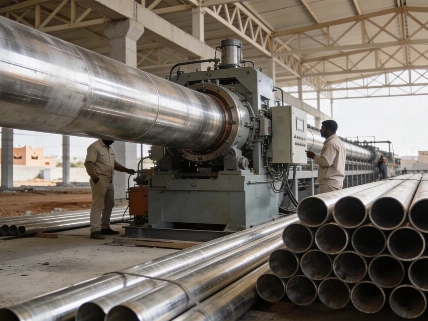
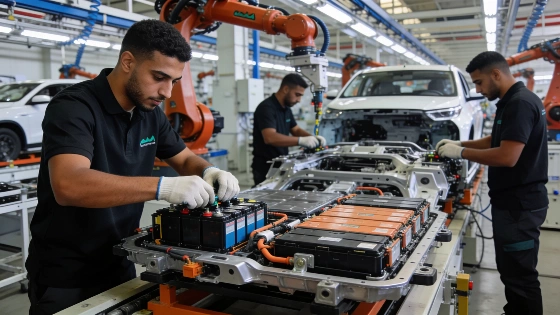
At the heart of this transformation is the Gotion High-Tech battery gigafactory in Kenitra, a €6 billion project with a planned capacity of 100GWh. Volkswagen's 25% stake in Gotion High-Tech signals to European industry that Morocco is now a vital node in the continent's battery supply chain. But the investment wave does not stop at batteries. Companies like BTR, Shinzoom, Tinci, Hailiang, and Zhongwei Co., Ltd. are anchoring the materials and recycling segments, while Lingyun, BTL, and Kuntai are embedding themselves in the chassis, ADAS, and interiors supply lines for global brands including Tesla, BMW, Mercedes-Benz, Volkswagen, Stellantis, BYD, Chery, and Geely.
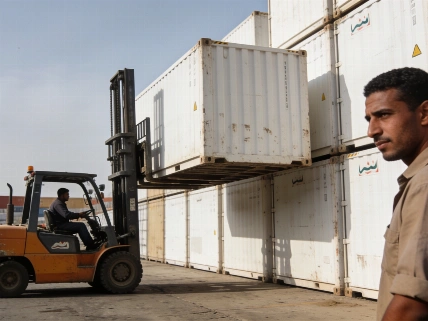
Chinese tire manufacturers-Guizhou Tire, Yongsheng Rubber, and Qingdao Sentury Tire-are also scaling up in Morocco, drawn by the country's extensive trade agreements and logistical advantages. The Port of Tangier, now one of the region's top automotive export hubs, enables just-in-time delivery to Germany and the UK within 8 to 10 days.
Why Morocco Became the Preferred Gateway
Morocco's rise is no accident. Its proximity to Europe-just 14 kilometers at the narrowest point-gives it a logistical edge. The country's network of over 50 free trade agreements grants preferential access to more than a billion consumers in the EU and UK. Decades of investment by Renault and Stellantis have built a mature supplier base and skilled workforce, with local integration rates exceeding 60%. Labor costs remain about half those in Eastern Europe or Turkey, and Morocco's dominance in phosphate reserves-crucial for lithium iron phosphate batteries-cements its upstream advantage.
Roughly 90% of Morocco's automotive exports are destined for Europe, with France, Spain, Germany, and Italy as primary markets. This pattern is set to deepen as Chinese firms leverage Morocco's nearshoring potential to bypass tariffs and regulatory hurdles, while also tapping into the country's growing domestic electric vehicle market.
Competitive Consequences and Regional Implications
The scale of Chinese investment in Morocco's automotive sector now rivals Mexico's role for North America. According to AlixPartners, Chinese firms have announced over €100 billion in Moroccan automotive projects since the pandemic, with a sharp acceleration since 2023. Morocco has overtaken Hungary, Poland, and Turkey as the top destination for Chinese automotive capital outside Asia.
This surge is not isolated. As reported earlier, global supply chains are shifting across North Africa, with new entrants targeting strategic sectors. For Morocco, the influx of Chinese capital is reshaping its industrial landscape, creating new jobs, and embedding the country deeper into Europe's automotive future.
Yet, the rapid build-up of electric vehicle and battery capacity brings risks. Overcapacity could intensify competition, and Morocco's charging infrastructure remains underdeveloped. The country's ability to sustain this momentum will depend on continuous upgrades to logistics, workforce skills, and regulatory frameworks.
Morocco's transformation into China's automotive bridgehead is not a passing trend-it is a calculated realignment of global supply chains. Chinese automakers are betting that Morocco's unique blend of geography, trade access, and industrial maturity will give them a decisive edge in the European market. For European manufacturers and policymakers, the message is clear: the competitive frontier is shifting south, and those who ignore Morocco's new role in the automotive value chain do so at their own peril.