
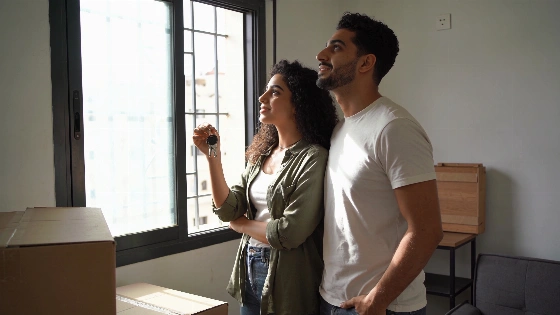
Egypt's government is opening applications for 25000 new rental and rent to own housing units from 20 September, aiming to expand affordable housing access for young people and low income families in 26 cities nationwide.
Egypt's Ministry of Housing is set to open the gates for 25000 new homes under rental and rent to own schemes, marking one of the country's most ambitious pushes to address the housing crunch for young and low income Egyptians. The application window opens 20 September, with the government promising a mix of immediate and future-ready units across 26 cities.
At the heart of the plan are 10000 rent to own units managed by the New Urban Communities Authority (NUCA), split between 5000 completed homes and 5000 more still to be built. These units, ranging from compact 57 square metre apartments to larger 161 square metre homes, are scattered across key urban hubs including New Cairo, Badr, New Alamein, and New Aswan. The remaining 15000 units are reserved for low income citizens under the rental component of the presidential "Housing for All Egyptians 9" initiative, with a special allocation for people with disabilities.
Eligibility and application process
Applicants for the rent to own units must submit through NUCA's Maskan platform between 20 September and 19 October 2026. For the 15000 rental units, people with disabilities get a one week head start from 20 to 27 September, while the general public can apply from 28 September to 28 October. The Social Housing and Mortgage Finance Fund, led by CEO Mai Abdel Hamid, will provide rental support up to EGP 100000 over the lease period, with eligibility capped at households earning a maximum net monthly income of EGP 16000. Applicants must be aged 21 to 35 at the close of the application period.
Deputy Housing Minister for New Urban Communities Walid Abbas confirmed that 5% of all units are reserved for people with disabilities, with allocation determined by public lottery among qualified applicants. The offering includes 8464 units in governorates, 3256 in new cities, and 3280 completed homes under the Hayah Karima initiative.
Strategic context and government priorities
Housing Minister Randa El Menshawy positioned the initiative as a direct response to President Abdel Fattah Al-Sisi's call to diversify housing access and support young families. The government's approach is to move beyond traditional homeownership, offering flexible rental and rent to own pathways that reflect shifting economic realities and demographic pressures. The Maskan platform and digital application process echo Egypt's broader digitalisation drive, as seen in the reported earlier launch of the IDEIA platform for green investment.
By targeting both completed and planned units, the government is attempting to balance immediate demand with longer term urban expansion. The focus on new cities-such as New October, New Mansoura, and New Damietta-signals a continued push to relieve pressure on Cairo and other saturated urban centres, while also supporting the presidential Hayah Karima initiative's rural development goals.
Winners, losers and what to watch
Young people and newly married couples stand to benefit most, with the government's rental support and income caps designed to keep units within reach of those priced out of the private market. However, the scale of demand is likely to far outstrip supply, and the public lottery system means many eligible applicants will walk away empty handed. The inclusion of people with disabilities as a priority group is a notable policy shift, but the 5% allocation remains modest relative to need.
Egypt's housing authorities are betting that digital platforms and targeted subsidies can deliver both speed and transparency, but the real test will come in execution-especially for the 5000 units still on the drawing board. If the government can deliver on its promises, this initiative could set a new standard for affordable housing policy in the region. If not, it risks becoming another headline announcement with limited impact on the ground. For now, the move signals a government willing to experiment with new models, but the gap between ambition and delivery remains Egypt's defining challenge in the housing sector.