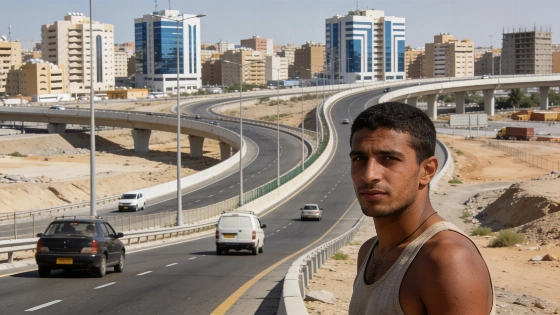
Madbouly says Egypt has expanded urban land and transport links since 2014 while building capacity for industry. Targets for water and energy infrastructure will shape the next phase of the state-led programme, alongside plans to raise food output.
Egypt has doubled its urbanised area from around 7% to 14% of its total land, Prime Minister Mostafa Madbouly said at the closing session of Egypt Forum 2026 in the New Capital. He described the expansion as part of a 12-year effort to address population concentration and long-standing infrastructure gaps. The national urban-development strategy extends to 2052. New cities are intended to ease pressure on overcrowded historic centres and expand settlement beyond the Nile Valley and Delta.
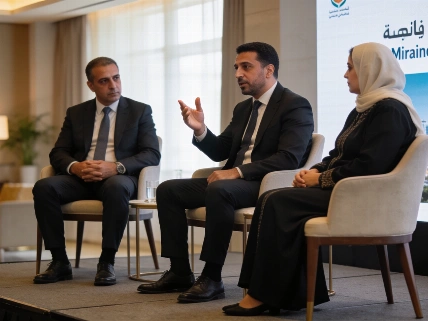
President Abdel Fattah El-Sisi attended the session. The forum ran from October 19 to 24 and was intended to assess the country's position before and after the development programme, then set priorities for the next three years. At the forum, Madbouly said between 14 million and 15 million people permanently lived in new cities, citing electricity-meter data. He also pointed to more than 350,000 commercial and industrial meters, as well as meters for administrative use, as evidence of economic activity in those communities, as the Egyptian Gazette reported.
Urban growth and transport links
Madbouly said Egypt had established 31 new cities in recent years, after building 22 cities over the five decades following the late 1970s. In total, 39 new cities have been completed or remain under construction. The government has also eliminated 357 unsafe housing areas that had been home to around 1.5 million people and built about 250,000 replacement units. More than 350 unsafe areas have been developed or removed nationwide, affecting over 350,000 families. Projects cited included Asmarat and Maspero Triangle, as well as Al-Mahrousa and Rawdat Al-Sayeda.
More than 16,000 feddans of unplanned areas have been developed out of 152,000 identified for work. Under the Sakan Kol El-Masryeen programme, around two million housing units have been built for different income groups. Housing Minister Sherif El-Sherbiny reported that agencies affiliated with the Ministry of Housing delivered 1.96 million units over 12 years: about 56% for low-income households, 12% for middle-income households, 7% for luxury housing and 25% in other categories. Madbouly said the government inherited a housing deficit of roughly three million units between 2011 and 2014.
Information from Madbouly, the road network has grown from around 23,000 kilometres of deteriorating roads to approximately 31,000 kilometres. That includes 7,500 kilometres of new roads and 10,000 kilometres that were developed or substantially upgraded. Within the new cities, road length increased from about 8,000 kilometres in 2014 to roughly 18,000 kilometres in 2026. Nineteen of 35 planned road corridors crossing the Nile have been completed. South of Cairo, the distance between bridges has fallen from around 100 kilometres to 25.
The Ring Road and Cairo-Suez Road were among the road projects, along with the Wadi El-Natrun-El-Alamein Road. Egypt has added five tunnels beneath the Suez Canal to the existing Ahmed Hamdy Tunnel and built 17 floating bridges. Work has resumed on the Ferdan-Bir El-Abd railway line, while the planned Sinai rail network is expected to extend more than 450 kilometres, linking Bir El-Abd and Arish with Taba.
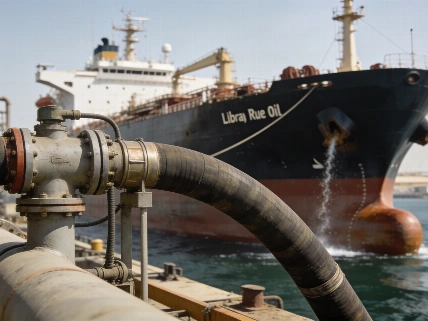
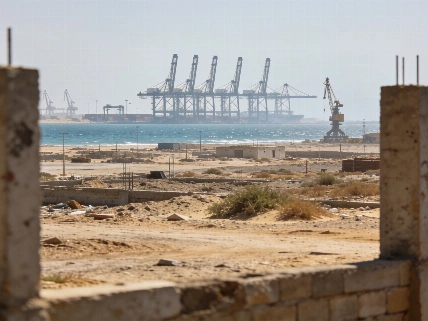
Mass-transit projects include metro lines and the Bus Rapid Transit system, with the monorail also in the mix. The high-speed electric railway network is planned to extend 2,250 kilometres. Egypt has also expanded port capacity: the number of seaports rose from 14 to 19, quay lengths from 37 kilometres to around 100, and maximum depths from 15 metres to 25 metres. Madbouly said cargo-handling volumes had reached around four times their previous levels.
Ain Sokhna Port and East Port Said Port featured among the projects he highlighted, alongside developments at Alexandria and Damietta. The country has added land ports and developed 33 dry ports and logistics zones. Airport numbers have risen from 19 to 23, with annual passenger capacity increasing from 53 million to 73 million.
Utilities and production targets
Rural sanitation coverage has risen from 12% in 2014 to 60%, Madbouly said. Egypt has built 237 treatment plants with daily capacity of around 19 million cubic metres. He said the remaining phases of the Hayah Karima initiative would help extend coverage across rural areas. The programme targets about 4,600 villages with a combined population of roughly 60 million. Its first phase covered 1,477 villages and cost more than EGP 450 billion. Drinking-water and wastewater projects implemented or completed between 2014 and 2026 totalled EGP 635.1 billion.
Drinking-water production capacity has increased from about 28 million cubic metres a day to 45 million. Infrastructure investment in new cities reached EGP 357.7 billion over the 12 years to 2026, according to Housing Minister Sherif El-Sherbiny. The population of those cities was reported to have risen from around 4.8 million in 2014 to approximately 15 million.
Desalination capacity has grown from 84,000 cubic metres a day to 1.5 million. The government is targeting two million cubic metres next year and 10 million in the coming years. Electricity generation capacity rose from 29,000 megawatts in 2014 to around 64,000 megawatts. Madbouly said the three Siemens power plants provide around 27% of Egypt's electricity needs. The government aims for renewables to exceed 45% of the energy mix by the end of 2028.
Projects cited included the Gabal El-Zeit wind farms and the Benban solar complex. Electricity interconnections with neighbouring countries were also among the projects. Construction of the El-Dabaa nuclear power plant is under way. Natural gas connections to homes have increased from 6.2 million to 16.2 million, with around 1,700 kilometres of new transmission networks.
The energy figures also sit against the financing demands explored in an earlier energy-sector report. Madbouly said the government had established 16 industrial complexes, with another two to three under construction. They provide around 4,800 small factories and have created approximately 50,000 jobs.
The Suez Canal Economic Zone has attracted more than $10 billion in investment and generated over 200,000 jobs, according to Madbouly. He cited manufacturing projects by Haier, Midea, Xinxing and Bosch, alongside activity in textiles and clothing, as well as other sectors. Egypt aims to raise local automotive content to 60% and move towards annual production of more than 100,000 vehicles within two to three years. The plans include electric-vehicle manufacturing and assembly.
Food security and the next phase
Cultivated land has increased from 9.1 million to 10.5 million feddans, with a target of 12.5 million within two years. Agricultural exports have risen from 4.3 million tonnes to 9.5 million. Madbouly put wheat self-sufficiency at around 52%, with a government goal of exceeding 60%. Meat self-sufficiency has reached 60, and he said Egypt had achieved self-sufficiency in milk.
The New Delta project involves reclaiming 2.2 million feddans, with investment estimated at EGP 800 billion. Water-reuse facilities include the Bahr El-Baqar plant, with capacity of 5.6 million cubic metres a day, and the New Delta plant, with capacity of 7.5 million. Silo capacity has risen from around 1.2 million tonnes to 4.4 million, and the government received approximately five million tonnes of locally produced wheat during the 2026 harvest.
Madbouly said fixed-internet speeds had risen from around 3 megabits per second to 98, placing Egypt first in Africa for fixed broadband speed. Mobile-phone towers have increased from 7,000 to 41,000. Tourism visitors rose from 9.5 million in 2014 to nearly 20 million, with a target of 30 million.
The government plans to release a National Economic Change Program within two months for public dialogue. Madbouly said forum priorities and implementation measures would be published on its platform once finalised. He described the next phase as focused on growth and production, with targets for jobs, incomes and public services, while acknowledging that the government's work remained unfinished.