
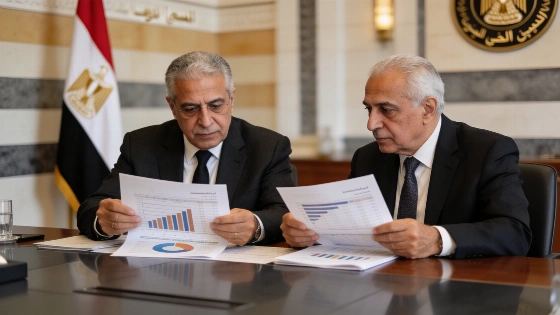
The Central Bank of Egypt is widely expected to keep its key interest rates unchanged for a fourth consecutive meeting, as policymakers weigh persistent inflationary pressures and a resilient external position amid regional uncertainties.
The Central Bank of Egypt's Monetary Policy Committee (MPC) is set to meet on Thursday to determine the direction of its key interest rates, with strong market expectations pointing to a fourth consecutive hold. The decision comes as Egypt continues to navigate persistent inflation and regional economic pressures.
At its previous meeting on 9 July, the MPC maintained the overnight deposit rate at 19%, the overnight lending rate at 20%, and the main operation and discount rates at 19.5%. This marked the third straight meeting without a rate change, a stance the committee said was consistent with its assessment of inflation trends and outlook.
Inflation Trends and Policy Rationale
Recent data from the Central Bank of Egypt showed annual core inflation rising to 14.7% in July 2026, up from 14.3% in June. The core Consumer Price Index registered zero monthly inflation in July, while the urban Consumer Price Index, published by CAPMAS, also recorded no monthly change. However, annual urban headline inflation accelerated to 14.9% in July from 14.3% in June.
The MPC has indicated that headline inflation is expected to accelerate through the third quarter of 2026, though at a slower pace than previously anticipated, supported by improved foreign exchange market conditions and easing inflationary pressures. The committee expects inflation to gradually decline, targeting single-digit levels and approaching the CBE's 7% ±2 percentage point target in the second half of 2027, provided a restrictive monetary policy stance is maintained.
Despite this outlook, the MPC has warned that upside risks remain, particularly from potential escalations in regional conflict, which could undermine recent improvements in risk indicators and increase uncertainty.
Expert Views and Market Expectations
Banking expert Mohamed Abdel Aal expects the CBE to keep rates unchanged, arguing that the recent uptick in inflation is largely due to base effects rather than broad-based price increases. He noted that the MPC considers a range of indicators, including inflation trends, exchange-rate stability, and broader economic and geopolitical factors, rather than reacting to a single month's data. Abdel Aal anticipates a wait-and-see approach from the CBE until year-end, unless significant changes occur in inflation, exchange rates, or global markets. He forecasts inflation to end 2026 at around 13%-14%, making a return to single-digit inflation unlikely this year.
Heba Mounir, macroeconomic analyst at HC Securities & Investment, also expects the MPC to hold rates, citing ongoing inflationary pressures. She highlighted Egypt's relatively resilient external position despite regional disruptions, crediting exchange-rate flexibility for mitigating pressures during periods of conflict. However, she pointed to domestic challenges, including higher local energy costs and recent electricity tariff increases for most residential brackets, which are expected to add to inflation in the third quarter. Mounir projects average inflation of around 16% for the current quarter, up from 15% in the previous quarter.
What to Watch Next
Economists surveyed by Reuters unanimously expect the CBE to maintain its current rates, with all 13 polled forecasting no change. Daniel Richards of Emirates NBD noted that while annual urban inflation accelerated in July, monthly figures suggest limited new inflationary pressure. He expects inflation to peak in August before declining, allowing the CBE to keep rates steady for the rest of the year and potentially resume monetary easing in 2027.
The MPC has reiterated its commitment to monitoring economic developments and inflation drivers, stating it will act as needed to preserve price stability and ensure inflation returns to target. The next key data points will be inflation readings for August and any significant shifts in Egypt's external or domestic economic environment.