Finance Minister Ahmed Kouchouk says Egypt's investment risk rating has reached its lowest level since 2014, as international investors respond positively to recent economic reforms and renewed private sector growth.
Finance Minister Ahmed Kouchouk said Egypt's investment risk rating had reached its lowest level since 2014, pointing to renewed international investor confidence after economic reforms. The shift reflects a lower market assessment of sovereign risk, distinct from a formal credit-rating upgrade and not a sign that Egypt has regained investment-grade status. In October 2026, Moody's upgraded Egypt's long-term local- and foreign-currency ratings from Caa1 to B3 and maintained a positive outlook, citing fiscal consolidation, stronger revenue collection, improving foreign reserves and an economic recovery. B3 remains below investment grade. Moody's said reforms had put government debt and interest burdens on a declining path, though both remained elevated, as reported by Ahram Online.
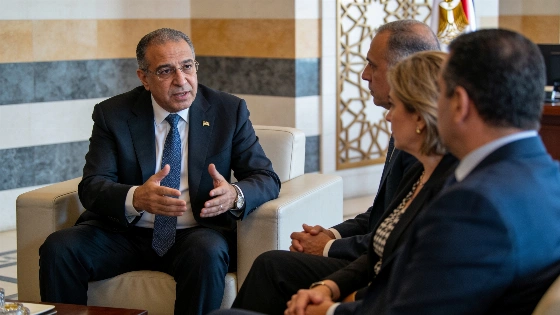
At a meeting with the heads of Egypt's newly appointed diplomatic missions, Kouchouk said the country's economic outlook was improving, with the private sector accounting for 60% of total investment. Separate recent reporting put the share at around 65%, against historical averages of 40% to 45%, and said private-sector investment had exceeded EGP 1 trillion in the preceding year. The figures may reflect different reporting periods or investment measures. Kouchouk highlighted activity in industry, telecommunications and information technology, as well as tourism.
Government Priorities and Policy Measures
Kouchouk set out four central government priorities: building trust with private investors and financiers, stimulating economic activity, reducing public debt, and raising spending on health and education, alongside social protection. He emphasised partnership with the private sector, including tax and customs incentives to support its expansion. The government aims to reduce public debt to below 70% of GDP by 2030, while also lowering debt-servicing costs and keeping the debt burden on a downward path.
The minister said initial tax revenues due for 2024, following implementation of the Competitive Neutrality Law, reached EGP 67.4 billion. Separately, the Finance Ministry said tax revenues had risen to 13% of GDP, up 1.6 percentage points over two years, attributing the increase to improved collection and fiscal reforms rather than additional tax burdens. The national tax-to-GDP ratio is a separate measure from the EGP 67.4 billion figure. The ministry says its priorities include cutting debt-servicing costs and raising budget revenues, as reported by Zawya.
The government is also working to expand Egypt's production, industrial and export bases, with particular attention to service exports and young people's capabilities in global markets. Greater private-sector participation and better revenue collection support the fiscal consolidation cited by rating agencies. Large financing pressures remain.
Diplomatic Coordination to Support Economic Goals
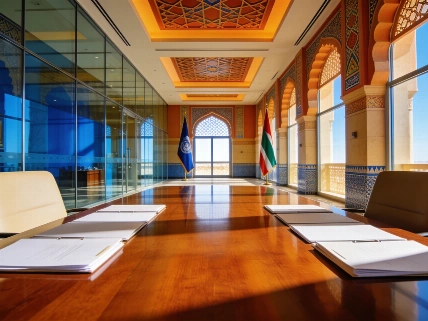
The dialogue, attended by Foreign Minister Badr Abdelatty, is part of a wider effort to align Egypt's diplomatic missions with national economic and financial objectives. Before the session, Abdelatty and Kouchouk discussed how embassies can promote investment and commercial opportunities, engage with international financial institutions and use economic diplomacy to attract investment and open markets for Egyptian products.
Moody's upgrade was not matched by equivalent moves from the other major agencies. Fitch affirmed Egypt's long-term foreign-currency rating at B with a stable outlook, while S&P Global Ratings kept its foreign- and local-currency ratings at B/B, also with a stable outlook. Fitch has cited Egypt's economic scale, growth potential and foreign-exchange reserves, along with continued bilateral and multilateral support. High public debt, interest costs, external financing requirements, volatile capital flows and geopolitical risks remain constraints. Egypt's IMF-backed $8 billion Extended Fund Facility was expected to conclude in December 2026, making the durability of reforms beyond the programme an impressive consideration for investors.
The government aims to reinforce Egypt's position as an investment destination and maintain the momentum of economic reforms. Private-sector growth and international engagement remain basic to its effort to reduce investment risk and strengthen economic ability to recover. High debt-servicing costs and external financing needs continue to weigh on the outlook.