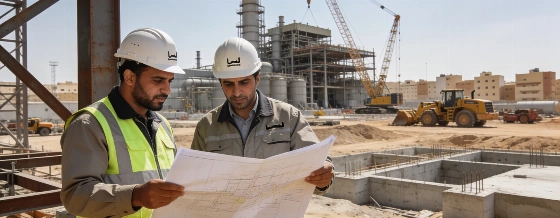
Libya's General Electricity Company has awarded Egyptian firm Madkour contracts to build three power plants worth around 100 million euros, aiming to add 660 megawatts and address chronic blackouts as regional energy ties deepen.
Libya's ongoing electricity shortages have pushed Tripoli to look abroad for help, leading to a new deal with Egyptian contractor Madkour to build three power plants. The agreement comes after years of underinvestment and rising demand have left Libya's grid struggling to keep up. The Libyan General Electricity Company (GECOL) says the new plants should help reduce the country's persistent power deficit, a problem also noted by the Tunis Afrique Presse (TAP) agency in the context of wider Maghreb energy concerns.
Each of the three stations is planned to add about 220 megawatts, for a total of 660 megawatts. The project is valued at roughly 100 million euros. GECOL has set an 18-month deadline for completion, relying on Madkour's experience and Egyptian technical skills to deliver where earlier projects have stalled. This approach follows a regional trend toward private and project-based power infrastructure, as seen in eastern Libya's $2.5 billion industrial complex with its own power station, according to Reuters.
Financing and regional partners
Funding for the project will not come from Libya alone. Bahraini ABC Bank is expected to finance part of the investment, either directly or by issuing letters of guarantee. This outside capital highlights the scale of Libya's infrastructure needs and the willingness of regional banks to step in while Western lenders remain cautious. Gulf financial involvement matches recent African Union (AU) recommendations for more diverse energy sector financing in North Africa, as reported by the UN Economic Commission for Africa (UNECA).
Meanwhile, Libya's Tripoli-based Audit Bureau is reviewing why years of spending have failed to end the country's rolling blackouts, despite billions invested in the sector. The new Madkour contracts are seen as a corrective step, but deeper governance and operational issues remain. Internal talks in 2026 between Libya's Ministry of Industry, the National Oil Corporation (NOC), and GECOL have also discussed shifting power plants from liquid fuels to LNG for a more sustainable energy model, according to Libyan business media.
Egypt-Libya energy ties grow
The Madkour deal is part of a broader shift in regional energy cooperation. Egypt is considering a major upgrade to its cross-border electricity link with Libya, aiming to boost capacity to 2,000 megawatts with a new 500-kilovolt transmission line. The investment is estimated at 10 billion Egyptian pounds. This project would strengthen Egypt's role as a key energy supplier to Libya. The Egyptian Ministry of Electricity and Renewable Energy has said such interconnection projects are central to Cairo's export plans, a point echoed in recent bilateral statements and by the Prime Minister of Greece on 8 September 2026 (official statement).
Egypt resumed electricity exports to Libya earlier this year after network failures and outages hit Libyan supply. The two countries already share an interconnection line, but the planned expansion would significantly increase the volume and reliability of cross-border flows. Egyptian media, including Al-Ahram, have reported that the upgrade fits into a wider North African push for grid connectivity, with ongoing projects involving Sudan and other Maghreb states (Al-Ahram business report).
Strategic stakes and regional context
For Libya, the Madkour contracts are a test of whether outside partnerships can succeed where domestic management has not. The country's grid instability has become a political problem, fueling public frustration and eroding trust in state institutions. Bringing in Egyptian and Bahraini partners is a calculated move to bring in regional expertise and capital. The Algerian Press Service (APS) has noted that similar cross-border energy projects are being explored elsewhere in the Maghreb, reflecting a wider trend toward regional energy security and cooperation.
Libya's approach is similar to moves elsewhere in the region, where countries have turned to foreign contractors and financiers to stabilize key infrastructure. The Comoros, for example, recently launched solar power plants with UAE support, as reported earlier, showing a broader pattern of energy partnerships across North Africa and the Indian Ocean region.
Libya's decision to hire Madkour is less about confidence in domestic reform and more a recognition that the current situation cannot continue. If the Egyptian-led projects succeed, Tripoli's authorities could claim a rare operational success and set the stage for more regional infrastructure deals. But if delays and mismanagement continue, Libya risks becoming even more dependent on outside help without fixing the underlying problems in its energy sector.