Egypt's House has postponed a vote on backing Saudi Arabia while MPs seek deployment details. The speaker has promised at least three sessions, but no public Saudi request is known.
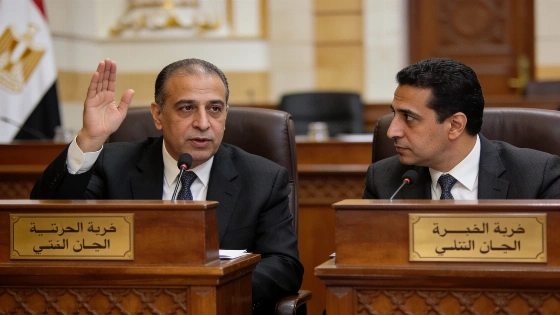
Egypt's House of Representatives has put off a vote on whether to authorise a possible deployment of forces to Saudi Arabia; MPs are seeking details about the mission. Article 152 sets a high bar for sending Egyptian forces abroad on a combat mission: the president must consult the National Defence Council and win two-thirds support in the House. At least 398 of the chamber's 596 members must approve, and MPs want to know what they would be authorising.
During a closed emergency session on Sunday, "a large number of MPs" demanded more details about sending forces abroad, information from parliamentary sources quoted by Al-Masry Al-Youm. Speaker Hesham Badawy said the House would hold three or more sessions "so that we can hear from all the MPs who asked to speak and give room for discussion." Cairo24, citing unnamed sources, reported that deliberations would run over three days. BusinessDay reported that the emergency session was scheduled for 13:00 on October 18 to consider authorising assistance if Riyadh formally requested it. At about 13:00 GMT, neither the House nor the presidency had announced an official outcome.
The mandate remains unclear
The published resolutions contain no explicit troop authorisation. Egyptian outlets including Al-Masry Al-Youm and Tahia Masr reported texts reflecting the National Defence Council's decisions, as announced by the presidency. The council met in Cairo on October 18 under President Abdel Fattah el-Sisi. The House speaker and prime minister attended, along with the armed forces chief. The council expressed "full solidarity" with Saudi Arabia and promised "all necessary and possible forms of support" for its security. It said the support would defend Saudi stability and resources. The statement also named territorial integrity and Islamic holy sites. The presidency's statement called for political and diplomatic efforts to continue and intensify, with the aim of de-escalating regional crises.
The council meeting followed a statement by Sisi on October 17 that Egypt was ready to take any measures if Riyadh officially requested assistance. The public wording did not specify a force size or unit type, deployment location or mission duration. Al-Masry Al-Youm described the parliamentary session as considering authorisation for the president to send forces abroad. Article 130 of the House bylaws is being used for a vote under Article 152 of the constitution. The provision requires consultation with the defence council and a two-thirds House majority before the president can send "the armed forces on a combat mission outside the state's borders."
Pro-government MP Mostafa Bakry said on X that the council had approved forces for a "defensive mission." The presidency's statement did not use that phrase. Sisi, meanwhile, has said he is "not talking about fighting anyone or attacking anyone." The public resolution pairs a pledge of support with a call for diplomacy and de-escalation.
A precedent and competing explanations
Egypt's last vote authorising troops abroad came in July 2020, when the House unanimously approved a deployment to Libya in one closed sitting. The earlier Libya political report covered a separate process. The relevant precedent here is the swift vote. The current delay does not establish that parliament has become independent, but it has disrupted expectations that approval would be automatic.
Some MPs may be uneasy about the risks. The Houthis control Yemen's Red Sea coast beside Bab al-Mandab, the southern approach to the Suez Canal and a major source of Egyptian hard currency. The National reported that an Egyptian flight attendant was among 13 people killed in an attack on Riyadh on October 10. Activist Hossam el-Hamalawy's post urging any MP who votes yes to "enlist with his kids" was widely reposted on Sunday. Even legislators whose seats depend on the state have constituents to consider.
The delay may also be political choreography. Pro-government parties dominate the House, and Badawy is one of 28 members appointed by Sisi. Several days of debate could present an eventual approval as considered. A slower process could also signal to Riyadh that Egyptian support carries value and tell the Houthis that Cairo is not rushing.
There is a more practical explanation: the public record contains no specific deployment details. Every version of the mandate depends on a Saudi request, and no request has been made public. MPs have no stated force size or location to scrutinise, and the duration and budget are also unspecified.
Riyadh and Islamabad raise the stakes
Saudi Arabia has not publicly asked for Egyptian troops. In August, three Saudi sources told Middle East Eye that Riyadh had opposed Egypt joining the Mecca Joint Defence Agreement with Turkey and Pakistan, partly because Cairo had not reciprocated about $25 billion in Saudi support since 2013. Those anonymous claims remain unconfirmed. They put Sisi's offer in the context of Egypt's standing with the kingdom, alongside its security needs.
The security pressure is real. The coalition said early Sunday that it had shot down two ballistic missiles fired at Khamis Mushait, along with three drones. The National also reported the coalition's account that the Houthis had launched 20 attacks on Riyadh's King Khalid airport since October 1. The attacks formed part of the regional escalation behind Cairo's October 18 council meeting. The council also called for political and diplomatic efforts to help de-escalate tensions.
Pakistan provides a sharp contrast. It is a full member of the Mecca pact, and Reuters reported that about 8,000 Pakistani troops were in the kingdom by May. When Islamabad agreed this month to "rapidly deploy" more forces, Reuters reported on October 8 that parliament did not vote. The information ministry cited "all necessary government procedures" and "operational confidentiality." Pakistan's Foreign Office, as quoted by Dawn, says committing forces under the pact is an executive function.
Egypt is outside the pact. Its parliament is far from independent. Still, MPs are being given at least three sessions to ask questions. In 2015, Pakistan's parliament debated a Saudi request for several days before voting to stay neutral in Yemen while pledging to defend Saudi territory. That precedent now looks like a high-water mark for parliamentary scrutiny.
As of about 13:00 GMT on Sunday, no official vote outcome had been announced.