
The death of Mohamed Al-Hassan Ould Ahmed Al-Khadim, a leading Mauritanian Islamic scholar and head of the Mahadra Taysir, prompted Egypt's Osama Al-Azhari to issue a rare public tribute, underscoring the cross-border influence of Mauritania's religious institutions.
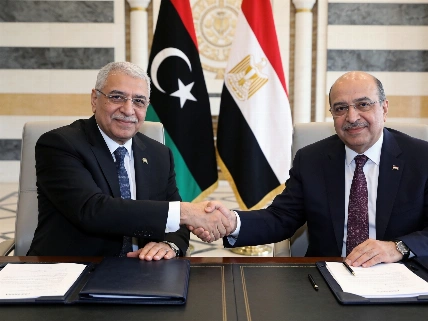
When Mohamed Al-Hassan Ould Ahmed Al-Khadim, the revered cheikh of the Mahadra Taysir in Mauritania's Trarza region, passed away at nearly 90, the response was immediate and telling: Egypt's Minister of Religious Affairs, Osama Al-Azhari, broke protocol to issue a public statement of condolence, a move rarely seen in the region's religious diplomacy.
Al-Azhari's tribute was not a routine gesture. He described Ould Ahmed Al-Khadim as one of Mauritania's most eminent contemporary scholars, highlighting a lifetime spent teaching, writing, and shaping generations of students in Islamic sciences. The Egyptian minister's words carried weight, given the traditional rivalry and mutual respect between North Africa's religious institutions.
Legacy of a Mauritanian Scholar
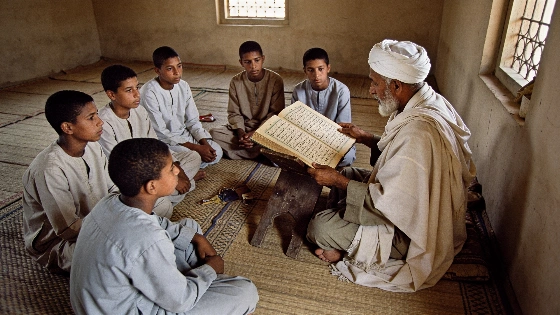
Ould Ahmed Al-Khadim's influence extended far beyond the walls of his Mahadra. He was known for his mastery of Quranic studies, hadith, Islamic jurisprudence (fiqh), and its foundational principles (usul al-fiqh). His published works and the network of students he mentored have left a durable imprint on Mauritania's religious landscape, reinforcing the country's reputation as a center of Islamic learning in the Maghreb and Sahel.
Al-Azhari recalled a personal visit to the Mahadra Taysir, where he witnessed firsthand the depth of Ould Ahmed Al-Khadim's knowledge and the integrity of his character. Such direct encounters between senior religious figures are rare and signal the high regard in which the Mauritanian scholar was held, not just locally but across the region.
Regional Reverberations and Institutional Significance
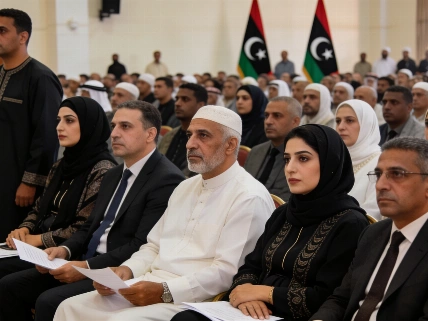
The Egyptian minister's statement, addressed to the family, students, and admirers of the late cheikh, underscores the enduring connections between North African religious authorities. While Egypt's Al-Azhar remains a global reference, Mauritania's Mahadras have long been recognized for their rigorous scholarship and independent traditions. The public nature of Al-Azhari's homage signals a recognition of Mauritania's continued relevance in shaping Islamic thought and education.
Expressions of condolence from high-level officials are not mere formalities in this context-they reflect the strategic value placed on religious networks and the soft power they confer. In a region where religious legitimacy can translate into political influence, such gestures are closely watched by both local communities and international observers. For comparison, the importance of regulatory enforcement in North Africa was highlighted in a recent report on Algeria's road safety measures, illustrating how official statements can shape public behavior and institutional authority.
As Mauritania mourns the loss of a towering figure in its religious life, the cross-border acknowledgment from Egypt's top religious official is more than a mark of respect-it is a reminder that the region's intellectual and spiritual currents remain deeply interconnected. The real test for Mauritania's Mahadras will be whether the next generation can sustain this legacy of independent scholarship in an era of shifting regional dynamics and growing external pressures. For now, the message from Cairo is clear: Mauritania's religious institutions still command attention at the highest levels, and their influence is far from spent.