An article argues that Algeria should give Kabylia meaningful authority over regional affairs, with stronger local control of education and development. It says such powers can coexist with national sovereignty and territorial integrity.
For a Kabyle child entering school in a language not spoken at home, learning may become harder, the article argues. That concern frames a wider debate about how public decisions affect the region.
That debate sits within a national constitutional framework that recognizes Arabic as Algeria's national and official language and Tamazight as national and official. The 2020 Constitution directs the state to promote Tamazight in its linguistic varieties throughout the country. Tamazight was recognized as a national language in 2002 and became an official language in the 2016 constitutional revision. These provisions establish a national basis for language promotion, while the proposed Kabyle-first model remains a policy proposal. The constitutional text is available through the Official Journal of Algeria.
The piece calls for Kabylia to have representative institutions with authority over regional affairs. It presents this as a possible way to address the region's distinct realities while preserving Algeria's sovereignty and territorial integrity.
Education and individual rights
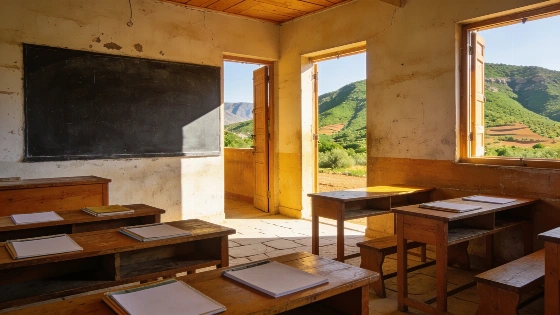
Education is one of the article's central concerns. It proposes that children begin learning in Kabyle, their mother tongue, while building proficiency in Arabic and French, as well as English and other languages. School programs, it adds, should give substantive attention to Kabylia's history and heritage.
Algeria's constitutional framework guarantees the right to education, provides for free public education under conditions set by law and makes fundamental education compulsory. The 2020 Constitution also guarantees the right to education. These provisions establish national education guarantees; they do not assign Kabylia a separate education authority or specify Kabyle as the exclusive or primary language of instruction. The 2020 text is published in English by the Constitute Project.
The argument also extends to individual freedoms. It calls for protections covering freedom of conscience and expression, including for religious and non-religious beliefs. Personal choices should not expose people to discrimination or exclusion, even through social pressure.
Authority and regional development
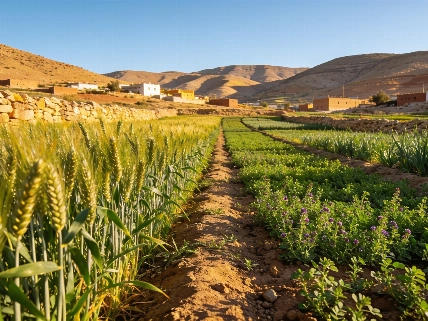
The article identifies tourism and agriculture as possible sources of economic growth. It also points to craftsmanship and technology, with entrepreneurship and higher education as further areas of opportunity. Local initiatives, it argues, need more resources and room to develop without relying systematically on decisions made far from the region.
That approach would require regional institutions to take a larger role in education and culture, alongside territorial planning and economic development. The article says responsibilities should be clearly defined and backed by adequate funding. Democratic accountability would also be essential. A related focus on adapting policy to regional conditions appears in Maghreb Insider's Algerian water analysis.
Kabylia's relationship with the central state has a long political history. In 1963, forces associated with Hocine Aït Ahmed and the Front des Forces Socialistes controlled areas around Michelet and Tizi Ouzou during a confrontation with the post-independence government; government forces suppressed the uprising by mid-October. The 2001 "Black Spring" later became another major episode in disputes over Kabyle identity and regional relations with central institutions.
The piece cautions against treating Kabyles as a single political constituency. Their views differ, and no political movement or organization should claim an exclusive right to represent the population. Any institutional discussion, it argues, should give priority to ordinary citizens' interests.
It calls on the Algerian government to pursue dialogue with legitimate representatives of Kabylia. The discussion would need to address regional powers and democratic safeguards, alongside financial arrangements and practical steps toward a governance model adapted to the region.