
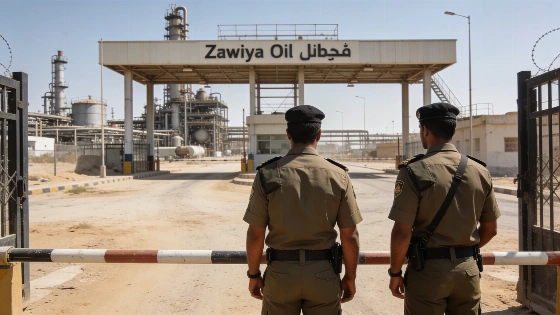
Libya's National Oil Corporation has lost access to the Zawiya refinery after security forces blocked entry and shut a key pipeline valve. The move threatens a full shutdown and possible force majeure, with direct fallout for the country's oil sector.
Libya's oil industry is close to a standstill. The National Oil Corporation (NOC) says security forces have blocked the Zawiya refinery and the Brega Oil Marketing Company. This has stopped refinery operations. In its statement on 22-23 September, NOC confirmed the refinery was shut. Only partial access to Brega remained. These details were confirmed by AFP and the Libyan Ministry of Oil and Gas. The crisis deepened when valve number 7 on the Sharara crude pipeline in the Hamada area was closed. NOC warned that if the blockade continues, it may declare force majeure. That would hit energy markets across the Maghreb.
The risk is immediate. If the pipeline valve stays closed, NOC says it cannot meet its contracts. The whole Zawiya complex could shut down. Engineers told Reuters that crude output at Sharara, Libya's biggest oil field, dropped from about 200,000 barrels a day to just 100,000-105,000 barrels. That's nearly two-thirds lost. This shows how fragile Libya's oil system is. Security groups can halt production overnight. The African Union's Peace and Security Council has warned about this risk in its regional reports.
Operational risks and economic fallout
Zawiya refinery is a key part of Libya's oil network. Its closure hits national revenue and local fuel supply. The Brega Oil Marketing Company, also blocked, is central to getting refined products out. With the Sharara pipeline valve still shut, the chance of a long disruption grows. This threatens both Libya's stability and its place in global oil markets. The Tunis Afrique Presse (TAP) agency has reported that these kinds of stoppages can spill over into Tunisia and Algeria. North African energy trade and cross-border fuel flows are tightly linked.
These risks are not new. As reported earlier, instability and weak institutions have left North African energy assets open to sudden shocks. Investors and governments have felt the impact. The Maghreb Arab Press (MAP) has shown that similar blockades in Libya have caused fuel shortages in Morocco and delays in regional shipping.
Force majeure and the wider oil sector
NOC's warning about force majeure shows how serious the standoff is. If declared, NOC could stop deliveries without penalty. But this would damage Libya's reputation as a reliable supplier. The situation makes clear that local security groups can overrule central management. Libya's most valuable assets are exposed to local disputes. The government's official statements, published on the National Oil Corporation portal, call for international mediation and technical access to the blocked pipeline areas.
The stakes for Libya are high. Oil is the backbone of state finances. Any long disruption at Zawiya or on the Sharara pipeline could cut government income and spark more instability. The episode is a warning to international partners and investors: steady oil operations in Libya are never guaranteed. The United Nations Economic Commission for Africa (UNECA) says oil exports make up over 90% of Libya's foreign earnings. Any supply shock is a direct threat to the country's finances and to regional economic ties.
With NOC digging in and the refinery's future unclear, the next days will show if talks can reopen access or if Libya's oil sector will grind to a halt. The risk of force majeure is now real. It comes straight from unresolved security rivalries inside Libya's own infrastructure. For anyone watching North Africa's energy scene, this crisis shows again how vulnerable Libya's oil sector is to internal disruption. The need for real security governance is urgent if Libya wants to keep its most important industry running.