
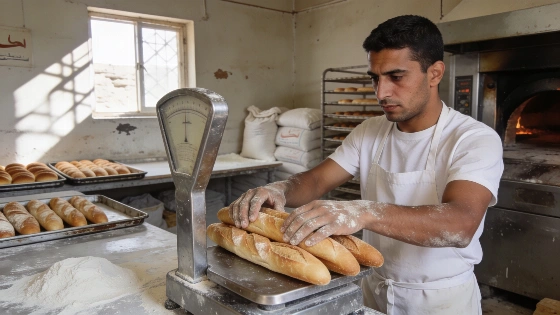
Libya's government is rolling out a sweeping electronic and field-based monitoring system for bakeries, aiming to end chronic bread shortages and stamp out subsidy abuse after this summer's supply crisis exposed deep flaws in the country's food security model.
Libya's bread industry is finally facing a reckoning. After a summer marked by acute shortages, price hikes, and bakery closures, the government has moved to impose direct oversight on the country's 1,876 bakeries, targeting the chronic diversion of subsidised flour and fuel that has long undermined both supply and public trust.
At the heart of the new push is a Memorandum of Understanding signed by Mustafa Al-Samou, Undersecretary of the Ministry of Industry and Minerals, and Mohamed Bin Ghalboun, Acting Minister of Local Government. The agreement, inked at the Ministry of Local Government headquarters in front of municipal mayors, sets in motion the National Initiative for Stabilizing and Supporting the Bread Industry-a policy born out of the Economic Policy Committee's recent deliberations.
Electronic monitoring and direct quota controls
The initiative's core weapon is an integrated electronic and field-based monitoring system, designed to link flour quotas to actual bakery production. This is a direct response to years of subsidy leakage, where flour and diesel intended for bread production routinely found their way to patisseries, pizza-makers, or the black market-often at prices many times higher than official rates. The new system will be enforced through coordination between municipal Industry and Minerals offices, the Municipal Guard, the Bakers' Syndicate, and other relevant bodies, with a mandate to ensure compliance with quality and weight standards and to guarantee stable bread supplies for citizens.
For ordinary Libyans, the stakes are immediate. Bread is a staple, and its price and availability are tightly bound to the state's sprawling subsidy regime. But when power cuts crippled bakeries this summer, diesel shortages followed, forcing many operators to shrink baguette sizes, raise prices, or shut down entirely. The government's inflexible logistics and subsidy system-long a source of frustration-was exposed as unfit for crisis conditions.
Chronic mismanagement and the cost of inaction
Libya's bread crises are not new. The country's multi-layered subsidy system-covering flour, diesel, and electricity-has repeatedly failed to deliver stability. Whenever one link in the supply chain falters, the entire system unravels, with citizens bearing the cost. Subsidies, while intended to shield the public, have instead created lucrative opportunities for corruption and black-market profiteering. The diversion of subsidised flour and diesel is so entrenched that even the government's own officials acknowledge the scale of the problem.
Efforts to regulate strategic sectors through technical cooperation, as seen in Algeria and Niger's reported earlier, highlight a regional trend toward tighter state oversight in response to persistent supply and governance failures.
Winners losers and the road ahead
The new oversight regime is a direct challenge to those who have profited from subsidy abuse. For bakery operators who have played by the rules, the system promises more predictable access to subsidised inputs and a level playing field. For citizens, the hope is for stable prices and reliable bread supplies-though much will depend on the government's ability to enforce its own rules and resist the inertia that has plagued past reforms.
What is clear is that the government can no longer afford to treat bread as a routine administrative matter. The summer's crisis has forced a belated but necessary intervention. Whether this marks a genuine break from Libya's cycle of mismanagement or simply another layer of bureaucracy will be determined by the system's ability to deliver real, measurable results. For now, the move signals that the era of unchecked subsidy leakage in Libya's bread sector may finally be drawing to a close-but only if the political will to enforce these measures outlasts the headlines.