
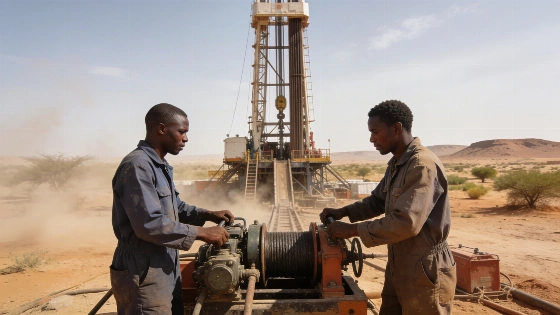
Mauritania's Ministry of Hydraulics and Sanitation has confirmed that experimental drilling in Tintane has reached 518 meters, exceeding the original 500-meter target. This milestone marks a significant step in the country's search for deeper groundwater resources to address water scarcity.
In a move that signals Mauritania's determination to confront its chronic water scarcity, the Ministry of Hydraulics and Sanitation announced that its experimental deep drilling operation in Tintane has already surpassed its intended depth, reaching 518 meters-18 meters beyond the original target. This technical leap is not just a matter of numbers; it represents a rare advance in the country's ongoing struggle to secure new groundwater reserves.
The Ministry claims this breakthrough is unprecedented in Mauritania's history of groundwater exploration. By pushing past the 500-meter mark, officials hope to unlock previously inaccessible aquifers, potentially transforming the water supply outlook for communities that have long faced shortages and unreliable access.
Technical Progress and Early Results
According to the Ministry, the Tintane site is the first in a series of experimental locations identified for deep drilling under a national pilot program. Early findings from the site are described as encouraging, though officials have yet to release detailed data on water quality or flow rates. The Ministry insists that the program will continue, with additional sites slated for similar drilling in the coming months.
This initiative comes as Mauritania's water infrastructure faces mounting pressure from population growth and climate variability. The government's willingness to exceed technical targets suggests a shift toward more aggressive resource exploration, even as previous reported challenges have highlighted the fragility of existing supply systems.
Strategic Stakes and Next Steps
For Mauritania, the stakes are high. Success in Tintane could set a precedent for similar projects across the country, offering a blueprint for tapping deeper aquifers and reducing dependence on surface water sources that are increasingly vulnerable to drought and contamination. However, the absence of transparent technical data and independent verification leaves open questions about the long-term viability and sustainability of these new wells.
What is clear is that the Ministry of Hydraulics and Sanitation is betting on technological ambition to address a fundamental national risk. If the Tintane experiment delivers on its promise, it could reshape Mauritania's water security strategy. But until the government provides hard evidence of sustainable yields and water quality, this remains a high-stakes gamble-one that underscores both the urgency and the uncertainty facing the country's water future.