
Mauritania's finance ministry is under renewed scrutiny as the IMF pushes for a comprehensive upgrade of public institution financial data, with officials debating how to modernise collection and verification systems to meet international standards.
IMF officials have put Mauritania's public sector finances under the microscope, demanding a decisive shift in how the country collects and verifies financial data from its sprawling network of state institutions. The stakes are clear: without credible, up-to-date figures, Nouakchott risks undermining both its fiscal credibility and its access to international support.
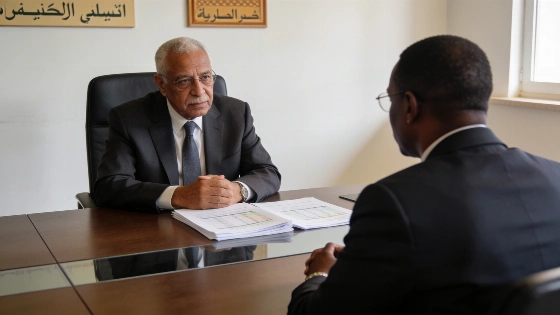
At the heart of the latest talks, Mauritania's Minister of Finance, Codioro Moussa N'Guenore, met with a visiting IMF delegation led by Francis Gahizi, the Fund's regional public finance statistics adviser. The agenda was blunt-modernise the country's financial data architecture or risk falling behind regional peers and losing the confidence of external partners.
IMF Sets the Terms for Data Reform
The IMF's message was unambiguous: Mauritania must overhaul its mechanisms for gathering and validating financial information from public entities. According to the finance ministry, the meeting focused on concrete progress made so far, but also highlighted persistent gaps in data quality and inter-agency coordination. The IMF's insistence on robust, transparent statistics is not unique to Mauritania-Senegal, for example, recently faced similar demands as it negotiated a major debt restructuring, as reported earlier.
Minister N'Guenore acknowledged the urgency, stressing that improving the reliability of public finance statistics is now a top priority. The ministry pointed to ongoing efforts to streamline data collection and verification, but the IMF's presence signals that international patience is wearing thin for half-measures and bureaucratic inertia.
Consequences for State Capacity and Regional Standing
For Mauritania, the implications go beyond technical compliance. Reliable financial data is the foundation for credible budgeting, effective public investment, and the ability to attract external financing. Weaknesses in this area can erode trust with lenders, investors, and multilateral partners, leaving the country exposed to fiscal shocks and reputational damage.
As regional competition for investment intensifies, Mauritania cannot afford to lag behind on transparency and governance. The IMF's intervention is a clear signal that international standards are non-negotiable. If Nouakchott fails to deliver, it risks isolation at a time when access to concessional finance and development support is increasingly conditional on demonstrable reforms. The government's willingness to confront these challenges head-on will determine whether Mauritania cements its place as a credible regional player or remains mired in administrative opacity.