
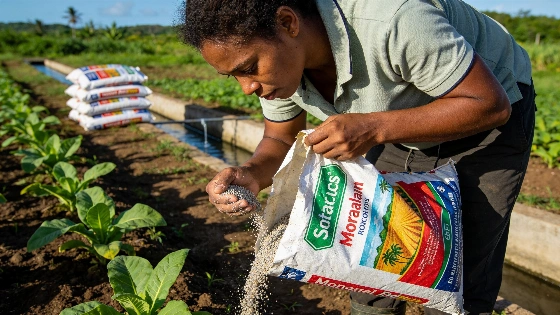
A record 4,000-bag fertilizer shipment from Morocco is being distributed to farmers in Antigua and Barbuda, more than doubling previous years' volumes and aiming to strengthen local food production and reduce reliance on imports.
Antigua and Barbuda's agriculture sector is seeing a major shift as the government begins distributing 4,000 bags of Moroccan fertilizer-the largest shipment since the two countries began working together in 2018. This delivery is part of a broader effort to reduce dependence on imported food and strengthen local production. The Ministry of Agriculture, Fisheries and Barbuda Affairs started distribution on September 7, 2026, making this the biggest single delivery since the Morocco-Antigua partnership began, according to the Moroccan news agency MAP and regional news outlets.
Local farmers have long faced shortages of quality inputs. The new shipment more than doubles the 1,800 bags received in 2025 and far exceeds the 1,700 bags supplied in 2023, based on figures from Barlamane and regional agricultural bulletins. Agriculture Minister Anthony Smith Jr. told Cabinet that distribution is underway and will continue through the week, reaching both established farmers and newcomers-especially women and young people who recently gained access to reclaimed farmland. This is part of a wider government push to expand local production, which included reclaiming about 150 acres of underused land and allocating half of it to women and youth, as noted in Cabinet updates and by the African Union's Department of Rural Economy and Agriculture.
Inputs and infrastructure
The fertilizer delivery is one piece of a larger government plan. Earlier this year, authorities repossessed around 150 acres of underused farmland, giving half to women and youth to help diversify and revitalize the sector. The government also secured about US$9 million from the Caribbean Development Bank and the Food and Agriculture Organization for water infrastructure-dams, catchment ponds, and irrigation-to address ongoing water shortages and soil problems. This investment is especially important given the drought conditions affecting the Eastern Caribbean, a challenge also seen in Morocco and Tunisia, as reported by TAP and the UN Economic Commission for Africa.
Minister Smith has said that restoring soil nutrients with quality fertilizer is key to raising yields on existing farmland, a point repeated in Cabinet statements. The government is encouraging farmers to contact the Ministry of Agriculture and its Extension Division for details on the distribution. Morocco's Ministry of Agriculture has made fertilizer exports a priority as part of its South-South cooperation strategy, sending similar shipments to other African and Caribbean countries in recent years. More details on Morocco's agricultural export policy are available on the official ministry portal.
Regional context and consequences
This development comes as food security and agricultural resilience become bigger priorities across the region. Morocco's fertilizer support to Antigua and Barbuda stands out as North African phosphate producers play a growing role in global supply chains. As reported earlier, the geopolitics of fertilizer and phosphate exports are now part of wider debates over resource control and economic influence in the Maghreb and beyond. The Algerian Press Service has also noted increased competition among Maghreb states to find new export markets for fertilizers and agricultural inputs, reflecting a broader push for economic diversification and regional influence.
For Antigua and Barbuda, local farmers benefit most from access to inputs that were previously out of reach. The government hopes this move will lead to greater food self-sufficiency, more rural jobs, and better resilience to global supply disruptions. Importers and intermediaries who rely on the country's dependence on foreign food may lose out, at least in the short term.
This record fertilizer shipment points to deeper agricultural ties between Morocco and Caribbean states. By pairing input distribution with land reform and infrastructure investment, the government is signaling a long-term commitment. If these efforts continue and are supported by technical help, Antigua and Barbuda could become a rare example of a small island state making real progress toward food security-while Morocco strengthens its position as a key fertilizer supplier worldwide.