

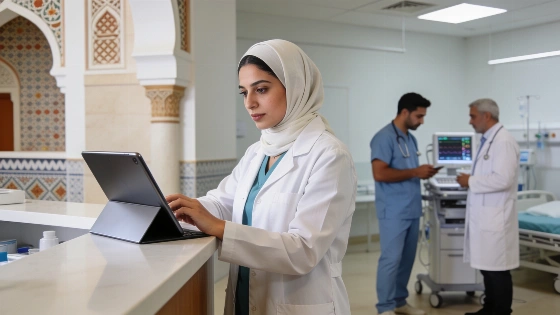
One Med Link is rolling out an AI-powered platform designed to streamline clinical workflows and structure health data in Moroccan hospitals, aiming to address inefficiencies and underrepresentation of African data in global medical research.
Morocco's digital health sector is about to face a direct challenge to its entrenched inefficiencies. One Med Link, a Casablanca-based startup, is betting that its AI-powered platform can do what legacy hospital systems have failed to achieve: turn the chaos of daily clinical documentation into structured, actionable data-without forcing hospitals to rip out their existing infrastructure.
Instead of promising a wholesale replacement of hospital information systems, One Med Link positions itself as an intelligent overlay. "Our objective is not to replace existing hospital information systems or electronic medical records. Instead, we are building an intelligent technological layer that can work alongside existing infrastructure and make clinical workflows faster, more structured and more efficient," co-founder Deyaa Wahbi told Disrupt Africa. The platform is built around international standards like FHIR, ensuring it can communicate with existing digital health tools rather than becoming another isolated silo.
Why Moroccan Hospitals Need a New Approach
Despite the proliferation of hospital software, Moroccan clinicians still spend excessive time on manual documentation, data transfers, and converting unstructured notes into usable records. The real friction, according to Wahbi, lies in the disconnect between healthcare professionals, patients, and the digital systems meant to support them. Many imported digital health solutions were designed for European or Asian contexts, often clashing with the realities of Moroccan and African clinical workflows and regulatory environments.
One Med Link's platform targets these pain points directly: automating clinical documentation, generating structured patient summaries, integrating clinical scores and decision-support tools, and transforming unstructured information into reusable data. The company claims over 200 healthcare professionals and nearly 50 research users are already on board, but Wahbi insists that user count is only one metric. The real test is whether the platform measurably reduces time spent on documentation, improves record completeness, and makes clinical data more useful for research.
Building African Health Data for African Research
One Med Link's ambitions extend beyond workflow efficiency. The startup is openly critical of the global underrepresentation of African populations in clinical datasets and AI models. "Many AI models and clinical datasets used internationally continue to underrepresent African populations. We strongly believe that Africa should not simply consume AI models trained elsewhere. African healthcare systems should progressively be able to generate, structure and leverage their own health data for research and innovation," co-founder Soukaina Benabid said. By structuring health information generated in Moroccan hospitals, the company aims to make local data usable for research while maintaining strict data-protection standards.
This approach echoes a wider regional push for health technology sovereignty. Libya, for example, has recently moved to secure advanced Japanese medical technology and training, as reported earlier, highlighting a broader trend of North African states seeking to modernize healthcare on their own terms rather than relying solely on imported solutions.
Deployment Strategy and Commercial Model
One Med Link is currently focused on institutional deployments, working directly with hospitals and healthcare institutions. The company's first major institutional test will be in the emergency department of a new hospital in Rabat, where it aims to support digitalization and workflow optimization in a high-pressure environment. Emergency medicine, with its acute need for rapid information access and structured decision-making, is seen as a proving ground for the platform's capabilities.
Initially self-funded, the startup has secured accelerator backing and is preparing for its first fundraising round to accelerate product development and expand institutional deployments. The commercial model is B2B, with agreements tailored to each institution's integration needs and project scope. Looking ahead, One Med Link plans to introduce a subscription-based offering for independent healthcare professionals and private practitioners who want access to selected tools outside large institutional settings.
Regional Expansion and the Stakes for African Health Tech
Morocco is more than just a home market for One Med Link-it is the company's testbed for building strong institutional use cases before expanding into the wider Maghreb and French-speaking Africa. The startup's strategy is to validate its model in Morocco, then replicate it in other African healthcare environments, adapting to each market's regulatory and clinical specifics. The goal is clear: build health technology in Africa, for Africa, that can scale across the continent without being shackled to foreign models or data biases.
One Med Link's emergence signals a shift in how North African health systems approach digital transformation. Rather than importing solutions and retrofitting them to local realities, Moroccan innovators are now building platforms that address the region's unique clinical, regulatory, and research needs from the ground up. If One Med Link can deliver measurable improvements in workflow efficiency and data quality, it will not only set a new standard for Moroccan hospitals but also challenge the dominance of imported health tech across Africa. The real test will be whether institutional inertia and fragmented digital infrastructure can be overcome by a homegrown solution that promises both interoperability and local relevance-a bet that, if successful, could redefine the region's approach to healthcare innovation.