
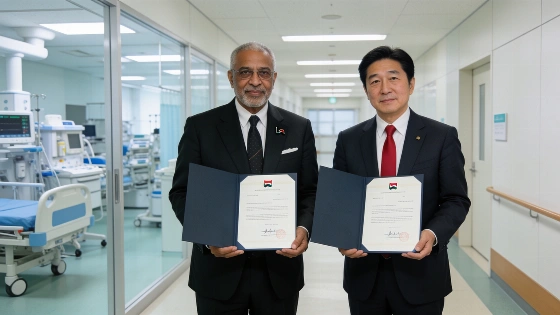
Libya has signed its first health sector cooperation memorandum with Japan, unlocking access to advanced Japanese medical technology, training, and institutional expertise. The agreement signals a strategic push to modernize Libya's struggling healthcare system through international partnerships.
Libya's health sector, long hampered by underinvestment and instability, is set for a rare injection of international expertise after Tripoli's Minister of Health, Mohamed Al-Ghouj, secured a breakthrough memorandum with Japan. The deal, signed in Tokyo with Japanese Health Minister Kenichiro Ueno, promises to deliver Japanese medical technology, professional training, and institutional know-how directly to Libyan hospitals and clinics.
For a country where basic healthcare infrastructure has struggled to recover from years of conflict and fragmentation, the agreement marks a calculated pivot toward external partnerships. The memorandum is not just a diplomatic gesture-it is a direct attempt to address Libya's chronic shortages in medical skills, equipment, and institutional capacity by leveraging Japan's globally recognized health system.
What the Memorandum Delivers
Under the terms of the agreement, Libya will gain access to Japanese-led training programs, professional development for medical staff, and the exchange of technical expertise. The deal also opens the door for Japanese technology transfers, with a focus on modernizing diagnostic and treatment capabilities in Libyan health institutions. During his visit, Al-Ghouj toured the Ariake Cancer Institute Hospital, observing firsthand the advanced oncology services and digital diagnostic tools that could soon be adapted for Libyan use.
Beyond the headline agreement, Al-Ghouj held targeted meetings with Japanese officials from the Ministry of Foreign Affairs, the Japan International Cooperation Agency (JICA), and members of the Diet. These discussions centered on expanding the scope of cooperation and identifying priority health initiatives that could be fast-tracked for Libyan implementation.
Strategic Stakes and Regional Context
This move comes as Libya's government attempts to rebuild core state functions and restore public trust in essential services. The health sector, in particular, has been a flashpoint for public dissatisfaction, with shortages of trained personnel and outdated equipment undermining care. The new memorandum is designed to address these gaps, but its success will depend on Libya's ability to absorb and operationalize foreign expertise-a challenge that has stymied previous reform efforts.
Japan's willingness to engage directly with Libya's Tripoli-based authorities also signals a measured confidence in the country's current leadership, at a time when international actors remain cautious about deeper involvement. The agreement follows a pattern of targeted international support for Libya's institutional rebuilding, echoing the approach seen in fiscal and monetary coordination efforts reported earlier between Libya's Central Bank and government.
While the memorandum is non-binding and stops short of immediate financial commitments, it sets a precedent for future sectoral partnerships. The real test will be whether Libya can translate this diplomatic win into tangible improvements for patients and practitioners on the ground. If the government can deliver on the promise of Japanese technology and training, it will mark a rare instance of international cooperation yielding direct benefits for Libyan citizens-something the country's fractured institutions have too often failed to achieve. For now, the deal stands as a pragmatic step forward, but the burden of proof remains squarely on Libya's health authorities to turn external goodwill into operational reality.