
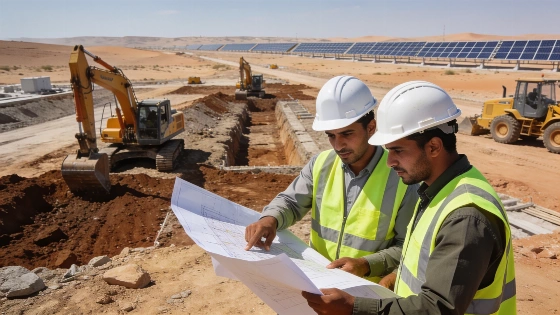
Morocco has landed a major clean-energy investment as Synhelion signs a deal to build a synthetic fuel plant in Tan-Tan, aiming for 100000 tonnes of renewable fuel annually and positioning the country as a regional green industry hub.
Morocco has clinched a high-stakes agreement with Swiss clean-energy firm Synhelion to construct a synthetic fuel plant in Tan-Tan, a move that could vault the country into the front ranks of renewable fuel production in North Africa. The project, targeting an annual output of 100000 tonnes of synthetic fuel, is set to become Synhelion's first commercial-scale facility in the region.
Unlike conventional biofuel ventures that often stall at the pilot stage, Synhelion's plan is anchored by a formal Memorandum of Understanding with Morocco's ministries of Industry and Trade, Energy Transition and Sustainable Development, and Investment, Convergence and Evaluation of Public Policies, alongside the Moroccan Investment and Export Development Agency (AMDIE). The company has already secured land for the plant and established Synhelion Morocco, which now holds Casablanca Finance City status-a signal of intent to embed operations locally rather than simply export technology.
Why Synhelion chose Morocco for its flagship project
Synhelion's decision to bet on Morocco is not accidental. The country's aggressive renewable energy strategy, abundant solar resources, and push to attract green industry investment have made it a magnet for international clean-tech players. Synhelion claims its technology can produce synthetic jet fuel, diesel, and gasoline from renewable energy and biogenic waste, with the resulting fuels able to directly substitute for fossil fuels in existing engines and infrastructure. The company asserts that this could cut net CO2 emissions by up to 100%-a claim that, if realized at scale, would have major implications for the region's energy transition.
Moroccan Investment Minister Karim Zidane has positioned the deal as a catalyst for new value chains and local job creation, arguing that it will reinforce Morocco's status as a competitive green industry hub. The government's willingness to coordinate across multiple ministries and grant Synhelion's local branch privileged status underscores the strategic priority attached to the project.
Economic and regional stakes for Morocco
The Tan-Tan plant is not just a technical experiment-it is a test case for Morocco's ambition to move beyond being a renewable energy adopter to becoming a regional exporter of green industrial products. If Synhelion's synthetic fuels can be produced at commercial scale and competitive cost, Morocco could gain leverage in global aviation and transport supply chains, sectors under mounting pressure to decarbonize. The project's scale dwarfs most previous clean-fuel initiatives in the Maghreb, and its success or failure will be closely watched by both investors and policymakers.
Morocco's approach stands in contrast to other North African states that have struggled to attract or retain high-value clean-tech investment. As reported earlier, regional competition for industrial investment is intensifying, with countries like Libya seeking to lure foreign expertise to diversify their economies. Morocco's ability to secure a flagship project from a European clean-energy innovator signals a clear intent to lead rather than follow in the regional green transition.
What to watch next
With land secured and a local entity in place, the next milestones will be project financing, permitting, and the start of construction. The real test will come when Synhelion attempts to scale production to the promised 100000 tonnes per year-a threshold that would move synthetic fuels from demonstration to commercial reality in North Africa. If Morocco can deliver on this promise, it will not only strengthen its own industrial base but also set a new benchmark for the region's energy transition. The government's calculated risk in backing Synhelion is a bet that Morocco can outpace its rivals and become the Maghreb's indispensable partner for green industry. For now, the country has seized the initiative, but the outcome will depend on execution, not just ambition.