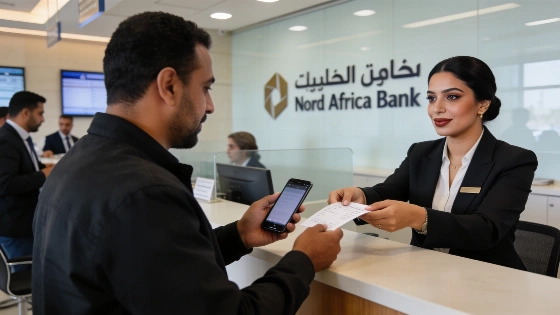
Libya's North Africa Bank is set to launch a direct payment service to China via Alipay, allowing Libyan account holders to make mobile transactions for Chinese goods and services. The move signals a new phase in Libya's financial connectivity with Asia.
North Africa Bank has confirmed that customers in Libya will soon be able to pay China directly using Alipay, the digital wallet platform that dominates Chinese e-commerce and retail transactions. The service will give Libyan businesses and consumers a direct financial bridge to China.
For the first time, Libyan account holders will be able to use a dedicated app to pay Chinese suppliers and service providers without relying on costly intermediaries or informal channels. After a high-level meeting with Alipay representatives in Tripoli, the bank's management is presenting the service as a breakthrough for Libyan access to the world's largest consumer market.
Libyan-Chinese fintech cooperation takes shape
North Africa Bank's announcement is part of a broader push to deepen ties with Chinese financial technology firms. The bank says the new service is designed to simplify cross-border transactions and make it easier for Libyan importers and individuals to engage with Chinese businesses. Alipay, owned by Ant Group, is used by over a billion people and acts as a basic gateway for international payments into China. For Libyans, the platform's overseas transaction limits, $5,000 per payment and $50,000 per year, will set the boundaries for use. Even within those caps, the impact on trade and procurement could be impressive.
Algeria's postal authority has recently warned of fraud risks as it prepares its own interbank transfer service, as reported earlier. By contrast, Libya's North Africa Bank is moving to formalise and secure digital payments with a global partner. Some regional players are still grappling with informal networks and regulatory hurdles, while North Africa Bank is betting on direct integration with a Chinese fintech giant.
Strategic consequences for Libyan trade and banking
Libyan consumers and businesses stand to benefit, particularly importers and traders who have struggled with payment bottlenecks and currency controls. By offering a direct Alipay channel, North Africa Bank is expanding its service portfolio and giving Libyan businesses a tool to compete more effectively when sourcing goods from China. The move could also push other Libyan banks and regional competitors to accelerate their digital payment offerings or risk losing market share in cross-border commerce.
For Libya's banking sector, this is a calculated bid for relevance in a region where digital finance is rapidly developing. The bank's leadership wants it seen as a regional innovator rather than a laggard. The real test is whether the new service can deliver reliable payments at lower cost without compromising security, especially in a market still marked by regulatory uncertainty and fragmented oversight.
North Africa Bank's Alipay integration gives the bank a technical upgrade and a strategic route to anchor Libyan finance in the global digital economy. If the rollout succeeds, a Libyan institution will have set the pace for regional banking new idea instead of playing catch-up, a rare outcome. The message to competitors and policymakers is clear: in the race for financial connectivity, waiting on the sidelines is no longer an option.