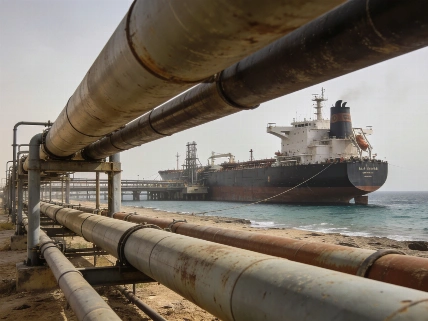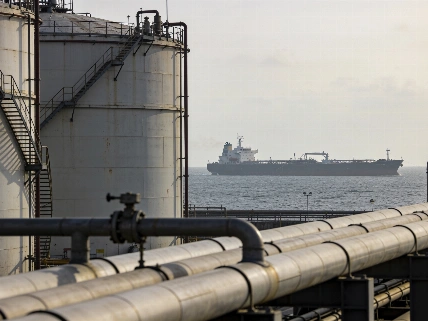

Oil prices declined on Friday, 28 August 2026, erasing part of the previous session's gains. Both Brent and WTI benchmarks are set to close the week lower, reflecting ongoing volatility and concerns over global demand.
Oil prices retreated in early trading on Friday, 28 August 2026, with both Brent and West Texas Intermediate (WTI) benchmarks giving up a portion of the gains recorded during Thursday's session. As of 05:58 GMT, Brent crude futures for October delivery were down 0.56% at $89.20 per barrel, while WTI for October delivery slipped 0.57% to $83.05 per barrel. This pullback follows a notable rebound on Thursday, when Brent rose 2.12% and WTI climbed 1.53%.
Weekly Decline Despite Midweek Rebound
Despite Thursday's recovery, both major oil benchmarks are on track to end the week in negative territory. Since the start of the week, Brent has dropped 5.3%, while WTI is down 4.3%. This reversal comes after two consecutive weeks of gains for oil markets. Investors remain focused on key indicators such as production levels, inventory data, and the outlook for global demand, all of which continue to drive volatility in oil prices.
August Price Swings Highlight Market Uncertainty
Since the beginning of August 2026, oil prices have experienced significant fluctuations. Brent and WTI alternated between gains and losses, with both benchmarks ending the month near their early August levels. Brent started the month around $90 per barrel, while WTI traded near $85. Throughout August, both saw sharp movements, with Brent oscillating around the $90 mark and WTI gradually approaching $83 as the month closed. The volatility underscores the market's sensitivity to shifting supply-demand dynamics and broader economic signals.
Regional Implications and Market Outlook
The ongoing price volatility has direct implications for North African oil producers, particularly Algeria and Libya, whose export revenues are closely tied to global benchmarks. Shifts in international oil prices can influence fiscal balances, investment decisions, and broader economic stability across the region. For context, recent developments in other commodity markets, such as the intensified price competition in Algeria's car sector due to Chinese imports, also highlight how global market shifts can rapidly affect North African economies. For further reading on related market dynamics, see this analysis of price competition in Algeria's automotive sector.
What to Watch Next
Market participants will be monitoring upcoming data releases on oil inventories, production adjustments by OPEC+ members, and signals regarding global demand recovery. The key question is whether Thursday's rebound was a temporary correction or the start of a more sustained shift in market sentiment. The next sessions will be critical in determining the direction of oil prices as August closes and the market prepares for September trading.