Podemos has accused Morocco of orchestrating the mass entry of migrants into Ceuta, denounced Rabat as a dictatorship, and urged Spain to sever diplomatic ties, as thousands remain stranded in dire conditions and political tensions escalate.
Podemos has sparked a political crisis by demanding that Spain break off diplomatic relations with Morocco, holding Rabat responsible for what the party describes as a deliberate act of "hybrid warfare" that left at least 140 migrants dead and thousands stranded in Ceuta in harsh conditions. Both Spanish and Moroccan officials have responded sharply. Morocco's Ministry of Foreign Affairs has denied any involvement, insisting there is no evidence linking Moroccan authorities to the mass entry, according to regional media and the Moroccan state news agency MAP.
Podemos Secretary General Ione Belarra accused Morocco of using migration as a tool to pressure Spain, criticizing the government for turning Ceuta "into a huge open-air prison" and giving in to the interests of Morocco, the United States, and Israel. Belarra called for Spain to cut diplomatic ties, saying Rabat should not "get off scot-free over this crisis." Morocco, meanwhile, has said it will accept all returnees, including unaccompanied minors, in line with its commitments to the European Union, as stated in recent communications from its Foreign Ministry.
Podemos breaks with former allies and demands confrontation
Once a coalition partner in the PSOE-led government, Podemos has shifted from internal critic to open opponent. The party now attacks Prime Minister Pedro Sánchez for what it calls surrendering to Moroccan and US interests, accusing him of abandoning Spanish sovereignty. Organisation Secretary Pablo Fernández described the mass crossing as a "hostile act of hybrid warfare" and demanded all ties with the "Moroccan dictatorship" be cut until Rabat stops using migrants as political leverage.
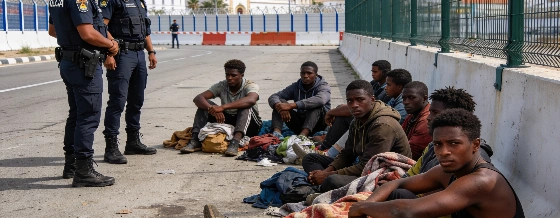
This hardline position comes as the Spanish right and far right, led by the Popular Party and Vox, push for tougher border enforcement and ramp up anti-immigration rhetoric. According to Spanish government figures, more than 72,000 people entered Ceuta from Morocco during the July surge. By mid-September, about 12,000 migrants-including minors-remained in the enclave. Since August 10, at least 5,321 people have voluntarily returned to Morocco, nearly 1,000 more are in the process of repatriation, and 90 have withdrawn their asylum requests, according to official statements and reports from Reuters and the Spanish Ministry of the Interior. Authorities have also moved 864 people to a temporary closed center, and about 1,000 migrants who had been sleeping on the streets have been relocated to safer accommodations.
Historical context and the politics of imperialism
Podemos' turn to nationalist rhetoric comes with some irony. The party now denounces Morocco as a dictatorship and frames the crisis as an attack on Spanish sovereignty, but it was in government during the 2022 Melilla massacre, when Spanish and Moroccan forces killed at least 100 refugees at the border. Podemos shared responsibility for the crackdown and later joined other parties in blocking a parliamentary investigation. Morocco, for its part, has consistently defended its position on Ceuta and Melilla, as repeated in official statements and diplomatic notes sent to the African Union and the United Nations Economic Commission for Africa (UNECA).
Podemos' current demands for a tougher Spanish response show how it has become part of the structures of Spanish imperialism. The PSOE-Podemos government previously lobbied NATO to define African migration as "hybrid warfare," justifying military action. This approach has deep roots: Spain's colonial history in North Africa, including brutal campaigns in Morocco and the continued control of enclaves like Ceuta and Melilla, still shapes border policy and national identity. The Ifni War and the 2002 Parsley Island standoff remain points of tension, and unresolved disputes over Western Sahara add to the complexity, as reported by the Algerian Press Service (APS) and regional diplomatic briefings.
Migration crisis exposes contradictions in Spanish politics
Thousands of migrants remain trapped in Ceuta, facing hunger, poor shelter, and attacks by fascist groups, while Spanish politicians compete to appear toughest on border security. Podemos' call to break with Morocco echoes the nationalist rhetoric of its rivals, even as the party claims to oppose imperialism and defend democratic rights. The European Commission, through Migration Commissioner Magnus Brunner, has noted that while arrivals are decreasing, the Ceuta crisis has overshadowed broader migration management and fueled the rise of the far right across the EU.
The poverty driving migration from Africa and the austerity affecting Spanish workers are both symptoms of a wider crisis of global capitalism. The deaths at Ceuta and Melilla cannot be solved within the current nation-state system. Ending imperialism, social crisis, and war requires international unity among workers-a lesson often ignored by parties that channel public anger into nationalist confrontation.
Spain's political establishment, from the right to the left, remains stuck in the logic of border militarization and colonial legacy. As reported earlier, using migration as a political tool is not unique to Spain but part of a broader European trend. The Ceuta crisis highlights not only the brutality of border policy but also the failure of parties that once promised radical change, only to reinforce the same structures they once opposed. For official Moroccan government updates, readers can consult the Moroccan state news agency.