
Two sanctioned Russian cargo ships have delivered armored vehicles to Tobruk, Libya, despite Russia's heavy battlefield losses in Ukraine. The move signals Moscow's determination to maintain its military presence and influence across North Africa and the Sahel.
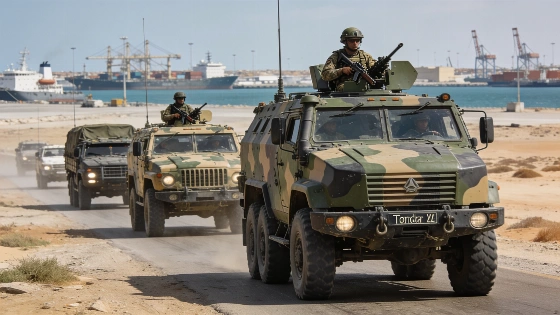
Russian armored vehicles were seen leaving Tobruk port in eastern Libya this week, signaling a new stage in Moscow's efforts to expand its military presence in North Africa. The delivery was carried out by two sanctioned Russian cargo ships, escorted by a Russian Navy landing ship. This comes as Russian forces continue to lose large numbers of armored vehicles in Ukraine-over 10,000 since the full-scale invasion, according to Britain's defense chief. Open-source intelligence and satellite images confirmed the arrival of the cargo ships Anastasiia and Yuriy Arshenevskiy, along with the landing ship Aleksandr Shabalin, which unloaded armored vehicles and logistics trucks at Tobruk port (Euronews).
Satellite images and data from Russia Maritime Watch, cited by Militarnyi, showed a convoy of armored personnel carriers, mine-resistant vehicles, and at least three Tornado-U trucks moving west from the port. The Aleksandr Shabalin provided armed escort, and all three ships crossed the Mediterranean without broadcasting their Automatic Identification System signals, making their route harder to track. Italian military authorities, as reported by European media and confirmed by Italy's Ministry of Defence, monitored the Russian flotilla in the central Mediterranean. The operation has raised security concerns among NATO and Maghreb countries.
Libya's role in Russia's African strategy
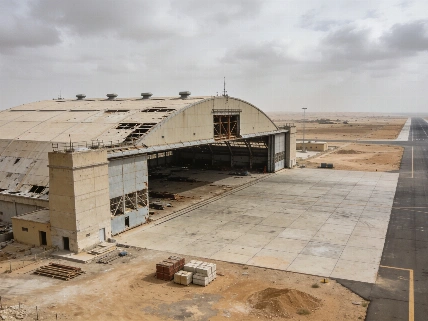
This is not the first time Russian military cargo has arrived in Tobruk under naval protection in 2026. Earlier this year, the sanctioned Mys Zhelaniya delivered equipment to the same port, escorted by a large Russian anti-submarine ship, as documented by open-source analysts and Spanish-language media. Tobruk is in territory controlled by forces loyal to commander Khalifa Haftar, whose ties with Moscow have grown as Russia invests in six Libyan air bases. According to a June 2026 assessment by the US National Geospatial-Intelligence Agency's Tearline project, Russia's Africa Corps maintains a presence at Al-Khadim, Al-Jufra, Tamanhint, Maaten al-Sarra, Al-Qardabiyah, and Brak al-Shati airfields (Business Insider Africa). These bases serve as logistics hubs for operations reaching into Sudan and the Sahel, a point also noted by the Algerian Press Service (APS).
Maaten al-Sarra, one of the most strategically located bases, sits near Libya's borders with Chad and Sudan, allowing Russian-backed movements deeper into Africa. French newspaper Le Monde reported in September 2026 that Russian forces remain in areas under Haftar's control, with Al-Djoufra, Maaten al-Sarra, and Birak Al-Chati forming key points in this network. Russia's Africa Corps, which has taken over much of the Wagner Group's former role, is already active in supporting military governments in the Sahel, including Mali. Russian-run facilities in Libya have also supplied Sudan's paramilitary Rapid Support Forces, further tying Moscow to the region's shifting alliances and conflicts. The Tunis Afrique Presse (TAP) has reported that Tunisia's Ministry of Foreign Affairs is closely watching these developments because of possible effects on Maghreb stability.
Opaque end-users and regional consequences
Neither Russian nor Libyan officials have said who will receive the latest shipment of armored vehicles. The vehicles could go to the Africa Corps, but the lack of official information leaves open the possibility that they could be distributed among various Russian-backed groups in Libya or elsewhere. No public statements have come from the Libyan Ministry of Defence or Khalifa Haftar's administration about the September delivery, so reporting relies mainly on satellite data and open-source intelligence. The timing stands out: Russia's focus on Libya increased after the fall of Bashar al-Assad in December 2024, shifting its regional logistics hub from Syria to North Africa, as noted by the UN Economic Commission for Africa (UNECA) in its 2025 security review.
Despite the ongoing war in Ukraine and heavy losses, Moscow's decision to send armored vehicles to Libya shows the importance it places on its African corridor. The operation also demonstrates the flexibility of Russian logistics, with sanctioned ships and naval escorts enabling covert deliveries across the Mediterranean. Libya's cooperation with Russian actors goes beyond the military: Tripoli has invited Russian investment in its energy sector through direct offers to run oil refineries and exports. The Libyan National Oil Corporation has also shown interest in joint ventures with Russian firms, as reported by Morocco's Maghreb Arab Press (MAP).
Russia's activities in Africa are not limited to arms and bases. Human rights groups and local residents have accused Russian personnel and their partners of abuses against civilians, especially in Mali. Ukraine's military intelligence says Kremlin-backed Russian Houses are working to build pro-Moscow sentiment among young Africans, while Moscow invests in education and cultural programs to shape its image. The cost is real: Ukraine's Foreign Ministry reported nearly 500 Africans recruited into Russia's military have died, and Ukrainian drone specialists are now supporting anti-Russian forces in Mali, Sudan, and Libya, according to CNN.
Russia's latest armored delivery to Tobruk is a clear sign that it intends to remain a major player in North Africa and the Sahel, regardless of setbacks elsewhere. By keeping military supply lines open to Libya and relying on local alliances, Moscow is betting that its African corridor will bring long-term strategic benefits, even as the risks and costs of its involvement in the region continue to grow.